

By Niuli Electric · Wiring & Connection Engineering Team · 11 min read
Key Takeaways
- A nickel-plated steel terminal is a high-temperature crimp terminal: a steel (alloy-steel) body with a nickel electrodeposit, rated to about 900 °F / 482 °C — far above where ordinary tinned-brass terminals fail.
- The failure trigger is the tin coating: tin melts at ~232 °C, and the underlying brass oxidises above ~200 °C, so a standard tinned-copper/brass terminal is unsafe once terminal temperatures climb past roughly 150–200 °C.
- Niuli’s standard terminals (ring, fork, terminal block) are tin-plated copper / brass with vinyl (75 °C) or nylon (105 °C) insulation — correct for the control cabinet outside the oven, but not for wiring that lives inside a 400 °C+ chamber.
- Nickel-plated steel becomes mandatory for any conductor that runs inside the hot zone: heating-element leads, temperature-probe and thermocouple tails, door-switch and fan wiring that shares the cavity — anywhere the terminal sees continuous 400 °C+.
- For the hot zone itself Niuli supplies the hardware that survives it: self-locking stainless-steel ties (working range −60 °C to 550 °C, SUS304/316) to bundle the leads, plus stainless-steel cable glands at the wall entry.
Why 400 °C Is the Line Where Terminal Material Stops Being Interchangeable
Industrial ovens — curing ovens, powder-coat lines, baking tunnels, kilns — do not run at one temperature. A paint cure runs 350–400 °C; a ceramic kiln or heat-treat chamber runs higher. The air inside the chamber is hot, but the terminals on the heating-element leads, the probe tails and the door interlock sit in that same air, so their metal and insulation see the full chamber temperature, not the ambient 25 °C outside.
Below about 105 °C almost any insulated terminal is fine. Between 105 °C and 200 °C the differences start to matter. Above 400 °C the choice is no longer a preference — tinned brass has already passed its safe limit, and only a nickel-plated steel (or ceramic/glass-terminal) part is still intact. That is the threshold this article is about.
What a Nickel-Plated Steel Terminal Actually Is
A high-temperature ring or spade terminal is built from a steel (alloy-steel) stamping with a nickel electrodeposit over it, then a butted seam is crimped closed. Commercial parts such as Morris Products’ high-temperature rings and Ferrules Direct’s RG series specify:
- Terminal material: steel; surface treatment: nickel plated.
- Temperature rating: 900 °F / 482 °C (some listings to 550 °C working range).
- Non-insulated (so you can inspect the crimp and the joint survives without a melting sleeve).
- Voltage: 600 V; stud sizes: #6, #10, 1/4 in; wire range: 22–16 up to 8 AWG.
- Certification: CE / RoHS, UL-recognized on many lines.
The nickel does two jobs: it is oxidation-resistant up to its useful limit (the nickel layer stays protective to roughly 480 °C, far above tin’s failure), and the steel base keeps the terminal mechanically strong at temperatures where soft brass would creep. Nickel itself melts at ~1,455 °C, so the coating is never the weak link at 400 °C.
Why Tinned-Brass Terminals Fail Long Before 400 °C
| Material / layer | Safe limit | What happens past it |
|---|---|---|
| Tin plating (on copper/brass) | ~232 °C (melting point) | Tin flows/reflows, the protective layer is gone; contact relies on bare copper. |
| Bare brass (Cu–Zn) body | ~200 °C continuous | Zinc oxidises, surface discolours, contact resistance climbs; creep at load. |
| Nylon insulation | 105 °C | Softens, then chars — no insulation left by 400 °C. |
| Vinyl (PVC) insulation | 75 °C | Melts and off-gasses well below the hot zone. |
| Nickel-plated steel | ~482 °C (900 °F) | Nickel stays protective; steel stays strong — still intact at 400 °C+. |
A standard Niuli ring/fork/terminal-block part is tin-plated copper (brass available) with vinyl or nylon insulation. It is the right terminal for the control panel hung on the oven door or mounted beside it — but bolt it to a heating-element lead inside the chamber and the tin is already gone by 232 °C, the brass is oxidising by 200 °C, and the nylon sleeve is charcoal by 400 °C. That is not a derating you can ignore; it is a fire and open-circuit risk.
When Nickel-Plated Steel Becomes Mandatory
“Mandatory” here means the connection cannot be expected to survive on a standard terminal. The rule of thumb:
- Inside the chamber at ≥ 400 °C — heating-element lead lugs, thermocouple/probe tails, RTD wires, fan-motor or door-interlock terminations that share the hot cavity. These must be nickel-plated steel (or ceramic/glass-insulated) terminals.
- Continuous-operation ovens — even at 250–350 °C, 24/7 duty creeps tinned brass; specify nickel-plated steel once you are above ~200 °C continuous to avoid drift over months.
- Any code/UL-listed high-temp assembly — where the equipment file calls out a temperature rating (e.g. UL 486 / appliance standards), the terminal’s rating must meet or exceed the chamber max. A 105 °C nylon part cannot satisfy a 400 °C requirement.
- Outside the chamber, in the cool control cabinet — standard tinned-copper/brass terminals are correct and expected; this is where Niuli’s ring, fork and terminal-block families belong.
Sizing and Standards to Match
- Temperature rating: pick a part rated to at least the chamber’s continuous max with margin — 482 °C (900 °F) nickel-plated steel covers 400 °C+ ovens.
- Stud size: #6 / #10 / 1/4 in to match the element lug or busbar; the high-temp rings use the same stud sizes as standard terminals, so the swap is mechanical, not a re-design.
- Wire range: 22–16 AWG for probe/sensor tails, up to 8 AWG for heavier element leads; crimp with a calibrated tool.
- Certifications: CE/RoHS, UL-recognized where the appliance listing requires it; confirm against the oven’s UL/EN appliance standard.
- Insulation of the wire: pair the terminal with high-temp wire (silicone ~180–200 °C, fibreglass/mica or MI cable for the hottest runs) — a nickel terminal on PVC wire still fails at the insulation.
Step-by-Step: Terminate a 400 °C+ Oven Interior Correctly
- Zone the wiring. Anything inside the chamber wall → high-temp treatment; anything in the external cabinet → standard terminals.
- Choose nickel-plated steel rings/spades rated 482 °C for every in-cavity termination (heating element, probe, interlock).
- Use high-temp wire (silicone or fibreglass/MI) so the conductor insulation matches the terminal’s rating.
- Strip and crimp with a calibrated ratchet tool (Niuli’s crimp tool, 0.25–6 mm²) — finish the full stroke; a partial crimp raises resistance and hot-spots.
- Bundle the hot-zone leads with self-locking stainless-steel ties (rated −60 °C to 550 °C, SUS304/316) — nylon ties would melt.
- Seal the wall entry with a stainless-steel cable gland so the high-temp cable passes the oven wall without abrading.
- Torque and verify. Seat the stud, torque to spec, and pull-test; confirm no nylon/vinyl part entered the hot zone.
Common Mistakes That Cause Oven-Terminal Failures
- Using a standard nylon-insulated terminal inside the chamber — the sleeve chars and the tin flows; the joint opens or arcs.
- Pairing a nickel terminal with PVC wire — the terminal survives, the wire insulation doesn’t.
- Assuming “brass is metal, so it’s fine” — bare brass oxidises above 200 °C; the plating, not the base, is what protects it.
- Partial crimp on a high-current element lead — higher resistance = hotter terminal = accelerated ageing.
- Re-using a terminal that has seen 400 °C — once oxidised, re-crimping onto the same lug does not restore the contact surface.
Niuli High-Temperature Wiring Hardware
Niuli’s standard terminals — ring, fork and terminal block — are tin-plated copper (brass available), vinyl 75 °C / nylon 105 °C, 600 V, and are the correct choice for the cool control cabinet outside a 400 °C oven. For the hot zone itself, specify nickel-plated steel high-temperature terminals (rated ~482 °C) from a high-temp specialist, and use Niuli’s genuinely high-temperature hardware to complete the run: self-locking stainless-steel ties rated −60 °C to 550 °C (SUS304/316) to bundle the in-cavity leads, and stainless-steel cable glands to seal the cable where it passes the oven wall. Crimp everything with a calibrated ratchet tool.
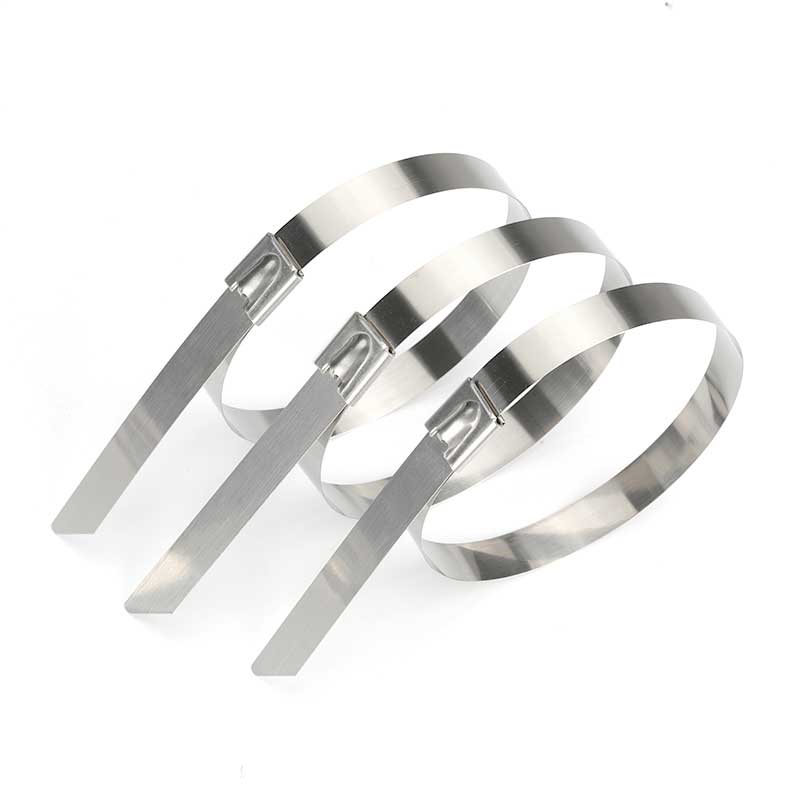
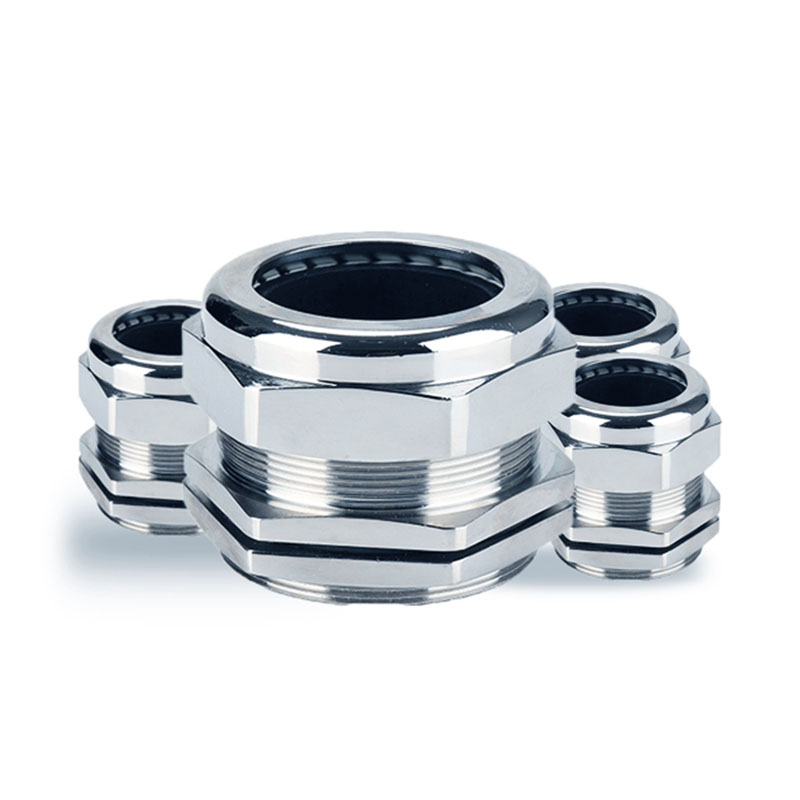
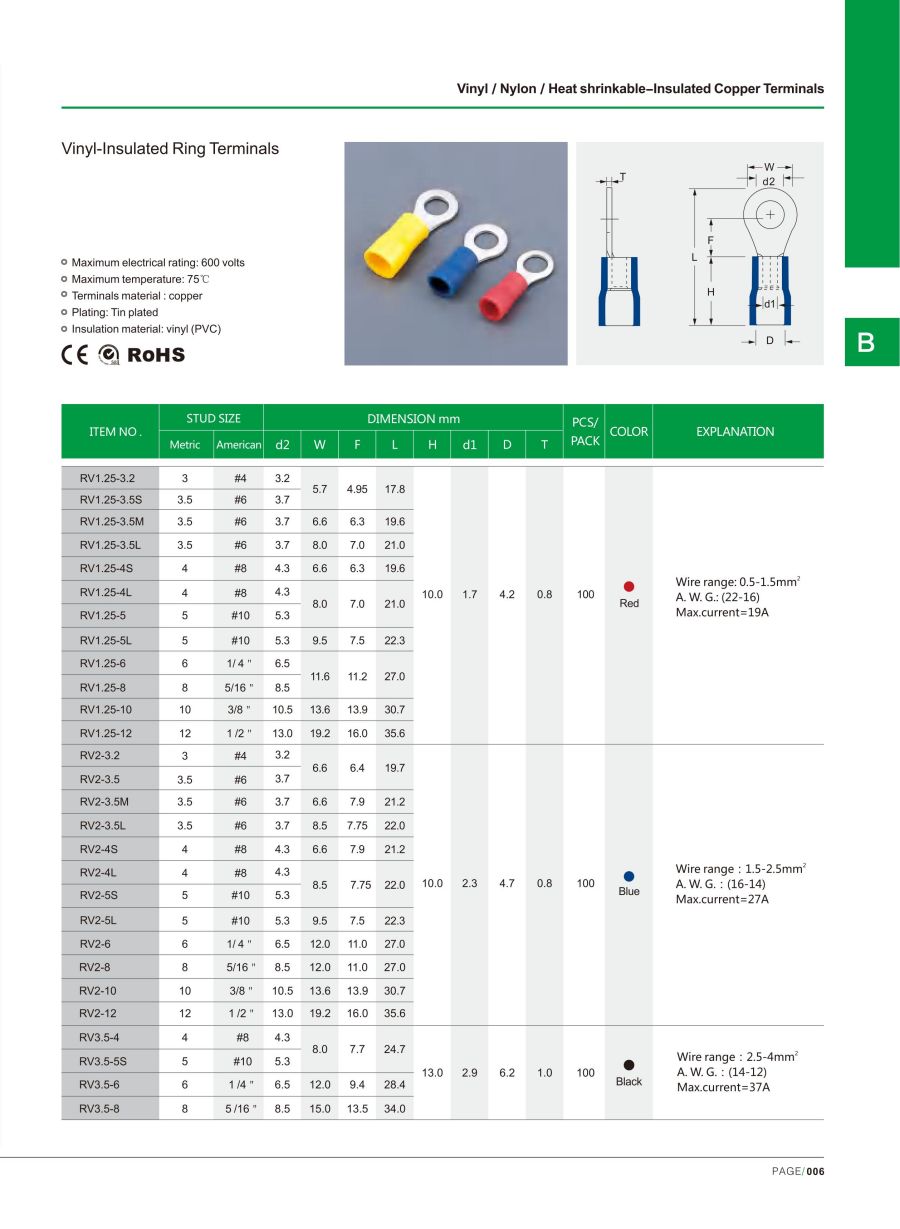
Images link to Niuli product pages (open in a new window). For the in-chamber terminations, pair a nickel-plated steel high-temp terminal (≈482 °C) with Niuli’s stainless ties and glands; use Niuli’s standard ring terminals only in the external control cabinet.
Frequently Asked Questions
What exactly is a nickel-plated steel terminal?
It is a high-temperature crimp terminal stamped from alloy steel and finished with a nickel electrodeposit. Commercial high-temp rings are rated about 900 °F / 482 °C, are non-insulated, and carry 600 V. The nickel layer resists oxidation where tin would melt, and the steel base stays mechanically strong at temperatures that soften brass.
Why can’t I use a normal tinned-brass terminal inside a 400 °C oven?
Tin melts at ~232 °C and the brass body oxidises above ~200 °C, while nylon insulation fails at 105 °C. Inside a 400 °C chamber all three limits are exceeded, so a standard terminal loses its coating, its protection and its insulation — it can open or arc. Nickel-plated steel is rated to 482 °C, so it survives.
At what temperature does a nickel-plated steel terminal become mandatory?
Once terminal temperature is expected to stay above ~200 °C continuous, or briefly reach 400 °C+, standard tinned-copper/brass is no longer safe. For any conductor living inside a 400 °C+ chamber — heating-element leads, probe tails, interlocks — nickel-plated steel (or ceramic/glass) terminals are mandatory.
Are these terminals insulated?
High-temperature rings are usually non-insulated so you can inspect the crimp and because a sleeve would just burn off in the hot zone. You protect the joint with spacing and high-temp sleeving (fibreglass/mica) rather than a nylon barrel.
Which wire do I pair with a nickel-plated steel terminal?
Use high-temp wire: silicone (~180–200 °C) for moderate runs, or fibreglass/mica/MI cable for the hottest leads. A nickel terminal on PVC wire still fails at the wire’s insulation, not the terminal.
Do high-temp terminals need a special crimp tool?
No — the crimp profile is standard; only the material differs. A calibrated ratchet tool (Niuli’s covers 0.25–6 mm², 24–10 AWG) works; just finish the full stroke so the joint stays low-resistance under heat.
Can I reuse a terminal that has already seen 400 °C?
Not advisable. Once the surface has oxidised at high temperature, re-crimping onto the same lug does not restore a clean contact face; fit a fresh nickel-plated steel terminal on service.
How do I bundle the leads inside the hot zone?
Nylon ties would melt. Use self-locking stainless-steel ties rated −60 °C to 550 °C (SUS304/316) — they survive the chamber while nylon cannot.
What standard covers these terminals?
Crimp terminals are generally built to UL 486 (and appliance/UL-listing temperature requirements); high-temp nickel-plated-steel rings are commonly CE/RoHS and UL-recognized. Match the terminal’s temperature rating to the chamber’s continuous max with margin.
Niuli sells terminals — are yours rated for 400 °C ovens?
Niuli’s ring, fork and terminal-block terminals are tin-plated copper / brass, vinyl 75 °C or nylon 105 °C — correct for the external control cabinet, not the in-chamber hot zone. For 400 °C+ interiors specify nickel-plated steel high-temp terminals and complete the run with Niuli’s genuinely high-temp hardware: stainless-steel ties (550 °C) and stainless-steel cable glands. Questions? Contact Niuli engineers.
Conclusion
A nickel-plated steel terminal stops being optional and becomes mandatory the moment a conductor lives inside a 400 °C+ industrial oven: tin melts at 232 °C, brass oxidises above 200 °C, and nylon insulation is gone by 105 °C, so a standard tinned-copper terminal cannot survive the chamber. Nickel-plated steel — rated about 900 °F / 482 °C — keeps its coating protective and its steel body strong where the others fail. Use it for every in-cavity termination (heating-element leads, probes, interlocks), pair it with high-temp wire, bundle the run with stainless-steel ties and seal the wall with a stainless-steel gland. Reserve Niuli’s standard tin-plated-copper terminals for the cool control cabinet outside the oven, where 75–105 °C ratings are exactly right.
Building or servicing a 400 °C+ oven? Get Niuli’s stainless ties, glands & crimp tools for the hot zone.
Related:
Flag Female Quick Disconnects & Meter Clearance ·
Hex vs Square Crimp & Battery Cable ·
DIN 46228 Ferrule & Strand Splitting