

By Niuli Electric · Fastening & Connection Engineering Team · 11 min read
Key Takeaways
- A high-toughness PA66 wall plug (a polyamide, the PA6/PA66 family) holds a concrete fixing under dynamic shear where a cheap PE anchor creeps, embrittles and finally shears inside the wall.
- The material gap is large: PA66 tensile strength is about 80 MPa, while polyethylene (PE) sits at roughly 20–40 MPa — two to four times weaker before you even reach the joint.
- Under shear, a wall plug lives or dies by three properties: creep resistance (does it keep its clamping force?), impact/fatigue toughness (does it survive vibration?), and mechanical memory (does it expand without cracking?). PA66 wins on all three; PE loses on all three.
- Niuli’s nylon wall plugs are a high-toughness polyamide grade described by the maker as “resistant, not easy to break” (CE / RoHS / REACH / SGS) — the right choice for dynamic, shear-loaded concrete fixings; Niuli’s PP wall plugs suit lighter, static loads.
- For a vibrating fixture on concrete — a bracket, a cable tray, a sign, a machine guard — specify a nylon (PA66-family) plug, drill to the exact plug diameter, clean the dust, and never over-torque.
Why Dynamic Shear Is the Real Test for a Wall Plug
A wall plug’s job looks simple: a screw goes in, the plug expands, friction holds the screw in the hole. But the load direction decides everything. Pull-out (tension, straight out of the wall) is the easy case. Shear is the sideways force that tries to slide the fixture down the wall or rock it on its fasteners — and dynamic shear means that sideways force keeps changing: a vibrating motor, a door swinging on its hinges, wind load on a sign, a cable tray carrying a moving load, a bracket that gets bumped.
Dynamic shear is where cheap plastic anchors die. The plug is squeezed between the screw and the rough concrete hole wall while the load oscillates thousands of times. If the material creeps, the joint loosens; if it is brittle, it cracks; if it has no “mechanical memory”, it cannot keep re-seating the screw. A high-toughness PA66 wall plug is engineered for exactly this; a PE anchor is not.
What a Wall Plug Does Under Shear
Inside a drilled hole, the screw forces the plug’s wings outward so the plug’s body presses against the hole wall. The hold comes from that radial pressure plus friction. Under shear, the screw’s head pulls sideways on the plug while the plug’s far side is pinned against the concrete. The plug must:
- keep its shape so the pressure stays even (no local crushing that lets the screw tip drift);
- keep its clamping force over time (no creep that slowly opens the gap);
- absorb repeated micro-movement without cracking (toughness and fatigue resistance);
- stay rigid enough not to shear at the screw-shank contact, yet flexible enough to expand without splitting.
This last point is the crux. A nylon plug (PA6/PA66) has what installers call mechanical memory — it is flexible enough to expand or collapse perfectly and rigid enough not to shear, staying intact for decades. Polyethylene simply does not have it.
PA66 vs PE: The Material Gap
| Property | High-toughness PA66 (nylon) | PE anchor (polyethylene) |
|---|---|---|
| Tensile strength | ~80 MPa | ~20–40 MPa |
| Creep under sustained load | Low — holds clamping force for years | High — deforms, loses grip over time |
| Impact / dynamic toughness | High — survives vibration, bumping | Low — embrittles, cracks |
| Low-temperature behaviour | Stays tough down to freezing | Turns brittle when cold |
| Fatigue under repeated shear | Reliable over many cycles | Weakens, then shears |
| Concrete shear holding (typical 6 mm plug) | High (nylon, stiffer sleeve) | ~80 kg, then shear inside wall |
The numbers tell the story before any vibration starts: at roughly 80 MPa versus 20–40 MPa, PA66 begins two to four times stronger than PE. That margin is what survives the dynamic case.
Why High-Toughness PA66 Survives Dynamic Shear
- Creep resistance. Under a constant sideways pull, PE slowly flows and the plug relaxes its grip; the screw drifts and the fixture sags. PA66 barely creeps, so the radial pressure — and the friction that holds the shear — stays put for years.
- Mechanical memory. Every vibration cycle slightly moves the screw. Nylon re-seats and re-expands; PE, once displaced, stays deformed and the contact pressure drops.
- Impact and fatigue toughness. PA66 absorbs shock and repeated loading without cracking. PE is softer and, once cold, brittle — the classic “shears inside the wall under a shear stress” failure of cheap plastic anchors.
- Stiffer, more predictable sleeve. A nylon plug keeps a more uniform wall pressure against the concrete, so the shear load spreads instead of concentrating at one point that would otherwise cut through the plastic.
Where PE Anchors Fail on Concrete
- Vibrating equipment brackets — a fan, a small pump, a relay cabinet: continuous oscillation relaxes a PE plug until the machine walks off the wall.
- Outdoor signs and cable trays in wind — oscillating lateral load fatigues PE; it cracks or shears at the screw shank.
- Cold environments — unheated workshops, freezer rooms, exterior walls in winter: PE embrittles and a single bump shatters the plug.
- Anything bumped or re-tensioned — PE’s lack of mechanical memory means it never recovers its original grip after the first disturbance.
Note the base material: on concrete the hole is hard and the shear path is short, so the plug takes the full cutting force of the screw. That is precisely why the plug’s own toughness matters most here — there is no soft substrate to share the load.
Sizing & Selection for Dynamic Shear
- Material first: choose a nylon (PA6/PA66-family) plug for any shear-loaded or vibrating concrete fixing; reserve PE/PP for light, static, indoor loads.
- Diameter match: drill to the exact plug diameter (commonly 6 mm / 8 mm / 10 mm for M6 / M8 / M10 screws). Half a millimetre too wide already cuts the peripheral grip.
- Length: use 50–60 mm for standard concrete, 80 mm+ for deep or high-stability needs; longer embedment = more friction area resisting shear.
- Screw: pair with a corrosion-resistant screw (stainless or zinc-plated) of the right gauge; the screw must reach full thread engagement without bottoming out.
- Safety factor: stay well inside the rated load — dynamic loads need a larger margin than static pull-out tables suggest.
Step-by-Step: A Shear-Resistant Concrete Fixing
- Pick the material. For dynamic shear, use a high-toughness nylon (PA66-family) plug — e.g. Niuli’s nylon wall plugs — not a PE/PP anchor.
- Drill to size. Use a bit exactly matching the plug diameter; drill straight (90°), to a depth ~10 mm beyond the plug length.
- Clean the hole. Vacuum or blow out dust — trapped drilling dust destroys the friction the shear hold depends on.
- Seat flush. Tap the plug in so its rim is flush with the wall; do not leave it proud or sunk.
- Drive the screw. Turn until snug; stop at the point the fixture is fixed. Over-torque can split even a tough plug or crush the concrete.
- Verify. Confirm no wobble under a sideways push; re-check after the first load cycle if the fixture vibrates.
Common Mistakes That Kill Shear Hold
- Choosing a PE/PP plug for a vibrating load — it creeps and shears; use nylon.
- Over-sizing the drill — a loose hole removes the radial pressure that resists shear.
- Leaving drilling dust — the single most common cause of a plug that “pulls out under shear”.
- Over-torquing — splits the plug or bursts the concrete corner, especially near an edge.
- Reusing a relaxed plug — once a PE plug has crept, it never recovers grip; fit a fresh nylon plug.
Niuli Wall Plug Range
Niuli supplies two wall-plug families for concrete and masonry. The nylon wall plugs are a high-toughness polyamide grade (the PA6/PA66 family) the manufacturer describes as “resistant, not easy to break”, certified CE / RoHS / REACH / SGS, in white and grey — the right call for dynamic, shear-loaded concrete fixings. The PP wall plugs (yellow / white / grey) are the lighter, lower-cost option for static, light-duty indoor use. For any fixing that vibrates, swings or is bumped, specify the nylon plug; it is the PA66-family toughness that keeps the joint intact where polyethylene would creep and shear.
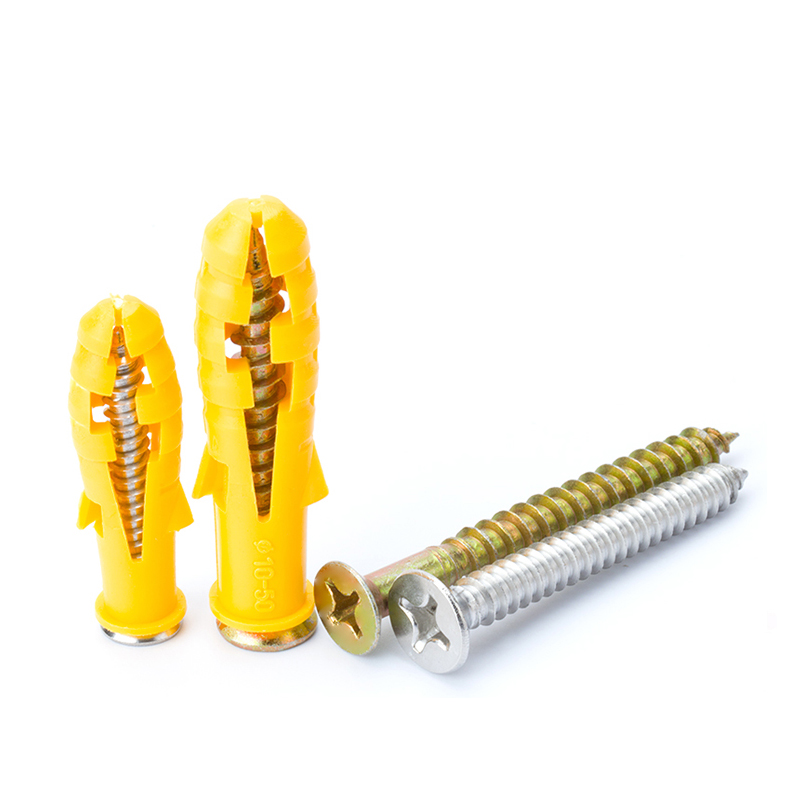
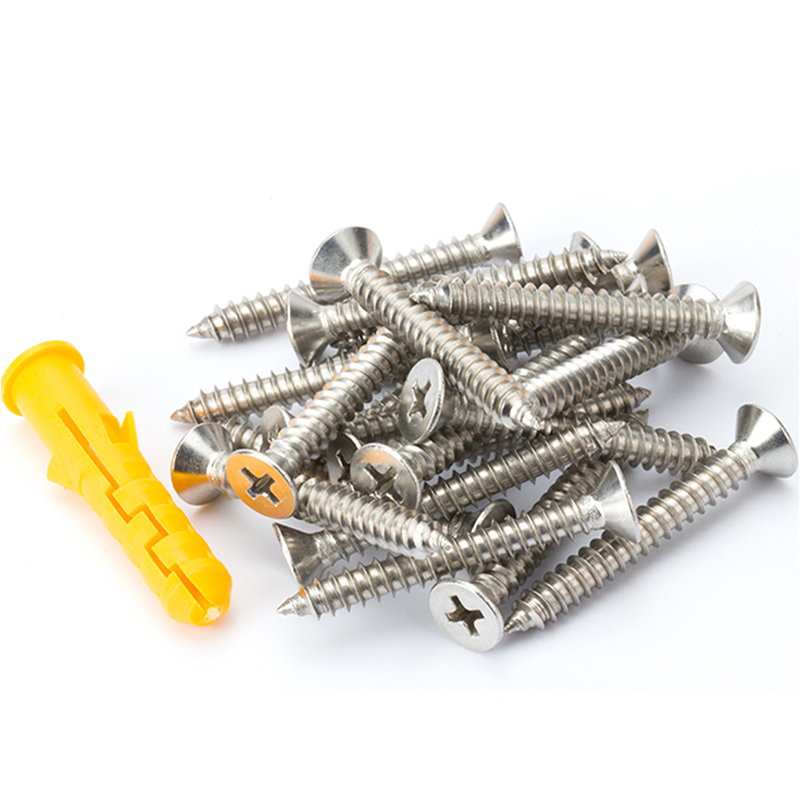
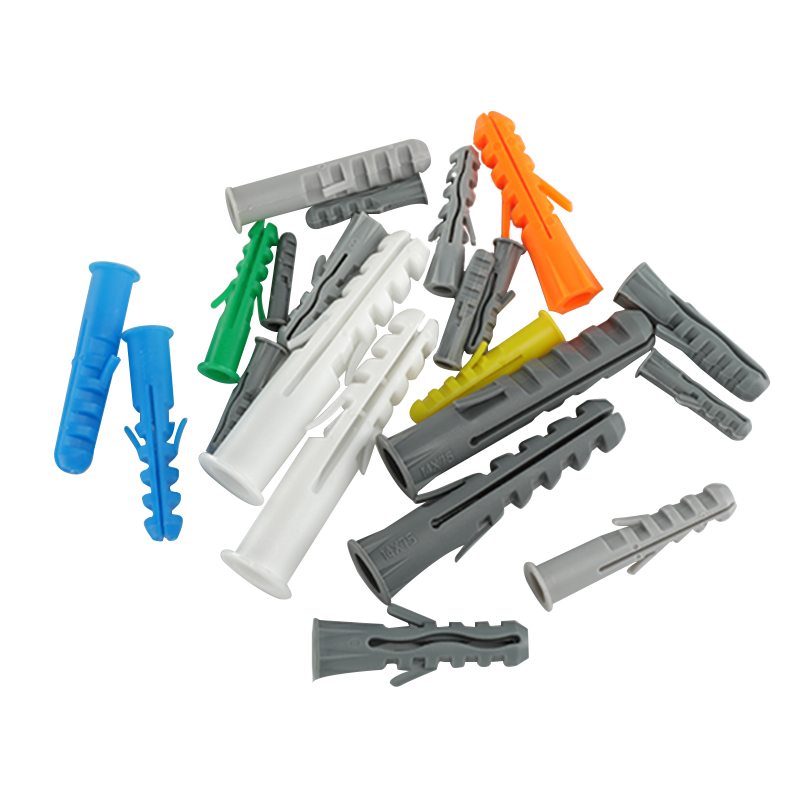
Images link to Niuli product pages (open in a new window). For dynamic shear on concrete, choose the nylon (PA6/PA66-family) plug; use PP only for light static loads.
Frequently Asked Questions
What is a high-toughness PA66 wall plug?
It is a plastic wall plug moulded from PA66, the engineering grade of nylon (polyamide, the PA6/PA66 family). “High toughness” means it resists impact and fatigue and keeps its shape under load, so it expands without splitting and holds its grip for years — unlike soft, brittle commodity plastics.
Why does a PE anchor fail under dynamic shear on concrete?
Polyethylene is two to four times weaker in tensile strength (~20–40 MPa vs ~80 MPa for PA66), creeps under sustained load, and embrittles when cold or fatigued. Under oscillating sideways force on hard concrete, it relaxes its grip and eventually shears inside the wall.
What does “mechanical memory” mean for a wall plug?
It is the nylon property of flexing to expand or collapse perfectly and then returning to shape, staying rigid enough not to shear. A PE plug, once displaced, stays deformed and loses contact pressure — it has no such memory.
Is creep really a problem in wall plugs?
Yes, for shear and vibration. Creep is the slow flow of plastic under constant load: a PE plug relaxes, the screw drifts, the fixture sags. PA66’s low creep keeps the radial pressure — and the friction that resists shear — essentially constant for years.
Can I use a PE or PP plug on a vibrating machine bracket?
Not safely. Vibration needs fatigue resistance and low creep, which PE and PP lack. Use a nylon (PA6/PA66-family) plug — e.g. Niuli’s nylon wall plugs — which are described by the maker as “resistant, not easy to break”.
Does drill size matter for shear holding?
Critically. The shear hold comes from radial pressure and friction against the hole wall. A hole even half a millimetre too wide removes that pressure; always drill to the exact plug diameter and clean out the dust.
How long should the wall plug be for concrete shear loads?
Use 50–60 mm for standard concrete and 80 mm or more where stability matters. Longer embedment gives more friction area to spread the shear load instead of concentrating it at one point.
Can I over-tighten a tough nylon plug?
Yes — over-torque can split even a tough plug or burst the concrete near an edge. Drive the screw until the fixture is fixed and snug, then stop. Toughness helps resist shear, not abuse.
What screw do I pair with a nylon wall plug?
A corrosion-resistant wood or chipboard screw (stainless or zinc-plated) of the correct gauge for the plug — typically M6/M8/M10 with 6/8/10 mm plugs. The screw should seat full thread without bottoming out in the hole.
Niuli sells wall plugs — which grade for dynamic shear?
For dynamic, shear-loaded concrete fixings use Niuli’s nylon wall plugs (high-toughness PA6/PA66-family, CE/RoHS/REACH/SGS). The PP wall plugs are for light, static, indoor loads. Questions? Contact Niuli engineers.
Conclusion
A high-toughness PA66 wall plug outperforms a PE anchor under dynamic shear on concrete because polyamide simply does what polyethylene cannot: it starts two to four times stronger (~80 MPa vs ~20–40 MPa), resists creep so the clamping force does not fade, stays tough through vibration and cold, and returns to shape instead of staying deformed. On hard concrete the plug takes the full cutting force of the screw, so that toughness is the difference between a fixing that lasts decades and one that silently shears inside the wall. For any vibrating, swinging or bumped fixture, specify a nylon (PA6/PA66-family) plug — Niuli’s nylon wall plugs are the high-toughness, “not-easy-to-break” choice — and reserve PP plugs for light static loads.
Fixing something that vibrates or swings on concrete? Use Niuli’s high-toughness nylon wall plugs.
Related:
Nickel-Plated Steel Terminals & 400°C Ovens ·
Flag Female Quick Disconnects & Meter Clearance ·
Hex vs Square Crimp & Battery Cable