


Wire Termination · DIN 46228
By Niuli Electric · Cable Accessory Engineering Team · 10 min read
Key Takeaways
- A DIN 46228 ferrule (bootlace ferrule) is a tinned-copper sleeve crimped onto the stripped conductor end so that every strand becomes one solid, gas-tight cylinder.
- In a screw-clamp terminal block the screw then presses the whole sleeve wall, not a few loose top strands — so the bundle cannot splay, every strand carries current, and vibration cannot loosen it.
- The standard forces this outcome through bore tolerance, copper wall thickness, a flared insulating collar, and a hexagonal/trapezoidal crimp profile that cold-welds the strands to the tube.
- Bare stranded wire under a screw simply splits: the screw loads only the top strands, the rest carry less, heat builds, and thermal cycling + vibration walk the joint loose.
- Niuli manufactures cable glands and connection hardware — not ferrules — but the same termination-reliability mindset applies to how a cable enters the enclosure.
Why Bare Stranded Wire Splits Under a Screw Clamp
A screw-clamp terminal block grips the conductor with a flat metal saddle driven down by one screw. When you insert a bare stranded conductor, the screw contacts only the strands at the top of the bundle. Those few top strands take almost the entire clamping force; the strands underneath are barely touched.
Two failure paths open immediately:
- Mechanical splaying. Because the load is uneven, the uncompressed strands squirt sideways out from under the saddle. Once a strand escapes, the connection looks “made” but has lost cross-section — and that stray strand can bridge to a neighbour and short.
- Thermal walk-out. The screw only bites a few strands, so contact resistance is high. Current heats the joint, the copper expands, the screw relaxes a fraction, the wire cools and contracts, and over thousands of cycles the saddle walks off the conductor entirely. The classic “loose terminal” that arcs and burns.
This is why IEC 61439 (low-voltage assemblies) and UL 508A (industrial control panels) effectively expect stranded conductors entering screw terminals to be ferruled. A ferrule is the mechanical fix that removes the uneven-load problem at its source.
What a DIN 46228 Ferrule Actually Is
A bootlace ferrule (also called a cord-end terminal or wire-end sleeve) is a short tube of tinned copper that you slide over the stripped end of a stranded wire, then crimp. The two common constructions are defined by DIN 46228:
- DIN 46228-1 — uninsulated ferrule. A bare tinned-copper tube. Used where the insulating collar would soften (high-temperature zones, confined spaces).
- DIN 46228-4 — insulated single ferrule. The same copper tube plus a colour-coded polypropylene collar. The collar funnels the strands in and gives a size cue. This is the workhorse of European-style control panels.
A twin ferrule (also DIN 46228-4) lets two same-gauge wires share one sleeve — handy for jumpers and signal loops. After crimping, the dressed end behaves electrically like a short solid wire: full cross-section, clean round profile, no loose strands.
How DIN 46228 Makes Strand Splitting Structurally Impossible
The standard does not just name a part — it specifies the geometry that forces a good result. Four features of a compliant DIN 46228 ferrule combine to stop splaying:
Bore tolerance captures every strand
The internal diameter of the sleeve is toleranced to the conductor it is listed for. When you insert a correctly sized wire, the strands fill the bore with no room to wander. Over-sized bores let strands double back; under-sized bores crush a few strands and leave the rest loose. The standard’s bore tolerance is what guarantees the strands end up parallel and contained, not fanned.
Copper wall thickness keeps the sleeve rigid
DIN 46228 sets a minimum wall thickness for the tinned-copper tube. After the hex crimp compresses it, the wall stays thick enough to remain a rigid cylinder. A rigid sleeve transfers the screw’s clamp load around its full circumference; a flimsy tube would just deform locally and pinch only part of the bundle — which is exactly the bare-wire failure mode.
The flared collar stops stray strands at insertion
On an insulated (DIN 46228-4) ferrule, the polypropylene collar has a flared funnel mouth. As you push the wire in, that funnel guides every strand into the tube and physically blocks a stray strand from standing proud. Stray strands are the number-one cause of nuisance shorts in terminal blocks, so the collar is doing real anti-splitting work before the crimp tool is even touched.
The crimp profile cold-welds strands to the wall
DIN-compliant ferrules are crimped with a hexagonal or trapezoidal die. The die squeezes the tube so the tinned copper displaces into the gaps between strands and, under pressure, cold-welds them to the sleeve wall. The result is one solid cylinder: the strands can no longer move relative to each other, so they cannot split when the screw clamps down. This is the single most important reason a ferruled end stays intact where a twisted bare end does not.
Bare Wire vs Ferruled End — Side by Side
| Behaviour in a screw-clamp terminal | Bare stranded wire | DIN 46228 ferrule |
|---|---|---|
| Where the screw load lands | A few top strands only | Whole sleeve circumference |
| Strand splaying / splitting | Common, immediate | Structurally prevented |
| Contact resistance | High, uneven | Low, full cross-section |
| Stray strand → short risk | Real | Collar contains strands |
| Survival under vibration / thermal cycling | Loosens, walks out | Cold-welded, stable |
| Re-insertion wear | Strands fray further | Sleeve survives repeated use |
Correct Crimp in 7 Steps
- Select the ferrule by cross-section. Match the mm² rating of the ferrule to the conductor (DIN 46228 colour coding helps: e.g. 0.5 mm² grey, 0.75 mm² white, 1.0 mm² red, 1.5 mm² black, 2.5 mm² grey, 4 mm² brown).
- Strip to the sleeve length. Remove just enough insulation that the exposed strands fill the tube and the insulation butts against the collar — no bare copper past the tube end.
- Don’t twist the strands. Let them lie parallel. Twisting pre-damages the wire and fights the crimp profile.
- Push the wire fully home. The collar funnel should sit flush against the cable jacket; strands must be flush with the tube mouth.
- Use a ratchet ferrule crimper. A ratchet tool locks until a full crimp cycle completes, preventing partial crimps that leave loose strands.
- Crimp at the marked station. Align the tube in the die position sized for that ferrule; squeeze until the ratchet releases.
- Inspect and insert. The crimp should be a clean hex/trapezoid with no split strands at either end. Insert the dressed end into the terminal and torque the screw to spec.
Seven Mistakes That Defeat the Ferrule
- Wrong size. A ferrule bore larger than the wire lets strands wander — splitting returns.
- Over-stripped wire. Bare copper past the tube end invites a stray strand and a short.
- Pre-twisting the conductor. Twisted strands crimp unevenly and trap air gaps.
- Partial crimp. A non-ratchet tool released early leaves strands unwelded.
- Crimping the collar. If the die lands on the plastic collar instead of the tube, the metal sleeve is untouched and the wire is still loose.
- Reusing a removed end. Once pulled from a terminal, the sleeve has work-hardened; re-crimping or re-inserting degrades it.
- Wrong standard for the environment. In high heat, an insulated (DIN 46228-4) collar can soften — use the uninsulated DIN 46228-1 there.
Niuli Cable Termination & Connection Hardware
Note on scope: Niuli is a cable-gland and connector manufacturer — we do not produce wire ferrules. The ferrule above is the right answer for dressing a stranded conductor end before it enters a terminal. The complementary problem — how the cable enters and is sealed at the enclosure — is where Niuli’s range fits. For a reliable panel you need both: ferruled conductors at the terminal, and a proper sealed entry at the box.
Niuli supplies the cable-side termination hardware below. Each is a real, in-stock line — click through for specs and drawings:
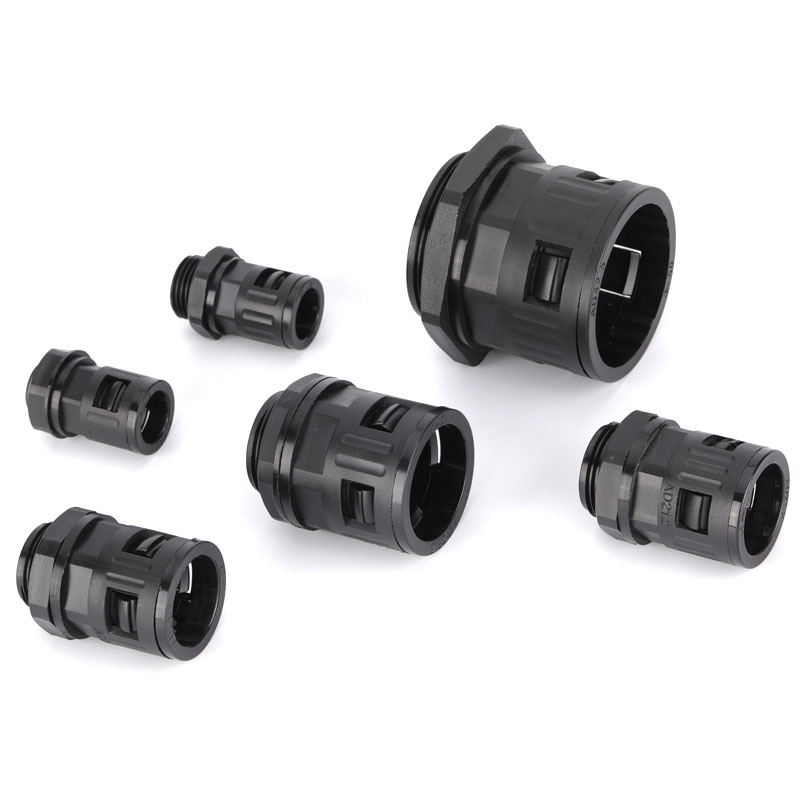
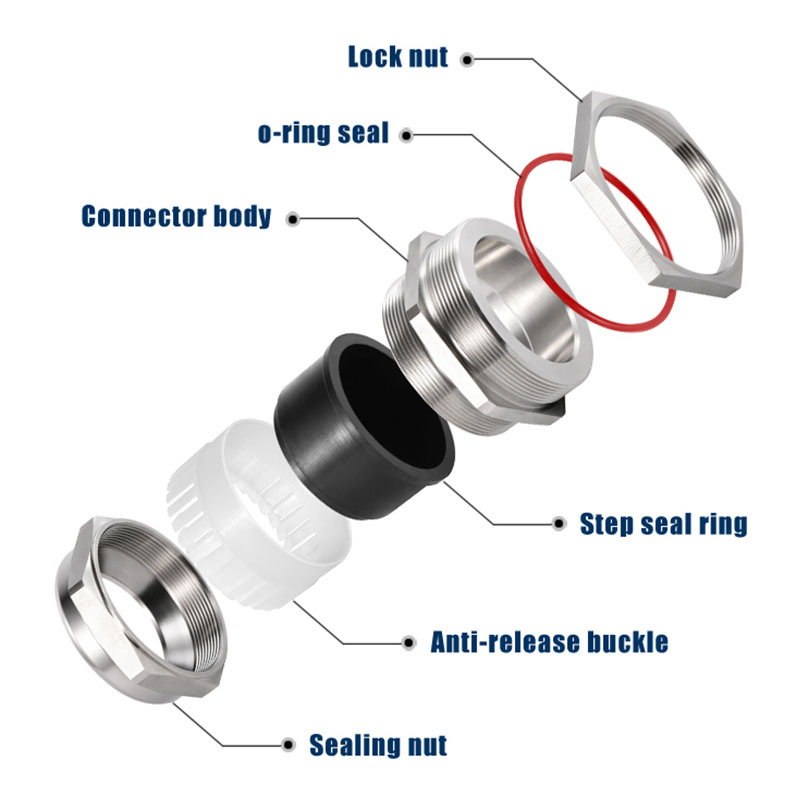
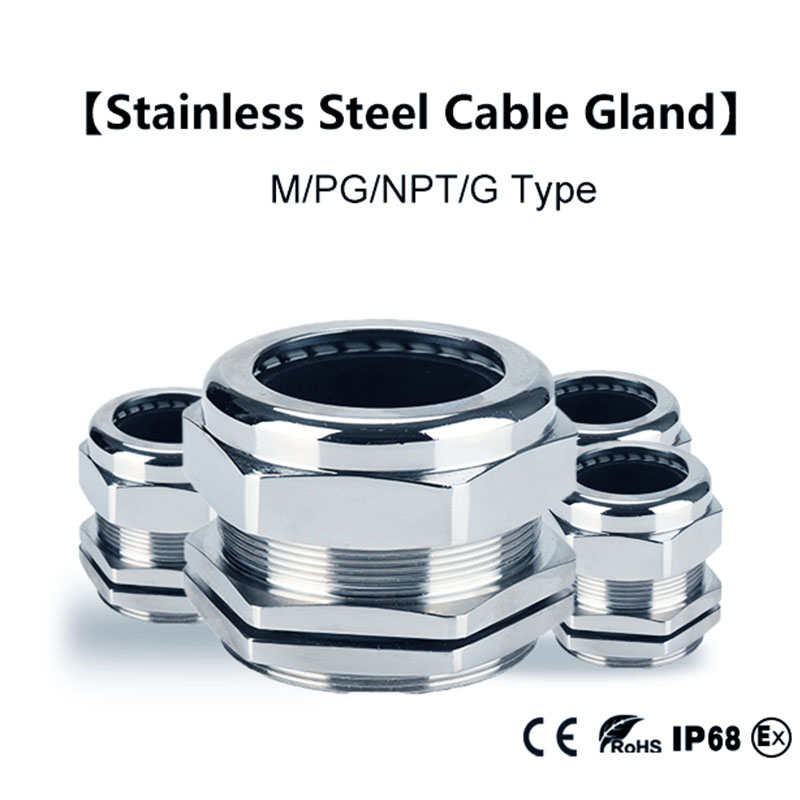
For the full line, see our cable gland range. If you need the conductor-end ferrules themselves, specify a DIN 46228-4 insulated ferrule from a ferrule specialist and pair it with a proper sealed cable entry from Niuli.
Frequently Asked Questions
What is a DIN 46228 ferrule?
It is a tinned-copper sleeve (DIN 46228-1 uninsulated, or -4 with an insulating collar) crimped onto the stripped end of a stranded wire so all strands become one solid cylinder. That dressed end then drops cleanly into a screw or spring terminal. See Niuli’s cable termination range for the enclosure-side hardware.
Why do bare stranded wires split under a screw terminal?
The screw saddle only contacts the top strands, so the rest splay sideways and carry little current. High resistance heats the joint, and thermal cycling plus vibration loosen it. A brass cable gland won’t fix the conductor end, but good enclosure sealing keeps the whole run reliable.
How does the ferrule mechanically stop strand splaying?
The hex crimp cold-welds every strand to the tinned-copper wall, turning the bundle into a single rigid cylinder. The screw then loads the whole sleeve, so no strand can escape sideways. Stainless glands solve the neighbouring problem of sealing that cable at the box.
What is the difference between DIN 46228-1 and -4?
Part 1 is the uninsulated tinned-copper tube for high-temperature or tight spaces; Part 4 adds a colour-coded polypropylene collar that funnels the strands in and marks the size. Both prevent splitting; -4 is the common panel-building choice. Browse the Niuli gland range for enclosure entry parts.
Does the insulating collar actually prevent stray strands?
Yes. Its flared funnel guides every strand into the tube and blocks a strand from standing proud at insertion — the usual cause of nuisance shorts. The collar is doing anti-splitting work before the crimp. For cable-side joins, Niuli’s corrugated tube connector plays a similar “no loose ends” role at the box.
What crimp profile does DIN 46228 expect?
A hexagonal or trapezoidal die that compresses the tube so the copper displaces into the strand gaps and cold-welds them. Use a ratchet ferrule crimper and the die station marked for the ferrule size. Contact Niuli if you want sizing help for your enclosures.
Can I reuse a ferruled end after pulling it out?
Not reliably. The sleeve work-hardens and the crimp deforms on removal, so re-inserting or re-crimping degrades the joint. Cut, re-strip and fit a fresh ferrule. Pair it with a sealed entry from the full gland range.
How do I size a ferrule to a conductor mm²?
Match the ferrule’s rated cross-section to the conductor; DIN 46228 colour coding makes this visual (e.g. 1.5 mm² = black, 2.5 mm² = grey, 4 mm² = brown). A correct bore is what keeps strands parallel and contained. Brass glands are sized the same way by cable diameter.
Do ferrules help in spring-clamp terminals too?
They do. A spring clamp also bites a bare bundle unevenly; a ferruled end gives it a clean, full-section surface to grip, improving retention and contact. The principle is the same as in a screw block. Niuli’s gland range covers the enclosure entry side.
Niuli doesn’t sell ferrules — what termination parts do you offer?
Niuli makes corrugated tube connectors, brass and stainless cable glands — the hardware that seals and clamps the cable at the enclosure. For the conductor-end ferrules, specify DIN 46228-4 from a ferrule specialist. Contact our engineers for a matched entry solution.
Conclusion
A DIN 46228 ferrule stops strand splitting by changing the geometry of the problem: it gathers every strand into a toleranced, tinned-copper sleeve and cold-welds them with a hex crimp, so a screw-clamp terminal loads the whole bundle instead of a few loose top strands. The result is lower resistance, no splaying, no stray strands, and a joint that survives vibration and thermal cycling. Specify DIN 46228-4 insulated ferrules for normal panels and DIN 46228-1 where heat would soften the collar — and pair them with a proper sealed cable entry.
Building a panel? Get the cable-entry side right too.
