

By Niuli Electric · Cable Accessory Engineering Team · 10 min read
Key Takeaways
- On heavy battery cables (2/0–4/0 AWG / 50–120 mm²) a hexagonal crimp die gives the lowest contact resistance because it squeezes the tubular copper lug evenly from six sides, consolidating every strand into one gas-tight mass.
- That uniform cold-forming leaves almost no air gaps, so the joint conducts like solid copper and stays cool even at hundreds of amps — whereas a square (4-point) die concentrates force at the corners and can leave diagonal voids that raise and destabilize resistance.
- Standards are clear: DIN 46235 (tubular lugs), DIN 46267 (connectors) and IEC 61238-1 specify the hex/diamond compression profile for power lugs; UL 486A-486B expects a proper crimp to add < 0.1 mΩ.
- A square crimp profile belongs to ferrule / terminal-block terminations, not open tubular battery lugs — using one there is a spec mismatch, not a “lower-resistance” option.
- Niuli manufactures cable glands, ties and conduit — the hardware that routes, bundles and seals the cable around the crimp — not crimp tools or lugs.
Why Contact Resistance Decides Battery-Cable Reliability
A starter or inverter cable can carry 200–600 A. Contact resistance follows Joule’s law — the heat at the joint is P = I² × R. A well-crimped 4/0 lug adds only a fraction of a milliohm, but a poor crimp with even 0.5 mΩ of extra resistance at 400 A dissipates 80 W right at the lug. That heat raises resistance further, the lug discolors, the insulation melts, and in the worst case the connection fails as a fire.
So the crimp is not just a mechanical clamp — it is the single point that determines whether the cable runs cool or becomes a hotspot. The die profile you choose is what sets that resistance.
What a Crimp Die Profile Actually Controls
A crimp die does not “glue” the wire in — it cold-forms the soft copper lug barrel around the conductor. The profile of the die decides how the metal flows:
- How evenly the six (or four) faces press the barrel wall.
- Whether strands consolidate into one homogeneous mass or stay as separate wires with air between them.
- Whether the joint is gas-tight — no oxygen/ moisture path that would oxidize the copper and creep resistance upward over time.
Two profiles dominate the debate for power lugs: hexagonal (six-sided) and square (four-sided). They are not interchangeable, and for heavy battery cables the difference shows up directly in the ohmmeter.
Hexagonal Crimp — Even Compression From Six Sides
A hex die has six flat faces. When it closes on a round tubular lug it presses the barrel wall at six points spaced 60° apart, and because the faces are flat the metal flows symmetrically toward the center. Every strand is squeezed into the same plane, the barrel collapses into a regular hexagon, and the conductor + lug become one solid, gas-tight cylinder.
This is why the profile is written into the standards: DIN 46235 for tubular cable lugs and DIN 46267 for bolted connectors both call for the hex (or the closely related DIN “diamond”) compression profile, and IEC 61238-1 validates it for mechanical and electrical performance. Field guides such as Haisstronica’s note the hex crimp is “seen as the most effective method for crimping copper power connectors,” deforming strands into a homogeneous mass with minimal air gaps.
Square Crimp — Right for Ferrules, Wrong for Battery Lugs
A square die has four flat faces 90° apart. It is the classic profile for wire ferrules and terminal-block ends, where the ferrule is meant to drop into a square or rectangular clamp opening — there the four-sided shape actually maximizes face contact with the block.
But a heavy battery lug is a round open barrel, not a ferrule. Press four flat faces onto a round tube and the metal only fully contacts near the four corners; the diagonals between corners stay proud and can trap voids. Force is concentrated at the corners instead of spread around the circumference, so strand consolidation is less uniform and the resulting resistance is higher and more variable lug-to-lug. In short: a square die is a spec mismatch on a battery lug, not a lower-resistance alternative.
Hex vs Square: Contact-Resistance Comparison
| Factor | Hexagonal die | Square die |
|---|---|---|
| Compression points | 6 (even, 60° apart) | 4 (corners only) |
| Strand consolidation | Homogeneous mass, minimal air gaps | Less uniform, possible diagonal voids |
| Gas-tightness | Yes (standard cold-weld) | Weaker, corner-centric |
| Contact resistance | Lowest, most stable | Higher, more variable |
| Standard for power lugs | DIN 46235 / 46267, IEC 61238-1 | Not specified for tubular lugs |
| Best use | Heavy battery / power lugs (Cu & Al) | Ferrules, terminal-block ends |
Why Hex Wins for Heavy Battery Cables
- Full-circumference contact. Six faces load the whole barrel, so every strand carries its share of current — no “top strands only” overload.
- No corner voids. A round barrel matches a six-sided squeeze far better than a four-sided one, so there is nowhere for trapped air (and future oxidation) to hide.
- Repeatable by spec. Because the profile is standardized, any calibrated hex die of the right code produces the same gas-tight result — critical when you are building a battery bank of dozens of identical lugs.
- Works for copper and aluminum. Heavy EV and storage cables are increasingly aluminum; hex compression is the accepted profile for both metals.
Step-by-Step: Hex-Crimp a 2/0–4/0 Battery Lug
- Match the die. Pick the hex die code for your lug size and cable gauge (e.g. ~13 mm for 3/0–4/0 AWG). Mismatched dies are the #1 cause of high resistance.
- Strip to barrel depth. Remove insulation to the exact metal-barrel length — too short leaves strands short of the stop, too long exposes bare copper.
- Insert fully. Push the conductor until it reaches the barrel stop; no strand may protrude and no copper should show between insulation and barrel.
- Clean surfaces. Wipe oxidation, oil or flux off strands and the barrel interior — contamination adds milliohms.
- Center the die. Place the hex die over the marked crimp zone, perpendicular to the barrel.
- Complete the full stroke. Pump the hydraulic tool until the pressure-relief valve releases (or the ratchet clicks fully). A partial stroke = a loose, high-resistance crimp.
- Inspect & torque. Look for a uniform hex impression with no cracks; then torque the lug to the terminal/busbar spec — under-torquing at the post recreates the same hotspot you just avoided.
Common Crimp Mistakes That Raise Resistance
- Partial stroke — the single most common error; always finish the full cycle.
- Wrong die code — even one size off leaves gaps or over-compresses and cracks strands.
- Over-crimping — cracks the barrel and severs strands, creating failure points.
- Dirty or oxidized contact — oil, flux or verdigris between strands inflates resistance.
- No post-torque — the crimp is only half the joint; the termination screw must also be torqued.
- Skipping the ohm test — a micro-ohmmeter reading confirms < 0.1 mΩ added; skip it and you ship guesswork.
- Using a square die on a round lug — corner voids, as above.
Niuli Cable Management & Termination Hardware
Niuli is a cable tie and cable gland manufacturer — we do not make crimping tools or battery lugs. But the crimped lug is only one link in a reliable battery-cable run: the cable still has to enter the enclosure, stay bundled, and be protected. That is where our hardware fits, and where a low-resistance crimp is kept low-resistance over the life of the install.
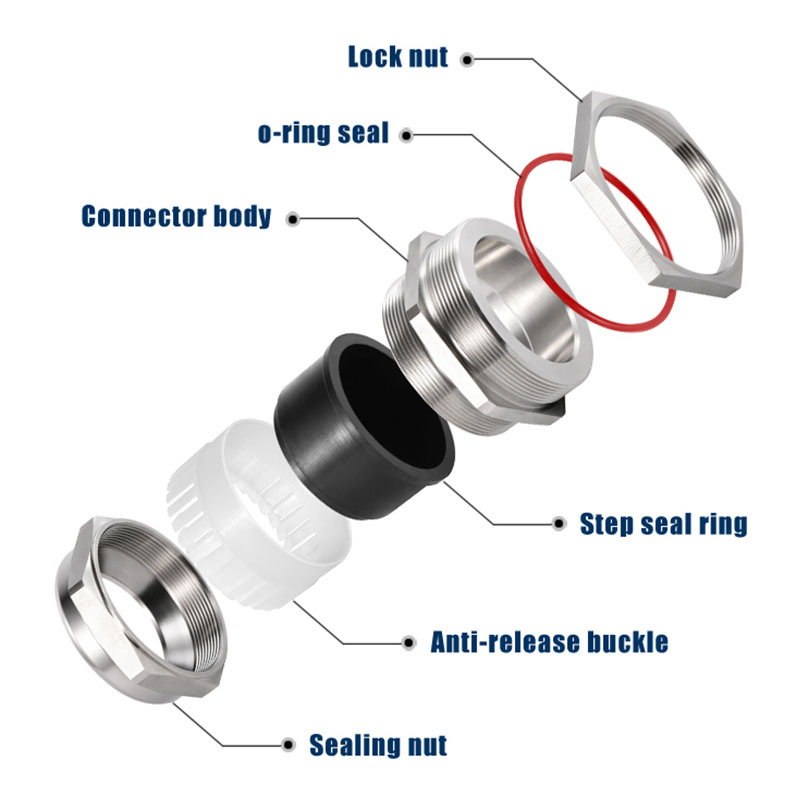
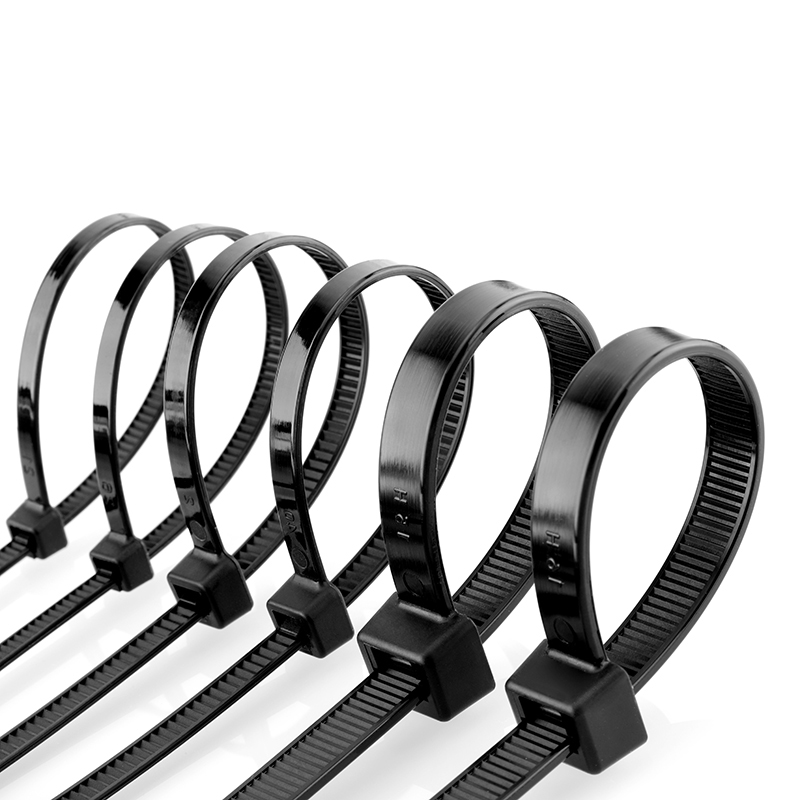
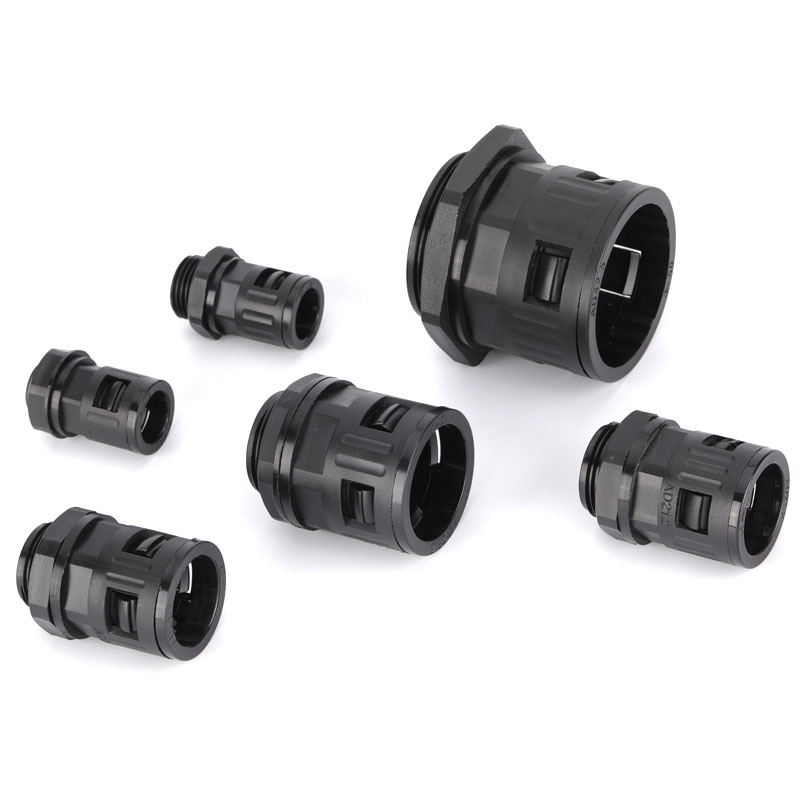
Images link to Niuli product pages (open in a new window). For the crimped joint itself, pair a hex die with a calibrated hydraulic tool and verify with a micro-ohmmeter.
Frequently Asked Questions
What exactly is a hexagonal crimp die?
A hex die is a six-faced crimp profile that squeezes a round tubular lug evenly from six directions 60° apart. The result is a regular hexagon where the copper barrel and all conductor strands are cold-formed into one gas-tight mass — the profile specified by DIN 46235 for power lugs.
Is a square crimp ever better than a hex crimp?
Yes — but only for the job it was designed for. A square (4-point) profile fits ferrules and terminal-block openings, where four flat faces meet the block’s square clamp. On an open tubular battery lug it is a mismatch. For bundling those battery cables afterward, anti-UV cable ties keep the run tidy without touching the crimp.
What contact resistance should a good battery-cable crimp show?
A proper crimp should add less than 0.1 mΩ of resistance beyond the conductor itself (UL 486A-486B guidance for copper connections). Measure across the joint with a micro-ohmmeter; a hex crimp on a clean tubular lug typically lands in that range and stays there. Our brass cable glands handle the enclosure entry once the lug is made.
Does a hex crimp work for aluminum battery cables too?
Yes. Hexagonal compression is the accepted profile for both copper and aluminum power conductors; the key is using the correct die code and an antioxidant compound for Al. Heavy EV and storage banks increasingly use Al, and stainless steel glands suit corrosive environments where those cables terminate.
What gauge counts as a “heavy” battery cable?
Anything from about 2/0 AWG (70 mm²) up to 4/0 AWG (120 mm²) and beyond, carrying hundreds of amps in starters, inverters, solar banks and EV packs. These are the sizes where die-profile choice most directly affects heat and voltage drop — see the full cable hardware range.
Hex vs indent crimp — which for open-barrel lugs?
Use hex for open tubular battery lugs. Indent crimps (4- or 6-point dimples) are for closed-barrel OEM terminals where the dimple holds the wire inside a sealed barrel. Putting an indent on a tubular lug under-crimps it; route the finished cable with a corrugated tube connector for protection.
Can I use a square die on a tubular copper lug?
You can physically force it, but you should not — a round barrel and four flat faces leave diagonal voids and corner-concentrated force, raising and destabilizing resistance. If you only have a square die, get the correct hex die before building a battery bank. Questions on hardware? Contact Niuli engineers.
What standard specifies the hex profile for lugs?
DIN 46235 (tubular lugs) and DIN 46267 (connectors) specify the hex/diamond compression profile; IEC 61238-1 validates mechanical and electrical performance; UL 486A-486B covers the pull and resistance tests. Any lug you buy will name its approved die code on the barrel. Browse the full cable gland range for enclosure hardware.
How do I verify a low-resistance crimp in the field?
Use a low-resistance (micro-) ohmmeter (Kelvin method) across the crimped joint; a good hex crimp reads < 0.1 mΩ above the conductor. Pair that with a pull test to spec and a visual check for a uniform hex impression and no cracks. Our cable-management hardware handles the rest of the run.
Niuli doesn’t sell crimp tools — what battery-cable hardware do you offer?
We supply the hardware around the crimp: cable glands for enclosure entry, anti-UV ties for bundling, and corrugated conduit for routing/protection. For the crimp itself, use a calibrated hex hydraulic tool and verify with a micro-ohmmeter — or talk to our engineers about specifying your cable run.
Conclusion
For heavy battery cables, the hexagonal crimp die delivers the lowest contact resistance — six-sided, even compression consolidates every strand into a gas-tight mass with minimal air gaps, exactly as DIN 46235/46267 and IEC 61238-1 require. A square die belongs to ferrule and terminal-block work, not round tubular lugs, where its corner-concentrated force leaves the voids that raise resistance. Crimp with the right hex die, finish the full stroke, torque the post, and verify with a micro-ohmmeter — then let Niuli’s glands, ties and conduit keep the run sealed and organized.
Specifying a battery-cable run? Get Niuli’s enclosure-entry, bundling & protection hardware.
Related:
Cut-Off Tool Tension & XLPE Jacket Stress Cracking ·
DIN 46228 Ferrule & Strand Splitting ·
PG to Metric Adapter IP Failure