


A Station Is Only as Good as the Joints It Makes
Choosing a soldering station is less about the brand and more about matching wattage, temperature control, and tip geometry to the work in front of you. For wire-terminal and electronics soldering, the wrong station means cold joints, damaged components, or slow throughput. This guide covers the decisions that matter — power, ESD safety, tip choice, alloy, and the defects that a good station prevents — so you can buy once and solder well.

Station Types You Will Meet
- Fixed-temperature irons — cheap, no control; fine for occasional hobby use, poor for production or sensitive parts.
- Temperature-controlled stations — the standard for workshops; hold a set tip temperature with closed-loop feedback.
- Hot-air / rework stations — for shrink tubing and surface-mount work; pair with a soldering iron for complete bench coverage.
- RF/induction stations — fast recovery for high-throughput lines; higher cost, highest performance.
What to Look For: 7 Key Criteria
1. Wattage and Heating Recovery
A station’s wattage tells you how fast it recovers temperature after touching a cold joint, not how hot the tip gets. For fine electronics, 40–60 W with good thermal recovery is plenty. For soldering thick wire lugs, ground planes, or shielded cable, you want 60–90 W or more so the tip does not cool the instant it contacts metal.
Rule of thumb: thin signal wire and PCB pads need low thermal mass and fast, gentle heat; heavy solder ring connectors and stranded leads need a chunky tip and high recovery. Undersize the wattage and you will hold the iron longer, which scorches the work and risks lifting pads.
2. Temperature Control and Calibration
A fixed-temperature iron drifts and overheats delicate parts. Choose a station with closed-loop control that holds the set temperature at the tip, not just at the element. Look for a digital readout and, for production, periodic calibration. A typical working range of 200–450 °C covers most lead-free and tin-lead work; set it as low as the alloy allows to protect components and extend tip life.
3. ESD Safety for Sensitive Components
If you solder anywhere near MOSFETs, ICs, or communication modules, ESD protection is not optional. A proper station has a grounded iron, an antistatic design, and a wrist-strap point. Skipping ESD control can kill a component that passes test today and fails in the field next month. For general wire joining on robust terminals, ESD matters less, but a grounded station is still the safer default in any workshop and costs little more.
4. Tip Selection and Care
The tip shapes the heat transfer. Common choices:
- Chisel (flat) — best all-rounder for wire and terminals; large contact area, fast heat.
- Conical / pointed — fine PCB work, but poor heat transfer for wire.
- Bevel / hoof — good for drag-soldering and filling joints.
- Blade / screwdriver — broad contact for heavy lugs and ground tabs.
Keep tips tinned (a thin solder coat) when idle; a bare, oxidized tip will not wet and you will fight cold joints all day. Wipe on a damp sponge or brass wool, re-tin, and never file the plating — filing exposes the core and ends the tip’s life. Replace tips when the plating wears through rather than cranking the temperature to compensate.
5. Alloy: Tin-Lead vs Lead-Free
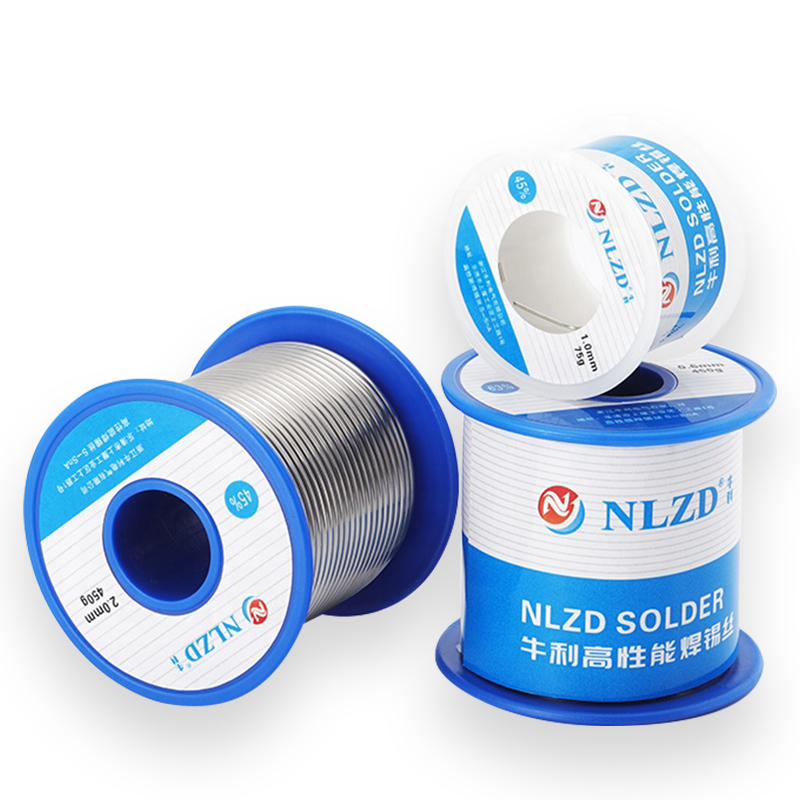
Your station must suit the solder you use. Tin-lead solder wire flows around 183–190 °C, is forgiving, and makes shiny, reliable joints — still common in repair and some industrial work where RoHS does not apply. Lead-free solder wire melts higher (about 217 °C for SAC alloys) and needs a hotter, well-controlled iron plus good flux. Lead-free is the default for new commercial and export products.
Match tip temperature to the alloy: tin-lead around 330–350 °C, lead-free around 350–400 °C, adjusted for joint size. Too hot shortens tip life; too cold gives dull, grainy, weak joints. Use the correct flux-core diameter for the wire — too thick a core floods the joint, too thin leaves it dry.
6. Flux, Fume Extraction, and Safety
Flux cleans the surfaces so solder wets properly; rosin or no-clean cores suit most work, while water-soluble flux needs thorough cleaning. Solder fumes contain flux vapors that should not be breathed — a bench fume extractor or arm is good practice for any regular soldering. Work in a ventilated area and keep a damp sponge and brass wool within reach.
7. Throughput and Ergonomics
For bench assembly lines, a station with a sturdy base, clear readout, and quick tip swap beats a fancy one that wastes seconds per joint. If you also shrink tubing, keep heat shrink tubing and a hot air source nearby so a soldered, insulated joint is one step, not three trips.
Common Solder Defects and Causes
| Defect | Cause | Fix |
|---|---|---|
| Cold joint (dull, grainy) | Tip too cool / moved early | Raise temp, hold longer |
| Icicle / spike | Pulled away too fast | Withdraw after flow |
| Bridging | Too much solder | Less wire, wick excess |
| Oxidized / poor wet | Dirty tip or surface | Clean, re-tin, add flux |
Bench Setup Checklist
- Stable surface with the station base secured.
- Wrist strap connected to the grounded point.
- Tip chosen and tinned before power on.
- Solder spool (correct alloy) and flux within reach.
- Fume extractor positioned over the work.
- Brass wool and damp sponge for tip care.
Troubleshooting the Station
If the tip will not hold temperature, check the element and the tip seating first — a loose tip loses heat fast. If joints look frosty on lead-free, nudge the set point up 10–20 °C and confirm good flux. Erratic behavior after a drop usually means a damaged heating element or sensor; replace rather than tolerate, because inconsistent heat is the root of most field failures.
Choosing Wire Gauge and Core
Match the solder wire diameter to the joint: 0.6–0.8 mm for electronics, 1.0–1.2 mm for terminal and wire work. The flux-core percentage (typically 1.5%–3.0%) sets how cleanly it flows; too little and joints are dry, too much and you get residue. For solder ring connectors, the pre-fluxed design carries its own flux, so a plain cored wire is usually enough.
Health, Safety, and Lead
Lead-free solder removes the lead-exposure concern but still produces flux fumes; extraction matters regardless of alloy. Wash hands after handling leaded solder, never eat at the bench, and keep solder off surfaces where it can be ingested. A clean, organized bench also reduces the chance of mixing leaded and lead-free solder, which would compromise RoHS compliance on export products. These basics protect operators on daily soldering far more than any premium tip does.
Acceptance Criteria for a Good Joint
A qualified joint is shiny (for tin-lead) or smoothly matte (for lead-free), shows complete wetting of both surfaces, and has no spikes, bridges, or bare spots. It withstands a gentle mechanical check without cracking. Write these criteria into the work instruction so “good” means the same thing to every inspector, not a matter of opinion.
Training New Operators
Soldering looks easy and is easy to do badly. A short checklist — clean, tin, heat the joint not the solder, feed solder to the joint, withdraw after flow — plus a supervised first dozen joints, turns a novice into someone whose work passes inspection. Keep a reference card at the bench and review a cross-sectioned sample weekly so standards do not drift on a busy line.
A One-Line Reference for the Bench
Most soldering problems come from forgetting one variable under pressure. A single laminated card at the bench removes that risk: alloy, tip temperature, tip type, and flux. For tin-lead that might read “Sn63/Pb37, 330–350 °C, chisel 2.4 mm, rosin core”; for lead-free “SAC305, 350–400 °C, chisel 2.4 mm, no-clean core”. Anyone picking up the iron sets the station from the card, not from memory, and the result is consistent whether it is Monday morning or Friday night.
Review the card whenever the alloy changes or a new operator starts, and retire tips on schedule rather than when they fail mid-job. Small, boring discipline like this is what separates a bench that passes every audit from one that produces the occasional mysterious field return. Keep the card next to the extractor so the two safety and quality habits travel together.
Frequently Asked Questions
Can one station do lead-free and tin-lead?
Yes, if it reaches the higher lead-free temperature and you keep separate tips/tinning for each alloy to avoid cross-contamination.
Why is my tip blackening?
Over-temperature and lack of tinning. Lower the set point and keep a fresh solder coat on the working face.
Do I need fume extraction?
For occasional use, ventilation is enough; for daily work, an extractor protects your health.
Equip your bench with the right station and solder
Niuli Electric supplies temperature-controlled soldering stations, tin-lead and lead-free solder wire, and solder ring connectors for wire termination. Tell us your alloy and duty cycle and we will spec the set.
