



- Single-wall heat shrink is a insulation sleeve; it does not seal out water on its own.
- Dual-wall (adhesive-lined) shrink has an inner melt adhesive that flows and seals the joint against moisture.
- Underground and buried joints must use dual-wall to stop water wicking along the conductor.
- Single-wall is fine for indoor strain relief, bundling and colour coding, not for wet locations.
- Shrink ratio and a correct, clean application decide whether either type actually protects.
A buried cable joint is permanently wet. The only question is whether water reaches the conductor, and once it does, it travels along the cable inside the insulation for metres. Heat-shrink tubing is the usual joint cover, but “heat shrink” is not one product: a single-wall tube insulates, while a dual-wall adhesive-lined tube seals. For underground service the difference is the difference between a joint that lasts and one that fails in a season.
What Heat Shrink Must Do Underground
Below grade the joint sees standing water, damp soil, thermal cycling and mechanical load. The cover must (1) electrically insulate, (2) mechanically protect, and (3) environmentally seal so water cannot enter and wick along the conductor to dry cable elsewhere. Single-wall tubing does the first two poorly-to-moderately and the third not at all; dual-wall does all three.
Single-Wall: Insulation Only
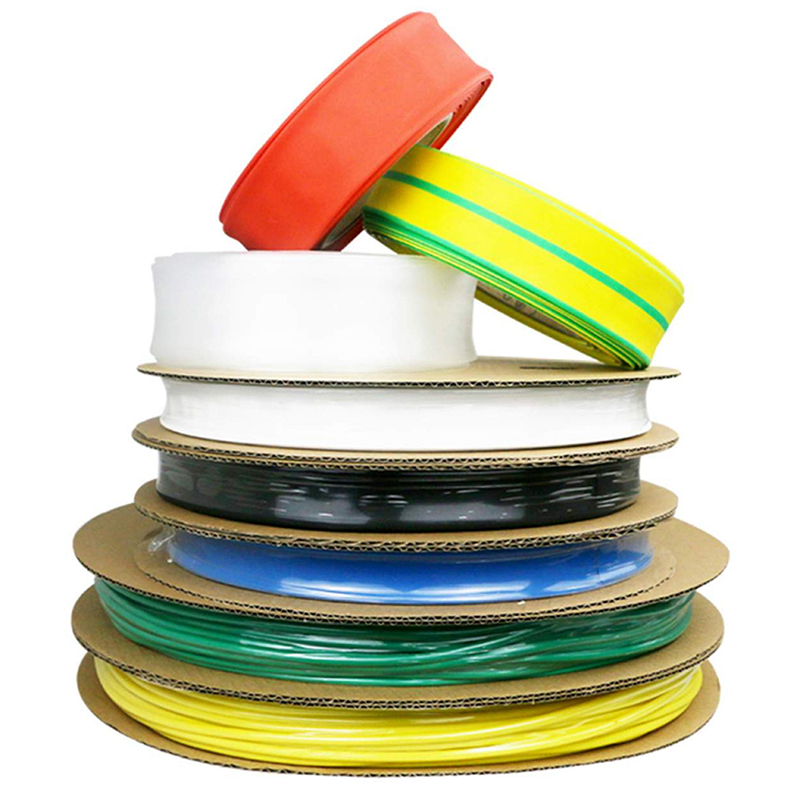
Single-wall polyolefin shrink is a uniform wall that shrinks tightly to the underlying shape. It is an excellent insulator and is cheap, flexible and available in many colours for coding. But it is a close-fitting sleeve with no filler, so water at the ends simply runs in underneath it and tracks along the conductor. Use it indoors for insulation, strain relief and bundling — never as the environmental seal on a buried joint.
Dual-Wall: Adhesive-Lined Seal
Dual-wall (sometimes “adhesive-lined” or “with hot-melt”) has a second inner layer of thermoplastic adhesive. When heated, the tube shrinks and the inner adhesive melts and flows, filling every void between the tube and the irregular joint — conductor, insulation step, pigtail. On cooling it sets into a moisture-proof bond at both ends. That bond is what stops water entry and wicking. For underground and outdoor joints it is the required type.
Comparison Table
| Property | Single-Wall | Dual-Wall (adhesive) |
|---|---|---|
| Water seal | None (sleeve only) | Yes, melts and seals ends |
| Best location | Indoor dry | Buried, outdoor, wet |
| Cost | Low | Mid |
| Wall thickness | Thin uniform | Thick + adhesive |
| Colour coding | Excellent range | Limited but available |
| Underground use | No | Yes |
Table 1. Single-wall vs dual-wall heat shrink.
Stopping Water Wicking
The failure mode underground is wicking: water enters at a poorly sealed end and climbs inside the insulation by capillary action, corroding the conductor far from the joint. Dual-wall stops it at the ends by bonding to the cable jacket and conductor. Single-wall leaves that path open. Always specify dual-wall with adhesive for any joint that can see water, and extend it well past the joint onto sound cable at both ends.
Getting the Seal Right
- Clean and degrease the cable; adhesive will not bond to a dirty or wet surface.
- Use a hot air tool at the rated temperature; a flame can scorch and leave voids.
- Shrink from the centre out to push trapped air to the ends.
- Confirm the adhesive has flowed (a thin bead at the ends) before cooling.
Shrink Ratio and Fit
Shrink ratio (e.g. 2:1, 3:1) is how much the tube closes. Pick a ratio that comfortably covers the largest part of the joint (the conductor bundle) and still grips the smallest (the single cable). A 3:1 dual-wall is forgiving on irregular buried joints. Niuli supplies heat shrink tube and kits in both single- and dual-wall, including thicker environmental grades.
Worked Example: A Buried Joint
A buried cable joint is made with single-wall shrink in a first attempt; a few months later the far cable corrodes from water that entered at the unsealed end and wicked along the conductor. Redone with dual-wall adhesive-lined shrink, the joint is cleaned, shrunk from the centre out with hot air, and the adhesive flows to seal both ends onto sound jacket. A season later there is no wicking and no corrosion. The tube type, not the colour, decided the outcome.
Niuli Heat Shrink Range
Niuli Electric supplies single-wall heat shrink for indoor insulation and dual-wall adhesive-lined for buried and outdoor joints, plus kits with the sizes and ratios for field jointing. Match the wall type to the location: dry inside, adhesive-lined outside.
Quick Selection Checklist
- Single-wall heat shrink is a insulation sleeve; it does not seal out water on its own.
- Dual-wall (adhesive-lined) shrink has an inner melt adhesive that flows and seals the joint against moisture.
- Underground and buried joints must use dual-wall to stop water wicking along the conductor.
- Single-wall is fine for indoor strain relief, bundling and colour coding, not for wet locations.
- Shrink ratio and a correct, clean application decide whether either type actually protects.
Frequently Asked Questions
Does single-wall heat shrink seal water?
No — it is a close sleeve with no adhesive, so water enters at the ends and wicks along the conductor.
What makes dual-wall seal?
An inner adhesive layer melts on heating and flows into every void, bonding to the cable at both ends.
Can I use single-wall underground?
Not as the seal; use dual-wall adhesive-lined for any wet or buried joint.
Why does water wick along the cable?
Capillary action carries it inside the insulation from a leaky end to dry cable metres away.
What shrink ratio should I use?
3:1 dual-wall is forgiving on irregular buried joints; size to cover the bundle and grip the single cable.
How do I apply it correctly?
Clean and degrease, heat with hot air from centre out, confirm adhesive has flowed at the ends.
Is a flame ok to shrink it?
Avoid a direct flame; it scorches the tube and leaves voids. Use a hot air tool.
Are Niuli tubes available in colours?
Single-wall has a wide colour range for coding; dual-wall is more limited but available.
Does dual-wall insulate too?
Yes, it insulates and seals; it is the full-protection choice for wet locations.
How long should the tube extend past the joint?
Well onto sound cable at both ends so the seal sits on undamaged jacket.
Related Resources
Use dual-wall adhesive-lined shrink for buried joints — send the cable sizes and we will kit the ratios.
