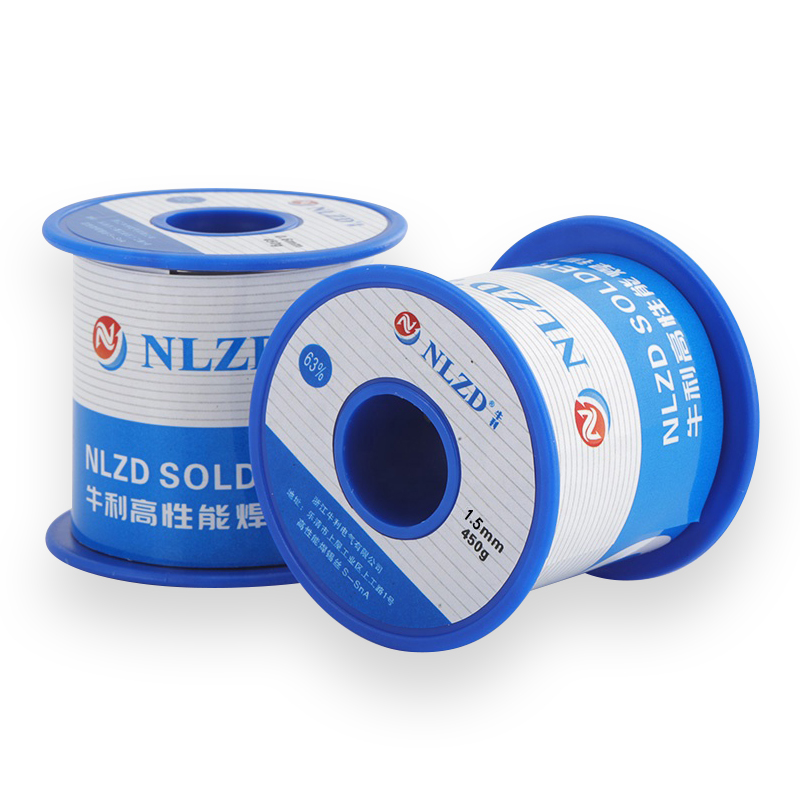
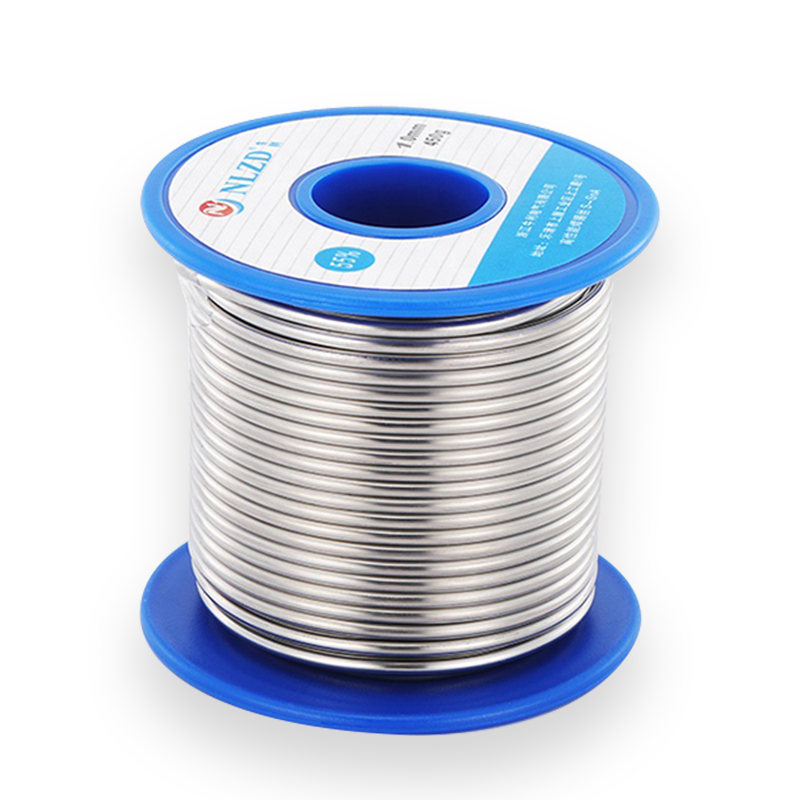
1.Material: Tin(Sn) and Lead(Pb)
2.Features: Smooth solder joint, low melting point, strong welding, no cleaning, less smoke and peculiar smell, accurate tin and lead content, stable quality.
3.Diameter: 0.5mm, 0.6mm, 0.8mm, 1mm, 1.2mm, 1.6mm, 2mm, 3mm, other diameter can be customized.
4.Weight: for one roll, 10 grams, 50 grams, 100 grams, 450 grams, 500 grams, 900 grams, 1 kg, other weight can be customized.
5.Certificates: CE
Niuli Tin Lead Solder Wire is available in multiple Sn/Pb alloy ratios for electronics, electrical repair and industrial soldering applications. Common options include Sn63Pb37, Sn60Pb40, Sn50Pb50, Sn40Pb60 and other customized compositions.
Tin content directly affects soldering performance, melting range and material cost. We control the Sn/Pb ratio according to the ordered specification. COA and composition test reports can be provided according to order requirements, helping customers verify that the supplied solder matches the specified alloy.
Sn63Pb37
Eutectic alloy with a melting point of 183°C, widely used for electronics soldering, hand soldering and repair.
Sn60Pb40
Common general-purpose electronics solder with a melting range of approximately 183–190°C.
Sn50Pb50 / Sn40Pb60
Lower-tin options suitable for selected electrical, hardware and industrial soldering applications where different melting and cost requirements apply.
The correct alloy should be selected according to soldering temperature, joint requirement, application and local regulations.
Flux-cored versions are available with different formulations according to application requirements. Options may include no-clean, rosin-based or other activated flux systems, depending on the product specification. Flux type and flux percentage affect wetting speed, residue, smoke and soldering behavior, so they should be selected together with the alloy.
Stable wire diameter and even winding help improve solder feeding during both hand soldering and automated processes. Standard diameters range from 0.5 mm to 3.0 mm, with customized sizes and spool weights available.
Suitable for:
Depending on product and customer requirements, documents can include: COA · Alloy Composition Report · SDS · Flux Specification
Lead-containing solder should only be used where permitted by applicable local regulations and application requirements.
| Model No. | Alloy Content | Melting point | Working Temperature | Density | Main Usage | ||
| ℃ | ℉ | ℃ | ℉ | gram/cm3 | |||
| NLSW-63% | 63% Sn 37% Pb | 183 | 361 | 240-260 | 464-500 | 8.4 | Suitable for wave soldering, in electronics industry, telecommunications, aviation, etc. |
| NLSW-60% | 60% Sn 40% Pb | 183-190 | 361-374 | 240-260 | 464-500 | 8.5 | |
| NLSW-60A | 55% Sn 45% Pb | 183-203 | 361-397 | 240-260 | 464-500 | 8.7 | |
| NLSW-1# | 50% Sn 50% Pb | 183-215 | 361-419 | 280-320 | 536-608 | 8.9 | Suitable for welding of general electric products, household appliance, electric instrument, automobile electric appliance, general hardware electric appliance, etc. |
| NLSW-2# | 45% Sn 55% Pb | 183-221 | 361-430 | 280-330 | 536-626 | 9.1 | |
| NLSW-3# | 40% Sn 60% Pb | 185-235 | 365-455 | 300-340 | 572-644 | 9.3 | |
| NLSW-4# | 35% Sn 65% Pb | 185-245 | 365-473 | 300-350 | 572-662 | 9.5 | Suitable for welding of general electronic and electric appliances, general machinery, machine, automobile water tank, lamp bulb, cable joint and so on. |
| NLSW-5# | 30% Sn 70% Pb | 185-255 | 365-491 | 330-360 | 626-680 | 9.7 | |
| NLSW-6# | 25% Sn 75% Pb | 185-267 | 365-513 | 330-370 | 626-698 | 9.9 | |
| NLSW-7# | 20% Sn 80% Pb | 185-279 | 365-534 | 350-380 | 662-716 | 10.2 | |
| NLSW-8# | 15% Sn 85% Pb | 270-290 | 518-554 | 350-390 | 662-734 | 10.4 | / |
| NLSW-9# | 10% Sn 90% Pb | 270-305 | 518-581 | 350-400 | 662-752 | 10.6 | / |
| NLSW-10# | 5% Sn 95% Pb | 300-330 | 572-626 | 370-420 | 698-788 | 10.9 | / |
| Buyer Problem | Niuli Solution |
|---|---|
| Tin content lower than quoted | Composition verification + COA |
| Poor solder wetting | Suitable flux formulation |
| Excessive residue / spatter | Flux options matched to process |
| Inconsistent wire feeding | Controlled diameter & winding |
| Difficult alloy selection | Application-based alloy recommendation |
| Regulatory uncertainty | Confirm destination and application before supply |
Sn63Pb37 is a eutectic alloy that melts at 183°C, while Sn60Pb40 melts over approximately 183–190°C.
Sn63Pb37 is widely used for hand soldering and electronics repair because of its sharp melting transition and good solderability.
No-clean, rosin-based and other flux-core options can be supplied according to soldering requirements.
Yes. COA and alloy composition reports can be provided according to order requirements.
Standard wire diameters range from 0.5 mm to 3.0 mm, with customized diameters available.
Tin-lead solder is generally not suitable for unrestricted RoHS applications because of its intentional lead content. Application-specific exemptions should be checked separately.
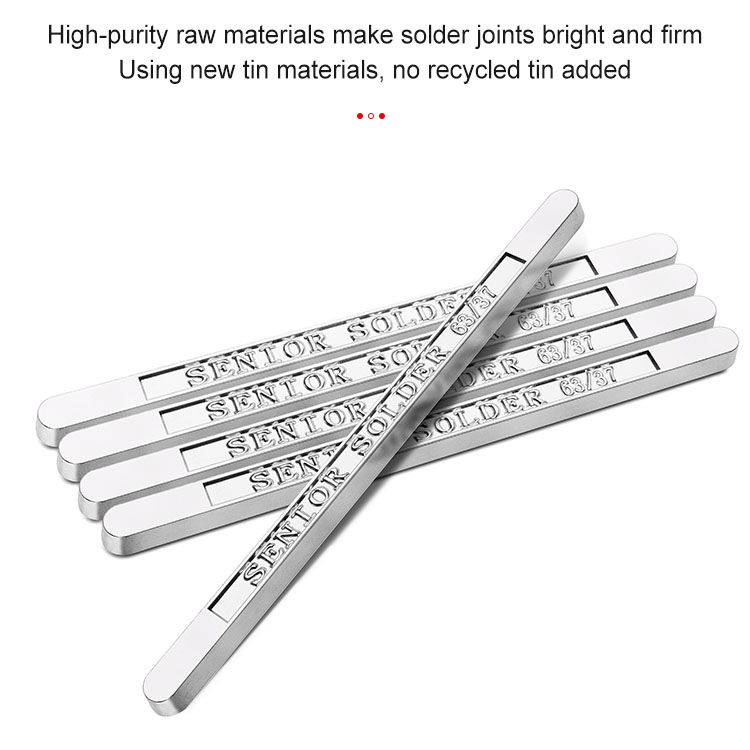
Composition-controlled Sn/Pb solder bars available from Sn63Pb37 to high-lead alloys for wave soldering, dip soldering, tinning and industrial solder-pot applications.
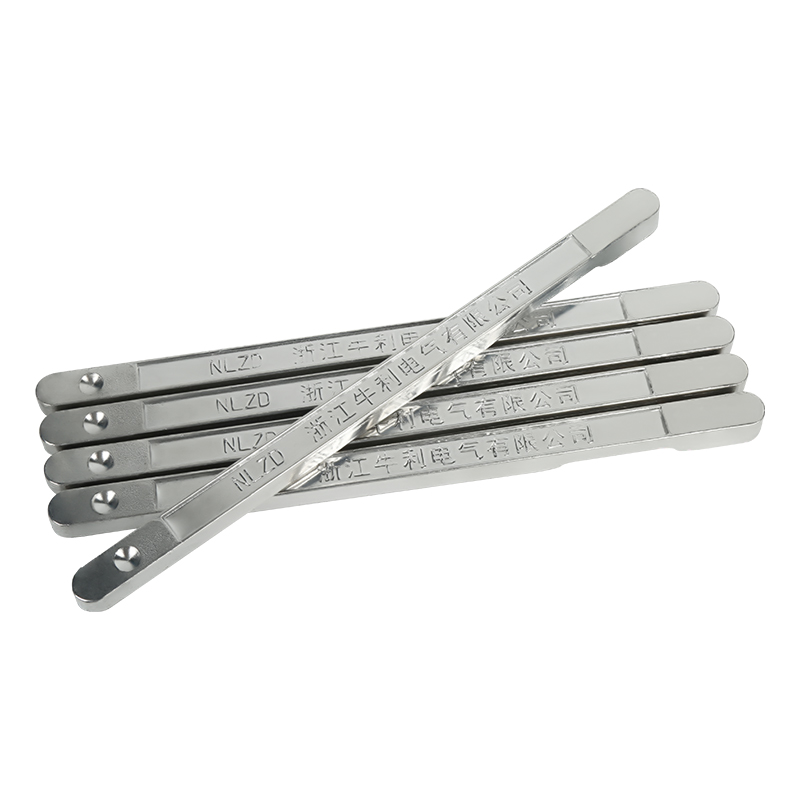
High-purity lead-free solder bars available in SAC, SnCu and other tin-based alloys for wave soldering, selective soldering and solder-pot applications.
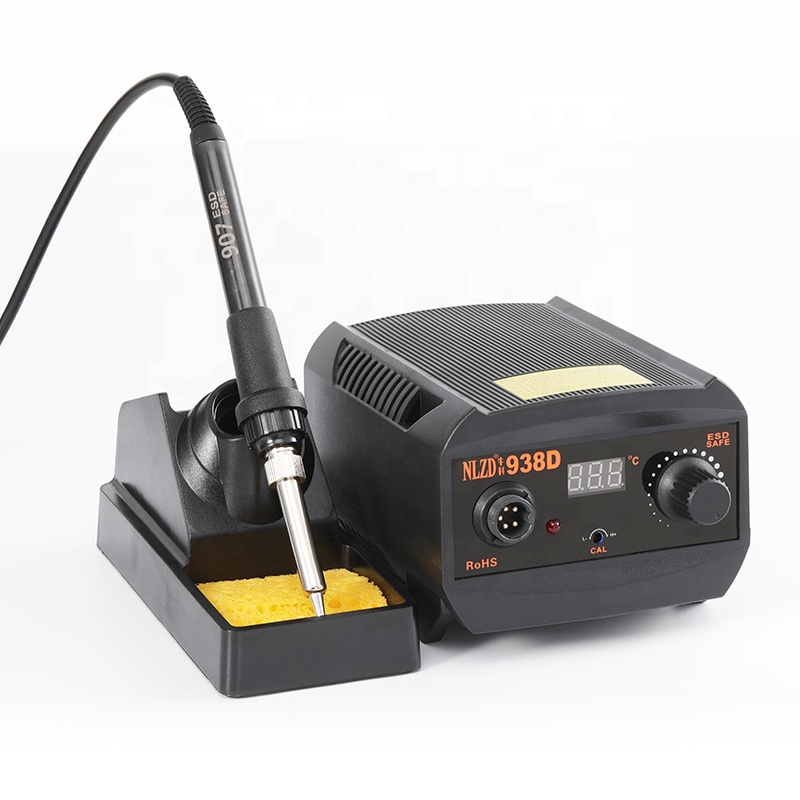
Features: 200-500 ℃ temperature adjustment, fast temperature recovery, anti-static, sufficient variable voltage full power, safety control
Products: power station, iron stand, clean sponge, soldering iron handle.
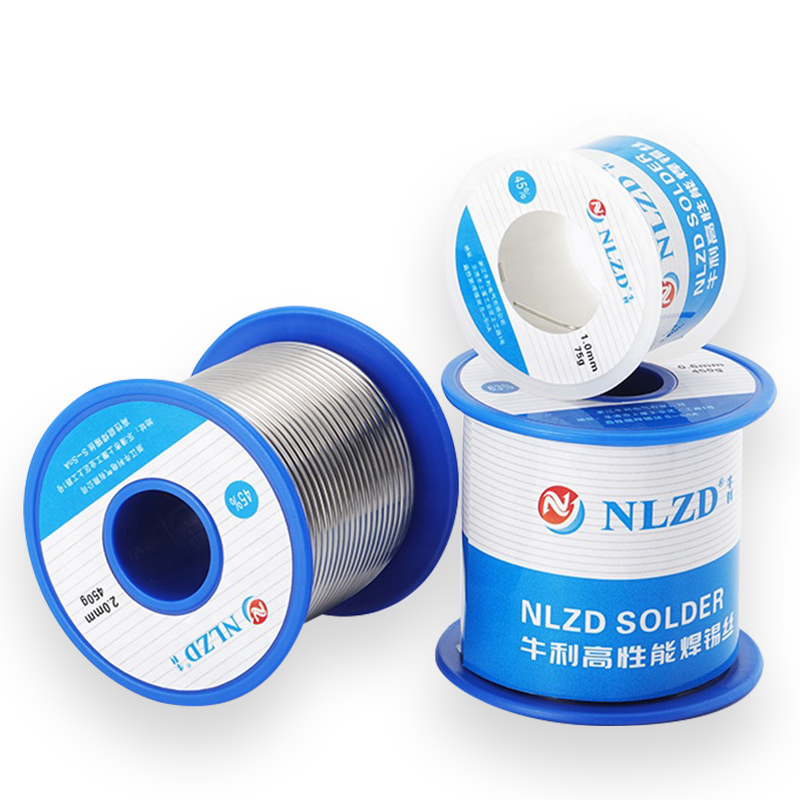
Flux-cored tin-lead solder wire available in Sn63Pb37, Sn60Pb40 and other Sn/Pb ratios, with controlled alloy composition, consistent wire diameter and customized flux options for reliable soldering.
 Optimized by Seraphinite Accelerator