


- A crimp is a cold-welded, gas-tight compression joint; solder is a molten filler that cools around the strands.
- Crimped joints show higher, more repeatable pull-out force and survive vibration far better than solder.
- Solder wicks up the strands (wicking) and becomes a hard point that fractures under flex; crimps stay flexible at the barrel.
- Oxidation: a proper crimp seals the strands from air; a poor solder joint leaves flux and voids that corrode.
- Use crimp for field wiring, vehicles, panels and vibration; reserve solder for static PCB assembly.
Choosing between a crimped and a soldered terminal is one of the most debated calls in wiring, and the answer is not “newer is better” — it is “which failure mode are you avoiding”. Both methods join a stranded conductor to a ring, fork, spade or pin terminal. They differ in how the metal bonds, how it behaves under pull and shake, and how it ages in air. The data is consistent: for field wiring and anything that moves, crimp wins; for static board assembly, solder is still practical.
What Each Process Actually Does
A crimp deforms the terminal barrel around the stripped conductor with a calibrated die, squeezing the metal of the barrel and the wire into one another until they cold-weld at a microscopic level. No filler is added. Solder melts a tin/lead or lead-free alloy, which flows by capillary action into the stranded bundle and freezes around the strands. Solder is a filler that bridges the gaps; it does not fuse copper to the terminal the way a crimp does.
Crimp: Cold Weld by Compression
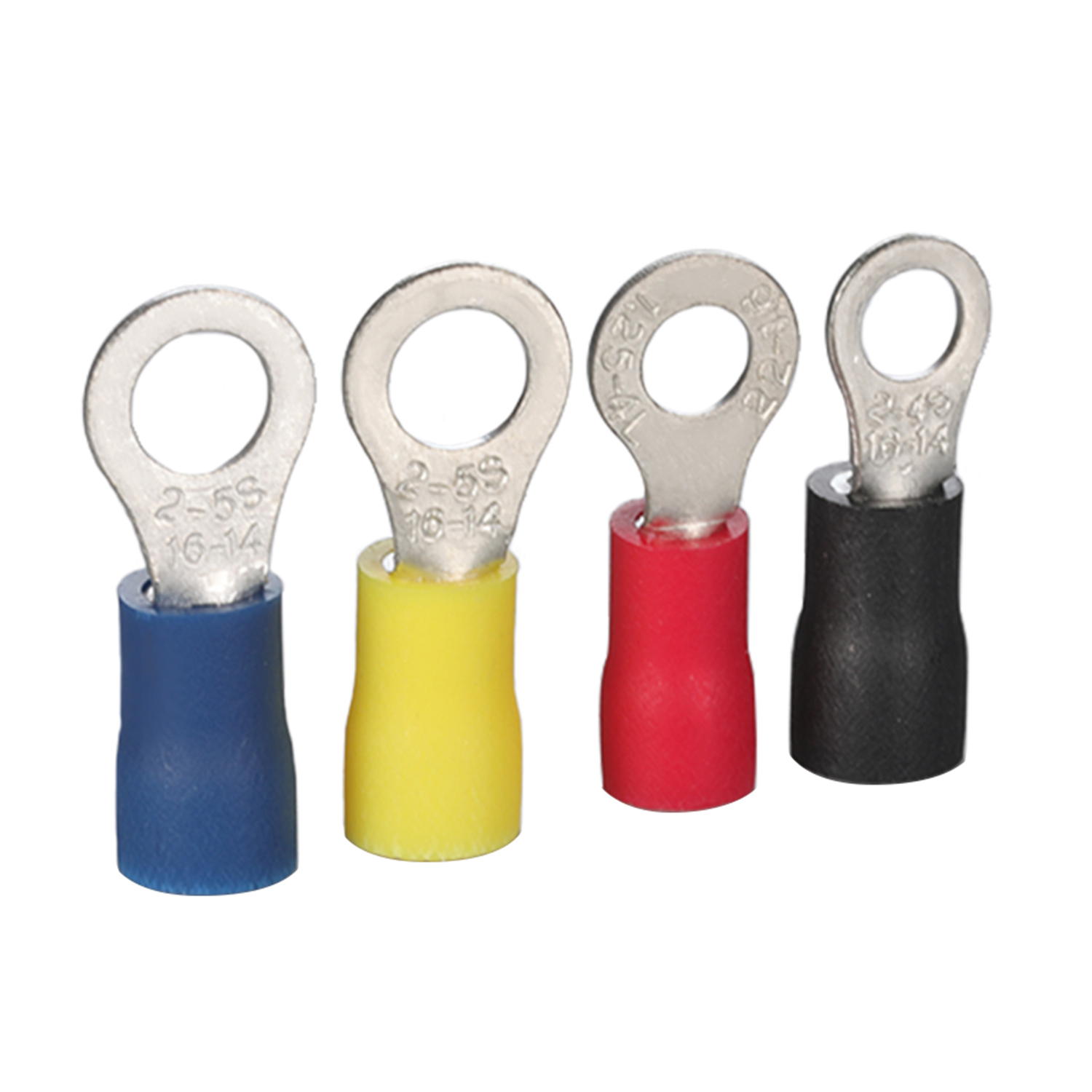
Because a crimp compresses the whole bundle into a solid, gas-tight mass, there are no voids for air or moisture to enter. The joint is mechanically continuous and, done with the correct die and strip length, it is extremely strong and repeatable. A good crimp also keeps the conductor flexible right up to the barrel, so the wire can bend without a brittle transition. crimping-tools is what makes the joint consistent — pliers or unmatched dies produce weak, high-resistance crimps.
Solder: Filler, Not Fusion
Solder flows into the strands and locks them, but it is a soft metal compared with copper. Under a steady pull it can creep; under repeated flex it work-hardens and cracks. The classic hazard is “wicking”: molten solder climbs up the insulation-stripped strands beyond the barrel, creating a stiff section. That stiff section becomes a stress concentrator that snaps after a few thousand vibration cycles. Solder also needs clean surfaces and correct flux; leftover flux is corrosive if not cleaned.
Pull-Out Strength and Test Data
| Joint type | Typical pull-out behaviour | Consistency |
|---|---|---|
| Proper crimp (matched die) | High; barrel fails before wire | Excellent, tool-dependent |
| Solder joint | Moderate; creeps under load | Variable, skill-dependent |
| Poor crimp (wrong die) | Low; barrel slips off | Poor |
| Solder + wicking | Fractures at stiff point | Poor under flex |
Table 1. Pull-out is highest and most repeatable with a correct crimp.
In pull-out testing a correctly executed crimp typically reaches or exceeds the conductor break strength, and the failure occurs in the wire, not the joint. Solder joints rarely reach that; they separate at lower force and the result depends heavily on the operator. For a buyer specifying terminals, “crimp” plus “correct tool and die” is the repeatable, inspectable specification.
Vibration, Creep and Wicking
Vibration is where solder loses. The soft solder creeps and the wicking hard point fractures; a crimp, being a solid cold weld, rides out vibration without a brittle transition. This is why automotive, rail, aerospace and panel wiring are almost universally crimped. Solder is kept for static printed-circuit assembly where the board does not flex in service.
Oxidation Resistance
Oxidation lives in the voids. A gas-tight crimp excludes air, so the strands do not tarnish and contact resistance stays low for years. A soldered joint that trapped flux or left a void will corrode from the inside, and the corrosion raises resistance and heat. Tinned copper strand and tin-plated terminals (non-insulated-terminals) add a barrier that slows oxidation further, which is why marine and outdoor wiring uses tinned conductors with crimped, tinned terminals.
When to Crimp, When to Solder
- Crimp: field wiring, panels, vehicles, trains, machinery, anywhere there is vibration or pull risk.
- Crimp: high-reliability and inspectable joints where pull-out must be certified.
- Solder: static PCB assembly and prototype boards that will not be flexed in service.
- Solder: very fine wire or joints where a crimp barrel is too bulky to fit.
Tooling Matters
A crimp is only as good as the die. Use the terminal manufacturer’s matched crimp profile (hexagonal, trapezoidal or square) at the rated pressure; inspect with a pull test or a cross-section cut. Niuli supplies ring-terminals, fork-terminals, hook-terminals, cord-end-terminals and male-and-female-quick-disconnects terminals plus crimping-tools sized to the same profiles, so the barrel and die are designed together.
Worked Example: A Vehicle Wiring Harness
A machinery wiring harness that flexes with vibration is the textbook case for crimp over solder. The build crimps tinned copper ring and fork terminals to tinned stranded wire with the matched die, then fits ferrules at every spring-cage block. Pull-out is verified on a sample and the joints pass; a year later, on a similar board that was soldered, the wicking point has fractured. The crimped harness is intact. The only solder used is on the static control PCB, where the board never flexes in service — exactly the right split of the two methods.
Niuli Terminal Range
Niuli Electric manufactures the full terminal family in copper (tin-plated) and non-insulated versions, with insulated and solder-ring-connector options for fast field work. Pair them with the matched crimp tool for a joint that passes pull-out and resists oxidation in harsh service.
Quick Selection Checklist
- A crimp is a cold-welded, gas-tight compression joint; solder is a molten filler that cools around the strands.
- Crimped joints show higher, more repeatable pull-out force and survive vibration far better than solder.
- Solder wicks up the strands (wicking) and becomes a hard point that fractures under flex; crimps stay flexible at the barrel.
- Oxidation: a proper crimp seals the strands from air; a poor solder joint leaves flux and voids that corrode.
- Use crimp for field wiring, vehicles, panels and vibration; reserve solder for static PCB assembly.
Frequently Asked Questions
Is a crimp stronger than solder?
A correct crimp is stronger and more repeatable; pull-out usually meets or exceeds the wire break strength, while solder joints separate at lower, variable force.
Why is solder banned in many vehicle wirings?
Solder creeps and work-hardens; wicking creates a brittle point that fractures under vibration. Crimps survive vibration.
Can I crimp and then solder for safety?
No — soldering over a crimp traps flux and adds a brittle layer; pick one method. Crimp is preferred for field wiring.
Does a crimp resist oxidation?
Yes, a gas-tight crimp excludes air from the strands, so corrosion is slow; tinned terminals add further protection.
What is the right crimp tool?
The die matched to the terminal profile and wire size, at rated pressure. Inspect by pull test or cross-section.
Are Niuli terminals tin-plated?
Copper terminals are tin-plated for oxidation resistance; non-insulated and insulated versions are available.
When is solder still acceptable?
Static PCB assembly and fine wire where a crimp barrel will not fit and the board will not flex.
What pull-out should I specify?
Specify the conductor break strength as the target and verify with a pull test on the installed crimp.
Do quick-disconnects use crimp?
Yes, male/female quick-disconnects are crimped to the conductor like other terminals.
How do I avoid a poor crimp?
Correct strip length, matched die, full compression, and a pull or section check on a sample.
Related Resources
Match your terminals to the correct crimp die — send us the wire size and we will size the barrel and tool.
