


Published by the Niuli Electric engineering team · Cable Management · 9 min read
Cable ties slip under vibration because the locking pawl micro-creeps, the nylon strap relaxes, and smooth surfaces let the bundle slide. Stop it by choosing high-grip ties, applying correct tension with a tensioning tool, anchoring bundles to push-mount or screw-mount bases, and inspecting on a fixed schedule.
Walk into any engine bay, panel shop, or production floor and you will see the same failure: a bundle of cables that was tight last month now hangs loose, the zip tie still locked but visibly slipped down the harness. In high-vibration environments this is not a cosmetic problem. A shifted bundle rubs against moving parts, chafes its own insulation, and can short a circuit or drop a sensor. This guide explains why cable ties slip under vibration and the practical steps that keep them put.
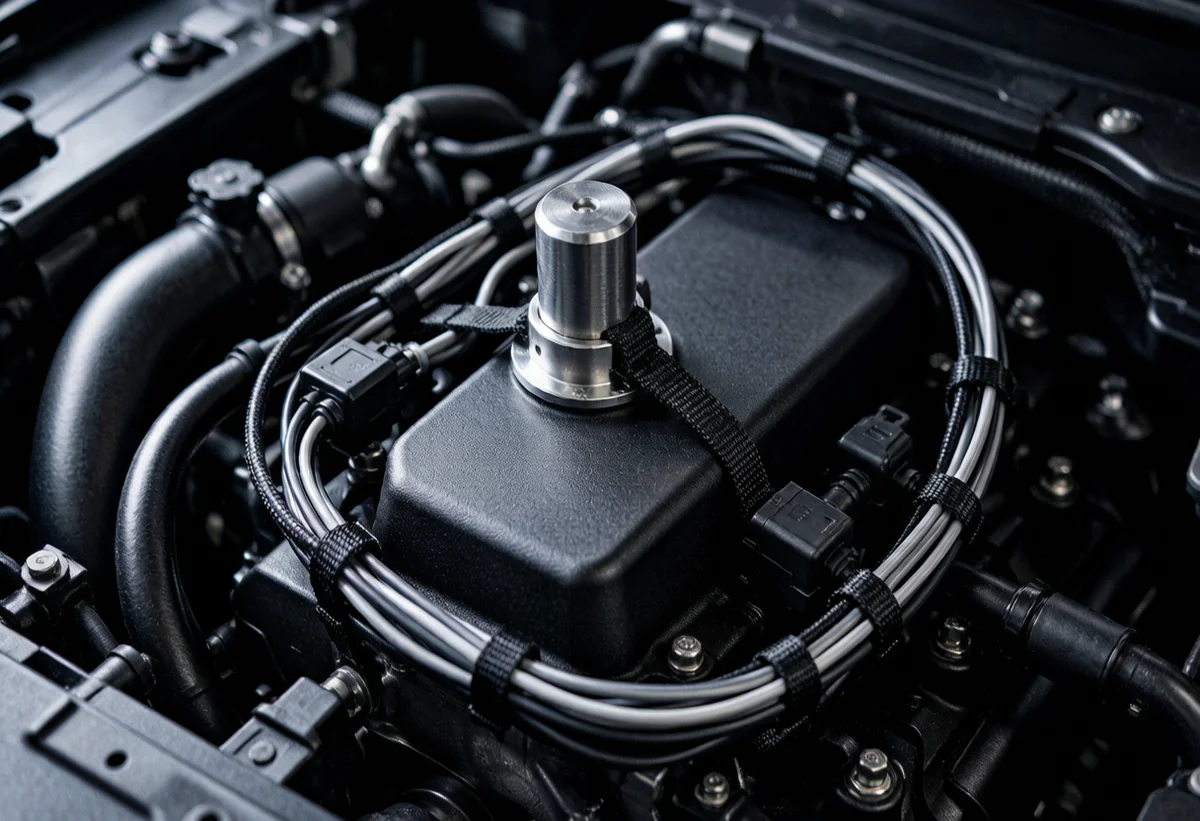
Anchoring the bundle to a fixed base is the single most effective way to stop slip under vibration.
Why Cable Ties Slip Under Vibration
A cable tie feels permanent once the pawl clicks, but vibration attacks the joint in three quiet ways:
- Pawl micro-creep. The toothed pawl and strap teeth are a ratchet, not a weld. Every vibration cycle nudges the pawl a fraction of a tooth. Over thousands of cycles the tie relaxes and the loop grows.
- Strap relaxation. Nylon 66 is viscoelastic. Under constant tension it slowly creeps, so a tie installed at 80% tension can drop to 60% within weeks, especially near heat sources.
- Surface slip. A smooth bundle against a smooth panel has almost no friction. Vibration makes the whole loop migrate along the cable or down a rail until it finds a stop.
Together, these explain why a tie that feels tight on the bench can be loose on a running machine. The fix is to remove one of the three failure modes. Related: why nylon cable ties break during installation.
Which Tie Type Resists Vibration Best
Not all ties defend against slip equally. The table below ranks common types for high-vibration duty.
| Tie type | Vibration resistance | Best use |
|---|---|---|
| Double-side teeth | High | Bundles that must not creep |
| Push-mount | High | Anchor to a panel, zero surface slip |
| Screw-mount base + standard tie | High | Fixed point on metal frames |
| HVAC / heat-stabilized | Medium-High | Engine bays, hot vibrating ducts |
| Standard self-locking | Low | Static, low-vibration only |
For a deeper read on material behavior, see what heat-stabilized cable ties are and why they hold tension near heat.
Step-by-Step: How to Prevent Slipping
1. Choose a high-grip tie
Start with double-side-teeth or push-mount ties. Double-side teeth add a second row of engagement so the pawl cannot walk backward, and push-mount ties remove surface slip entirely by clipping into a fixed base.
2. Anchor to a fixed point
Wherever possible, route the bundle to a screw-mount or push-mount base on the frame. A tie anchored to the structure cannot migrate, no matter how much the machine shakes.
3. Apply correct tension with a tool
Hand-pulling over- or under-tensions. Use a tensioning tool so every tie lands in the same tight band. Correct tension seats the pawl fully without stretching the strap into early creep.
4. Use the double-loop method on critical runs
For safety-critical bundles, wrap the tie twice before locking. The second loop spreads load and gives a backup if the first loosens.
5. Add spacing, not just count
Place ties every 150–300 mm along a long bundle rather than one giant loop. Even spacing stops whipping and local slack.
6. Inspect on a schedule
In vibrating systems, check ties monthly for loss of tension, cracks, or discoloration, and replace any that have relaxed before failure occurs.
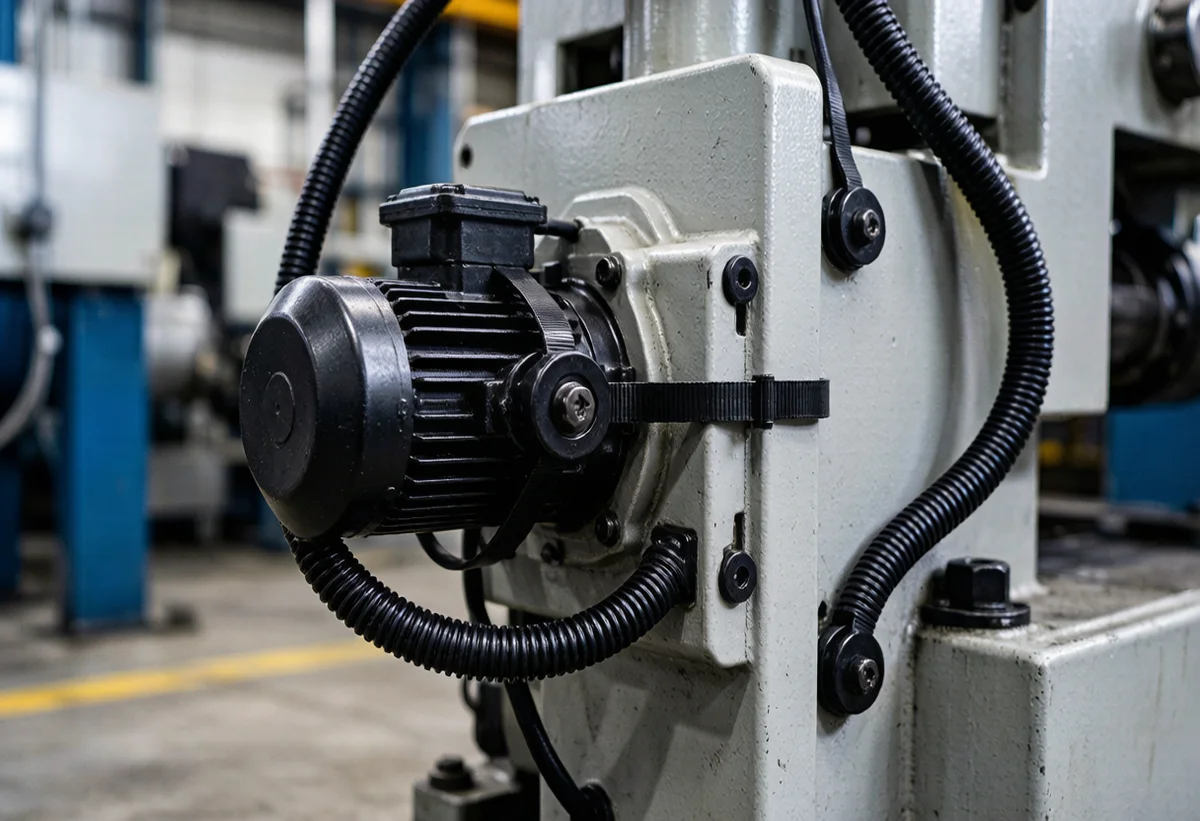
Even spacing and fixed bases keep bundles stable on running equipment.
Quick Selector: Environment → Tie
| Environment | Recommended Niuli tie |
|---|---|
| Automotive engine bay | HVAC / heat-stabilized tie + push-mount base |
| Factory machinery, constant motion | Double-side teeth + screw-mount base |
| Control panel / cabinet | Push-mount cable tie |
| Outdoor, sun + vibration | Anti-UV tie + screw-mount base |
Common Mistakes That Cause Loosening
- Reusing a single-use tie. Opening the pawl damages the teeth; a reused tie has lost most of its anti-creep grip.
- Over-tensioning. Stretching the strap accelerates creep and can crack the head.
- Tying to a smooth, unsupported surface. Without a base, the loop slides no matter how tight it feels.
- One tie on a long bundle. A single loop whips and loosens; spacing distributes the load.
- No inspection. Vibration damage is gradual; a monthly check catches slack before failure.
Niuli Solutions for Vibration-Prone Areas
Niuli Electric manufactures UL, CE, RoHS and REACH certified nylon cable ties in over 10 years of production, with fresh Nylon 66 and a strict three-stage inspection system. For vibration duty we recommend:
- Double-side teeth cable ties – up to 20% higher grip through dual-tooth engagement.
- Push-mount cable ties – clip into a panel, eliminating surface slip.
- HVAC / heat-stabilized ties – hold tension in hot, shaking engine compartments.
- Full nylon cable tie range – standard, releasable, heavy-duty and custom sizes.
FAQ
Why do cable ties slip under vibration?
Vibration makes the locking pawl micro-creep backward, relaxes the nylon strap, and lets a smooth bundle slide along its surface. Over thousands of cycles the loop loosens even though the tie stays locked. Choosing high-grip ties and anchoring to a fixed base removes these failure modes.
What type of cable tie is best for high-vibration environments?
Double-side-teeth and push-mount ties perform best. Double-side teeth add a second engagement row that stops pawl creep, while push-mount ties clip into a fixed base so the bundle cannot slide. For hot areas, pair them with heat-stabilized or HVAC ties. See double-side teeth ties.
Does tension affect cable tie slippage in vibrating equipment?
Yes. Under-tensioning leaves slack that vibration amplifies; over-tensioning stretches the strap and speeds creep. A tensioning tool applies consistent, correct tension so the pawl seats fully without straining the tie. This is the most overlooked step in vibration-proofing.
Are push-mount or screw-mount bases better for vibration?
Both beat tying to a bare surface. Push-mount ties clip in fast for panels and cabinets; screw-mount bases suit metal frames and let you use any standard tie at a fixed anchor. Use either to eliminate the surface-slip failure mode. Compare push-mount options.
Can I reuse a cable tie in a vibration-prone area?
No. Standard cable ties are single-use; opening the pawl damages the teeth and destroys most anti-creep grip. In vibrating systems, always install a fresh tie. If you need repeat access, use a dedicated releasable tie instead.
How often should cable ties be inspected in vibrating systems?
Inspect monthly in heavy-vibration environments and quarterly where motion is mild. Look for loss of tension, cracks, discoloration, or cable abrasion at tie points, and replace relaxed ties before they fail. A scheduled check prevents unplanned downtime.
Conclusion
Cable ties slip under vibration because pawls creep, straps relax, and smooth surfaces let bundles slide. You stop all three by picking high-grip ties, anchoring to fixed bases, tensioning correctly, spacing ties, and inspecting on schedule. The result is stable, safe cabling that survives the shake.
Related Resources
- What are push-mount cable ties?
- What are heat-stabilized cable ties?
- Why do nylon cable ties break during installation?
- Niuli nylon cable tie catalog
Need anti-vibration cable ties that stay put?
Talk to the Niuli engineering team for the right tie type, size, and mounting base for your application.
Niuli Electric is a leading China nylon cable ties manufacturer with UL, CE, RoHS, REACH, SGS and BSCI certifications. This article is for general guidance; always follow your site’s engineering and safety standards.
