


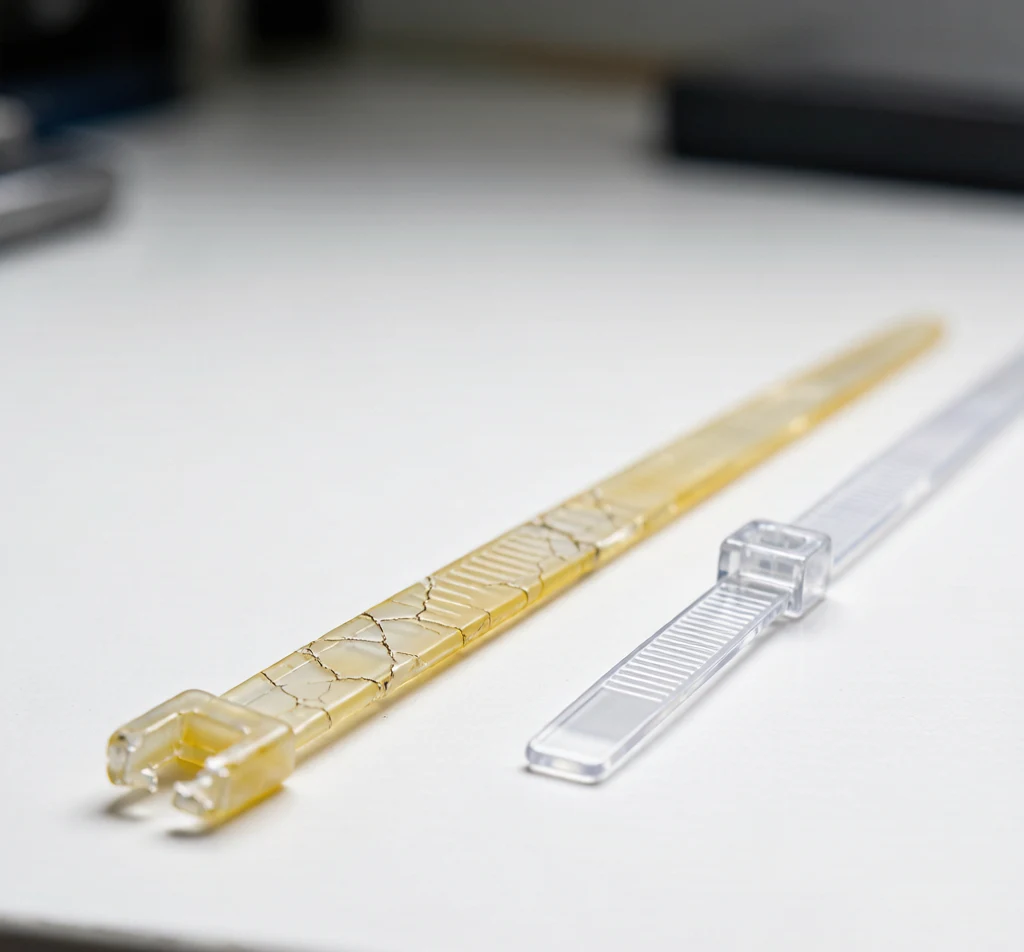
Clear zip ties don’t just “get old.” The yellowing and brittleness you see in warehouses, control panels, and display stock come from UV light through windows, heat, and nylon polymer oxidation. Here is what causes it—and how to specify ties that stay clear.
Key Takeaways
- Clear nylon zip ties yellow indoors mainly from UVA through windows and from heat and polymer oxidation—not from age alone.
- Nylon 66 (PA66) oxidizes over time; clear (natural) ties show discoloration first because they have no carbon black to mask it.
- UV-stabilized and black ties resist yellowing far longer—use them for window lines, lit displays, and warm environments.
- Cool, dark, dry storage extends the shelf and service life of clear ties.
- Niuli Electric supplies UL, CE, RoHS, REACH, SGS & BSCI-certified nylon 66 ties, including anti-UV and high/low-temperature grades for B2B volumes.
10+ years manufacturing nylon cable ties · 100% fresh PA66 from the USA · 32 production lines · 10,000+ m² factory.
In this article
Why This Matters for B2B Buyers
When a batch of clear zip ties turns yellow and snaps, it is rarely a cosmetic complaint. In distribution warehouses and MRO stock, discolored brittle ties mean rejected shipments, returns, and rework. For panel builders and OEMs, a failed tie can loosen a cable bundle and trigger downtime or a warranty claim. Knowing the cause lets you specify the right tie up front—and protect your margin.
Why Clear Zip Ties Turn Yellow Indoors: The 4 Root Causes
Clear zip ties turn yellow and brittle indoors because four mechanisms act together, even without direct sunlight:
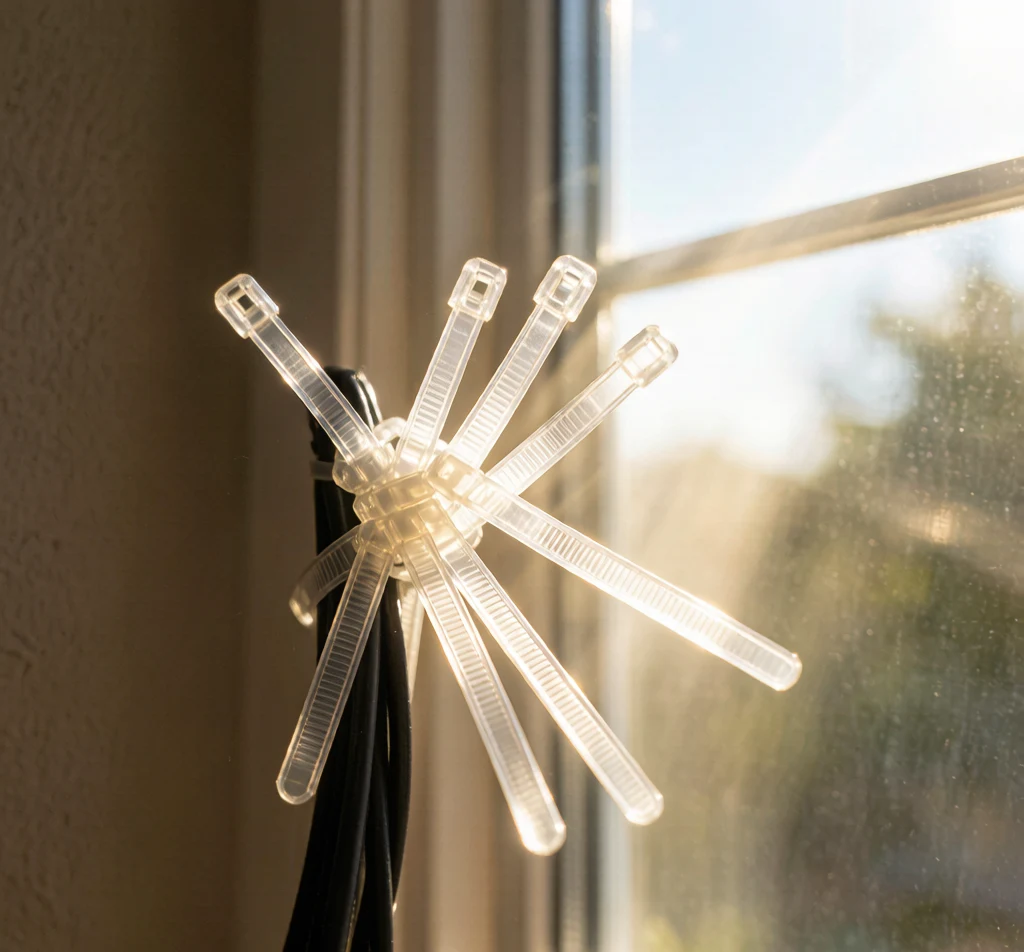
- UVA through glass. Window glass blocks most UVB but passes UVA, which still drives photo-oxidation in nylon.
- Heat. Warm warehouses, equipment rooms, and enclosures accelerate the chemical reactions that break polymer chains.
- Polymer oxidation. Nylon 66 slowly absorbs moisture and oxygen; the resulting oxidation discolors and weakens the material.
- Additive depletion. Heat stabilizers and plasticizers are consumed over time, leaving the tie unprotected.
The Hidden Indoor UV Culprit
Most buyers blame outdoor sun, but indoor yellowing is common on window-facing shelves, near skylights, and under prolonged artificial light. Some retail and display LEDs emit enough near-UV to age clear plastics. If your clear ties sit in a bright aisle or behind glass, treat them as “exposed”—even indoors.
Why Clear Ties Show It First (and Black Ties Don’t)
Clear (natural) nylon has no pigment, so oxidation shows immediately as yellowing. Black ties use carbon black, a powerful UV absorber that also hides discoloration—which is why black ties outlast white and clear ones in light. Our comparison of black vs white cable ties outdoors explains the same principle for outdoor runs.
How to Prevent Clear Cable Ties from Yellowing
You can extend the life of clear ties with simple handling and the right spec:
- Store cool, dark, and dry—keep clear ties out of window light and away from heat sources.
- Rotate stock—use oldest inventory first (FIFO) to avoid long shelf aging.
- Specify UV-stabilized ties for any window, display, or sun-adjacent location. See our UV-stabilized nylon cable ties for indoor-exposed bundles.
- Use black ties where appearance is not critical—they resist yellowing best.
- Control the environment—lower ambient temperature slows oxidation.
Quick Reference: Match the Environment to the Tie
| Indoor condition | Degradation risk | Recommended Niuli product |
|---|---|---|
| Window-facing shelf / lit display | High (UV + heat) | Anti-UV Cable Ties |
| Warm equipment room / enclosure | Heat + oxidation | High-Temp Cable Ties |
| General bundling, low light | Low | Standard Nylon 66 Ties |
| Frequent re-bundling | Handling wear | Releasable Cable Ties |
See the difference UV stabilization makes—request free samples of our anti-UV cable ties.
What to Specify for B2B Orders
For volume procurement, standardize on UL-approved nylon 66 (PA66) ties with a flammability rating of UL 94V-2 and a documented working-temperature range. Where exposure or warmth is a factor, switch to anti-UV or high-temperature grades. Match the tie to load and size using our cable tie size selection guide, and confirm the spec with a UL-approved nylon 66 cable tie from our standard range.
Frequently Asked Questions
Do clear zip ties yellow faster than black ones?
Yes. Black ties contain carbon black, a UV absorber that also hides discoloration; clear (natural) ties oxidize and show yellowing first. For window- or sun-exposed runs, choose black or UV-stabilized ties.
Can clear zip ties turn yellow without any sunlight?
Yes. Heat and normal oxidation yellow nylon 66 even in dark storage, just more slowly. Warm warehouses and equipment rooms speed it up further; UV only accelerates an existing process.
Are yellowed clear zip ties still safe to use?
Not reliably. Yellowing signals oxidation that also cuts tensile strength and makes ties brittle and snap-prone. For load-bearing or safety-related bundles, replace them before failure.
How can I stop clear cable ties from yellowing?
Store them cool, dark, and dry; rotate stock (FIFO); and specify UV-stabilized or black nylon 66 ties for exposed or warm locations. Use the environment-match table above to choose.
What cable ties should I use near windows or under display lights?
Use UV-stabilized cable ties (or black ties where color is acceptable). They contain additives that absorb UVA and slow oxidation, keeping bundles intact far longer indoors.
How long do clear nylon zip ties last indoors?
In a cool, dark storeroom, 1–2+ years before noticeable yellowing; near windows or in warm rooms, just months. UV-stabilized grades last several times longer in the same spots.
Are UV-stabilized ties more expensive for bulk B2B orders?
Only marginally. The premium is small versus rejected shipments, returns, and rework from premature failure—making them the cheaper choice at volume. Our team can quote OEM pricing.
Specifying the right tie avoids returns and rework. Talk to a reliable cable tie manufacturer.
Conclusion
Clear zip ties turn yellow and brittle indoors because of UVA through windows, heat, and nylon 66 oxidation—not simply old age. Store them well, and for exposed or warm locations specify UV-stabilized or black nylon 66 ties. The result is longer service life, fewer rejects, and lower total cost for your B2B operation.
Related Resources
- Black Cable Ties vs White Cable Ties: Which Lasts Longer Outdoors?
- How to Choose the Right Cable Tie Size
- How to Choose a Reliable Cable Tie Manufacturer (Buyer’s Guide)
- How Can Coloured Cable Ties Improve Cable Management
Recommended future posts (not yet published): “How to Store Nylon Cable Ties to Prevent Premature Aging” and “Nylon 66 vs Nylon 6 Cable Ties: Which Resists Yellowing Better?”
Need UV-stable cable ties at B2B volume?
Get a quote from Niuli Electric’s engineers—UL/CE/RoHS/REACH-certified nylon 66 ties, OEM & ODM supported.
Niuli Electric is a China-based manufacturer of nylon cable ties, cable glands, clips, and soldering accessories, certified to UL, CE, RoHS, REACH, SGS & BSCI. This article is for general technical guidance; confirm specifications with our engineering team for your application.
