


Choosing the right cord end terminal size is one of those small decisions that quietly protects an entire control panel. A ferrule that is too small crushes strands and raises resistance; one that is too large leaves the barrel loose and the connection heats up under load. For electrical engineers, panel builders, and procurement buyers specifying cord end terminals, getting the mm², length, and insulation profile correct is the difference between a tidy, reliable termination and a repeated field failure. This guide walks through how ferrule sizes are labeled, how to measure your conductor, and how to avoid the sizing mistakes that cost hours on the shop floor.
What Is a Cord End Terminal (Ferrule)?
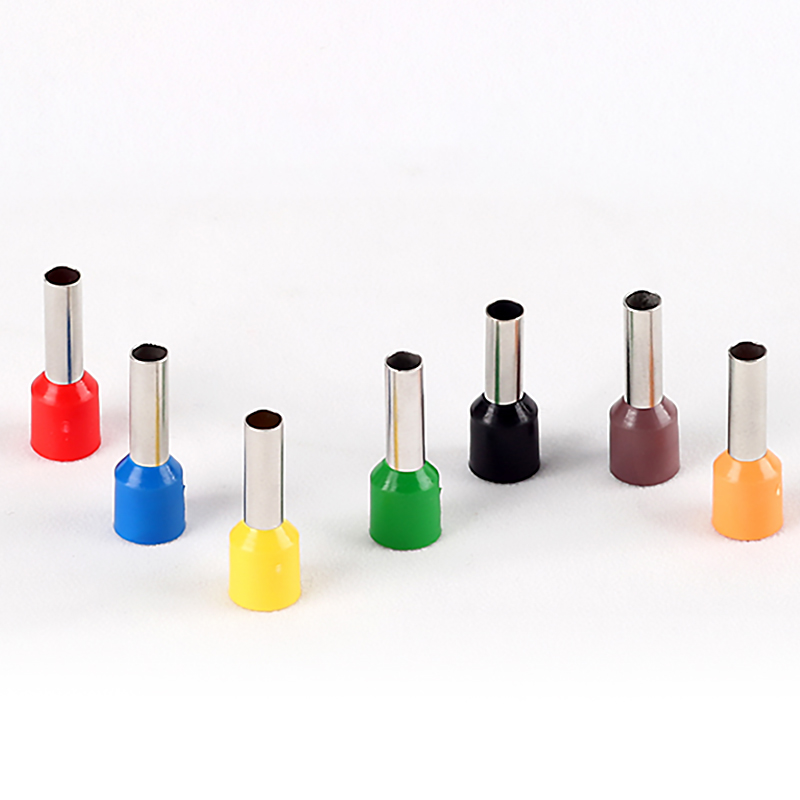
A cord end terminal, more commonly called a wire ferrule or bootlace ferrule, is a thin-walled metal sleeve (usually tinned copper) with a colored plastic collar that slides over the stripped end of a fine-stranded conductor. When crimped, it turns a bundle of individual wires into a single solid-looking pin that inserts cleanly into a screw clamp, spring cage, or push-in terminal block.
Ferrules exist because fine-stranded flexible cables (class 5 or class 6 conductors per IEC 60228) splay apart when you clamp them directly. Loose strands short against neighboring terminals, and repeated tightening fatigues the remaining wires. A ferrule captures every strand, distributes clamp force evenly, and prevents the conductor from fraying during maintenance. In switchgear, drives, and PLC cabinets, ferrules are effectively mandatory for any flexible lead.
Why the Right Cord End Terminal Size Actually Matters
The sizing is not cosmetic. Three failure modes trace directly back to a wrong ferrule size:
- Strand damage. A barrel sized for 2.5 mm² used on a 1.5 mm² wire lets strands sit loosely; a barrel sized for 1.5 mm² forced onto 2.5 mm² wire will not close fully, leaving air gaps that oxidize.
- Contact resistance and heating. A poor crimp interface raises resistance. At rated current, that extra resistance becomes heat, which accelerates insulation aging and can trip thermal protection unnecessarily.
- Torque creep. A loose ferrule in a spring clamp slowly relaxes. The connection that tested fine on Monday reads hot by Friday.
Cord end terminal size selection is therefore an EEAT-relevant engineering decision: it touches safety, longevity, and compliance with wiring standards such as IEC 60947 and DIN 46228.
How Cord End Terminal Sizes Are Labeled
Three numbers define a ferrule, and you need all three to pick correctly:
| Parameter | What it means | How to read it |
|---|---|---|
| Cross-section | Conductor area the barrel accepts | Marked in mm² (e.g. 1.5, 2.5, 6); AWG equivalent shown on dual-marked packs |
| Pin length | How far the metal sleeve extends | Standard ~12 mm; long ~18 mm for deep terminal block wells |
| Color collar | Quick visual size check | Follows DIN 46228 coding; not a substitute for reading the mm² |
The color is a workshop aid, not a specification. Always confirm the printed mm² and the actual conductor measurement before crimping, because color coding varies slightly between regional standards and suppliers.
Step-by-Step: Choosing the Right Cord End Terminal Size
1. Measure the conductor cross-section
Read the cable jacket for the printed mm² (for example, 4 × 2.5 mm² means 2.5 mm² conductors). If the marking is gone, use a wire gauge tool or calculate from the strand count and single-wire diameter. Match the ferrule barrel to that cross-section exactly, not to a “close enough” neighbor.
2. Check the insulation outer diameter
The plastic collar must slip over the cable jacket without bunching. If your cable has a thick or double-insulated jacket, you may need a ferrule with a wider collar opening even at the same mm². This is common with flexible non-insulated terminals leads where the strand pack and the jacket diameter do not scale together.
3. Decide on pin length
Most terminal blocks take a standard 12 mm pin. If the clamp sits at the bottom of a deep well, or you are terminating into a relay socket, choose the long (18 mm) version so the metal sleeve fully spans the contact zone. A short pin that stops above the clamp only touches the entry taper and carries current through a thin section.
4. Confirm tool compatibility
Ferrules need a quadruple-roll (trapezoidal) crimp profile from a dedicated ferrule crimper, not the hexagonal die you use for lugs. Using the wrong crimping tool deforms the barrel unevenly and voids the strain-relief benefit. Match the tool’s jaw range to your ferrule mm² range.
Common Cord End Terminal Sizing Mistakes
- Reusing one size for everything. A “universal” 1.5 mm² ferrule on a 0.75 mm² sensor wire crushes the few strands you have.
- Skipping the collar. Insulated (collar) ferrules protect the conductor-to-insulation transition. On un-stranded solid wire they are unnecessary, but on flexible wire they prevent the breakage point right behind the crimp.
- Twin ferrules on one clamp. Two wires in one ferrule is a code violation in most panels. Use a twin (double) ferrule only where the terminal is explicitly rated for two conductors.
- Crimping the plastic. The crimp must close on the metal sleeve only. If you trap the colored collar in the die, the conductor sits proud and will not seat.

Cord End Terminal Size Reference (Typical DIN 46228 Range)
| mm² | Approx. AWG | DIN color | Standard pin |
|---|---|---|---|
| 0.5 | 20 | Grey | 12 mm |
| 0.75 | 18 | White | 12 mm |
| 1.0 | 17 | Red | 12 mm |
| 1.5 | 16 | Black | 12 mm |
| 2.5 | 14 | Grey | 12 mm |
| 4.0 | 12 | Grey / Blue | 12 mm |
| 6.0 | 10 | Yellow | 12 mm |
| 10 | 8 | Red | 12 mm |
| 16 | 6 | Blue | 18 mm |
| 25 | 4 | Grey | 18 mm |
| 35 | 2 | Green | 18 mm |
Note: Color coding follows DIN 46228 Part 4; always verify the printed mm² on the ferrule against your conductor, because color alone is not a specification.

Where Cord End Terminals Are Used
Ferrules appear wherever flexible stranded wire meets a clamp: DIN-rail terminal blocks in motor control centers, inverter and drive connections, railway and EV charging cabinets, and laboratory equipment. Because they keep the strand pack intact, they are preferred in any environment subject to vibration or frequent rewiring. Specifying the correct cord end terminal size at the BOM stage removes a common source of panel rework.
Cord End Terminal Materials and Plating
The sleeve is almost always tinned copper, and that tin layer matters. Tin plating protects the copper from oxidation during storage and makes the ferrule compatible with both copper and aluminum conductors without accelerating galvanic corrosion. For panels that sit in humid or coastal environments, insist on tinned barrels rather than bare copper, which can green over time and raise contact resistance at the clamp.
The colored collar is typically polyamide (PA) or, on cheaper lines, PVC. PA collars resist higher temperature and abrasion and hold their shape better through repeated handling, which is why they dominate professional ferrule ranges. The collar length also matters: a longer collar gives more strain relief at the conductor-to-insulation transition, reducing the breakage that otherwise happens right behind the crimp on flexible wire.
Quality and Compliance Checks Before You Buy
Because a ferrule is a safety component, the purchase decision should include a few verification steps rather than price alone:
- Standard. Look for DIN 46228 Part 4 (or IEC 61238) compliance. A ferrule made to the standard has a controlled barrel wall thickness and crimp profile.
- Marking. The mm² should be printed or embossed on the collar, not just on the bag. In a busy panel that marking is what stops the wrong size going in.
- RoHS / REACH. For export or regulated industries, confirm the plating and plastics meet the relevant substance restrictions.
- Sample crimp test. Before a bulk order, crimp a sample and pull-test it. A compliant ferrule will show wire breakage rather than barrel slippage — the barrel should stay on the conductor.
Storing and Handling Ferrules
Ferrules are small and easy to mix. Keep them in the original compartmented boxes by mm², and resist the temptation to decant into a single bin. A color-coded shadow board at the bench speeds sorting and prevents the classic error of grabbing a 1.5 mm² ferrule for a 2.5 mm² wire. Store them dry; although tinned copper resists corrosion, the collars can pick up dirt that interferes with the crimp die.
Get the Right Ferrule for Your Panel
Matching the cord end terminal size to your conductor is a five-minute check that prevents hours of fault-finding later.
Need a Cord End Terminal Size Quote?
Tell us your conductor mm², pin length, and volume. We will match the correct ferrule size and a compatible crimping tool for your workshop.
Frequently Asked Questions
Can I use a cord end terminal on solid (single-strand) wire?
No. Ferrules are designed for stranded and flexible conductors, where they gather the individual strands into a neat, compression-proof tip. Solid wire already holds its shape and should enter the terminal directly — fitting a ferrule over it only loosens the connection. Check the conductor first: if it is finely stranded, a ferrule is the right call; if it is a single rigid core, skip it.
What is the difference between single and twin cord end terminals?
A single ferrule terminates one conductor; a twin (or double) ferrule joins two conductors side by side into one terminal opening, which keeps paired wires from being crushed together in a single slot. Twin ferrules need a crimp tool and die sized for the twin profile, so confirm your tool supports them before specifying them on a bill of materials.
My wire cross-section falls between two ferrule sizes — which do I choose?
Always aim for the size whose marked mm² matches your conductor; a ferrule should grip every strand snugly with no gaps. If your wire sits between two standard sizes, pick the smaller one that still accepts the full strand bundle rather than a loose larger size — a sloppy fit defeats the purpose. When in doubt, sample both and pull-test the crimp before a large order.
Do I need a special crimp tool, or will regular pliers work?
Use a proper quadruple-indent ferrule crimper. Pliers or a generic pliers-style tool cannot deliver the uniform, four-point compression a ferrule needs, and they can splay or cut the strands. A dedicated ferrule crimper also indexes by color or mm² so you land the right die every time, which is what makes the joint repeatable on a production line.
What do the DIN color codes mean, and can I rely on color alone?
Ferrule colors follow DIN 46228 as a quick visual check — for example, white 0.5 mm², red 0.75 mm², blue 1.0 mm², and so on up the range. Treat color as a fast sanity check, not the spec: always read the printed mm² on the ferrule and match it to the conductor, because colors can vary slightly between suppliers and a mis-pick is easy under poor light.
