

By Niuli Electric · Fastening & Connection Engineering Team · 11 min read
Key Takeaways
- A wall plug holds by interference fit — the plug body is slightly larger than the hole, so driving the screw makes it expand and bite the wall. If the hole is even a little too wide, that bite never forms and the plug spins with the screw instead of gripping. In soft AAC this is won or lost on the drill-bit tolerance (±0.2 mm): hold it and the plug bites; exceed it and the plug just turns.
- In soft aerated autoclaved concrete (AAC), the drill bit tends to wander and the crumbly substrate opens the hole 5–10 % wider than the bit’s rated diameter — so the “effective” hole is almost always larger than the label suggests.
- The ±0.2 mm drill-bit tolerance band (per ANSI B212.15) exists precisely to preserve anchor holding power: a 6.35 mm (1/4″) bit is held to 6.60–6.81 mm, a 9.53 mm (3/8″) bit to 9.91–10.11 mm. Stay inside it and the plug keeps the interference it needs.
- Exceed ±0.2 mm in AAC and you lose the interference margin — the plug rotates freely, the fixture never tightens, and you cannot recover it by driving the screw harder (over-torque only makes it worse).
- Niuli’s nylon wall plugs (a high-toughness PA6/PA66-family grade, CE/RoHS/REACH/SGS) survive the repeated re-seating that a soft AAC fixing demands better than brittle commodity plugs; the PP wall plugs suit lighter static loads.
Why a Wall Plug Spins in Soft AAC
If you have ever driven a screw into a wall plug set in aerated autoclaved concrete (AAC, “aircrete”, “thermalite”) and felt the plug rotate with the screwdriver instead of staying put, you have seen the classic spinning-plug failure. The fixture never tightens; the screw just turns the plug like a little drum inside the wall. In dense concrete this is rare — in soft AAC it is one of the most common call-backs on a fit-out.
The cause is almost always the same: the hole is too big. A wall plug is not held by glue or by the screw thread biting the wall — it is held by interference fit, and once the hole exceeds the tolerance that fit depends on, nothing grips. In AAC the tolerance is far easier to lose than people expect, which is why a disciplined ±0.2 mm drill-bit tolerance matters so much more here than in hard substrates.
The Interference-Fit Principle
A plastic wall plug is moulded slightly larger than the drill hole it is meant for. When you push it in, it is compressed; when you drive the screw, the plug’s body is forced outward against the rough hole wall and wedges there. The hold comes from that radial pressure plus friction — a mechanical interference fit, not a threaded connection to the substrate.
This is the crux of the ±0.2 mm question: the plug needs a defined amount of interference (the plug’s outer diameter minus the hole diameter) to expand and bite. A nylon plug typically wants on the order of 0.3–0.5 mm of interference against the hole wall to develop its grip. Shrink the interference to near zero — by drilling a hole just 0.2–0.4 mm over — and the plug slides in loosely, expands only a little, and the moment you apply torque the plug rotates instead of resisting. The bit tolerance is the single control that decides whether that interference exists.
Why AAC Makes the Hole Bigger Than the Bit
Hard, high-PSI concrete barely moves under a carbide bit — the hole comes out close to the bit’s true diameter. Soft AAC is the opposite. Two effects conspire to enlarge the effective hole:
- Bit wander. In soft or brittle materials the bit vibrates and skates, “carving out a hole 5–10 % larger than the bit’s rated diameter” (the substrate, not the bit label, dictates the effective size).
- Crumbly bore. AAC has air pockets throughout; the percussive action can spall the bore wall, rounding it out beyond the bit diameter.
- Worn bits. A masonry bit’s cutting edge wears past tolerance after heavy use — field guidance flags replacing or re-checking a bit once edge wear exceeds 0.2 mm (roughly every 200 holes in production). A worn 6 mm bit can drill a 6.4–6.6 mm hole without anyone noticing.
So on AAC the nominal bit size is only a starting point. The real hole is usually the bit diameter plus wander plus wear — exactly the margin the ±0.2 mm band is trying to protect.
The ±0.2 mm Tolerance Band (ANSI B212.15)
Masonry drill-bit tolerances are not an afterthought — they are specified “to insure maximum holding power of concrete anchors by matching drill tolerances to anchor dimensions” (ANSI B212.15-1994). The standard holds each bit to a narrow band around its nominal size:
| Nominal (inch) | Nominal (mm) | Allowed drill diameter | Spread |
|---|---|---|---|
| 1/4″ | 6.35 mm | 6.60 – 6.81 mm | ±0.20 – 0.23 mm |
| 5/16″ | 7.94 mm | 8.51 – 8.72 mm | ±0.28 – 0.39 mm |
| 3/8″ | 9.53 mm | 9.91 – 10.11 mm | ±0.20 – 0.29 mm |
Read that carefully: a “6 mm” plug calls for a bit that is actually 6.6 mm, not 6.0 mm, because the band is centred on the anchor’s required bore, not the plug’s outer diameter. The ~±0.2 mm window is the budget the plug’s interference fit is designed around. Drill inside it and the plug bites; drift outside it and the math no longer works — and in AAC drift is the default, not the exception.
What Happens When You Exceed ±0.2 mm in AAC
Picture a 6 mm nylon plug whose body is ~6.6 mm. The spec calls for a 6.6–6.8 mm hole, giving ~0 to +0.2 mm interference — the plug compresses slightly and then expands hard against the wall. Now add AAC wander (+5–10 %) and a slightly worn bit: the real hole becomes 6.9–7.0 mm. The interference is now negative — the plug is smaller than the hole. Drive the screw and the plug simply turns.
- The plug spins with the screw and the fixture never tightens.
- Over-tightening makes it worse — you crush or strip the plug instead of gaining grip (over-driving is the most common cause of a spinning plug).
- The joint loses both its tension and its shear capacity, because the interference fit that resists shear is gone.
Once a plug is spinning in AAC you cannot “fix” it in place. The standard remedies are: step up to the next plug size in the same hole, pack the void with setting filler and re-drill, or use a chemical (resin) anchor that fills the gap. None is as clean as drilling to tolerance the first time.
How to Hold ±0.2 mm in Soft AAC
- Use a fresh, in-tolerance bit. Check the tip before the job; discard or re-edge any bit whose cutting edge has worn past ~0.2 mm. A worn bit is the silent source of oversized AAC holes.
- Mind the real callout. A 6 mm plug wants a ~6.6 mm bit, an 8 mm plug a ~8.5 mm bit, a 10 mm plug a ~10.0–10.1 mm bit — follow the plug maker’s chart, not the plug’s nominal size.
- Test-drill a pilot. In soft AAC, start 0.5 mm under the callout on a scrap piece; if the plug is loose, you have your answer before the wall is committed.
- Low impact, steady pressure, perpendicular. Hammer energy shatters the brittle AAC and widens the bore; use a gentle setting and let the bit cut, don’t pound.
- Clear the dust. Packed AAC dust prevents the plug seating to full depth and fools you into thinking the hole is tight when it is not.
Nylon vs PP Plug for AAC
Soft AAC fixings get re-seated and bumped more than dense-concrete ones, so plug toughness matters. Niuli supplies two wall-plug families: the nylon wall plugs are a high-toughness PA6/PA66-family grade the maker describes as “resistant, not easy to break” (CE / RoHS / REACH / SGS), the right call where a plug must survive repeated torque and vibration without splitting. The PP wall plugs are the lighter, lower-cost option for static, light-duty indoor use. Whichever you choose, the rule is the same: drill to the plug’s specified bore and keep that hole inside ±0.2 mm, especially in AAC.
Step-by-Step: An AAC Hole That Won’t Spin the Plug
- Pick the plug, then the bit. Read Niuli’s nylon or PP plug spec; use the bore diameter it lists (e.g. ~6.6 mm for a 6 mm plug), not the plug’s nominal size.
- Verify the bit. Confirm it is fresh and within tolerance; measure a test hole on scrap AAC.
- Pilot if unsure. Drill 0.5 mm under on a offcut; if the plug is loose there, the full hole will spin.
- Drill gently, straight. Low hammer energy, perpendicular, steady light pressure to avoid wander and spall.
- Clean the bore. Vacuum or blow out dust so the plug seats fully.
- Seat and drive. Tap the plug flush, drive the screw until the fixture is fixed and snug, then stop — do not over-torque.
Common Mistakes That Cause a Spinning Plug
- Drilling with a worn bit — the silent oversize; the hole looks 6 mm but measures 6.6 mm.
- Assuming the bit label = the hole — in AAC wander adds 5–10 %; the effective bore is larger than the bit.
- Using full hammer energy on AAC — spalls the bore round and wide.
- Leaving drilling dust — the plug never reaches full depth, so interference is lost at the back.
- Over-tightening to compensate — crushes or strips the plug; the fix is a correctly sized hole, not more torque.
Niuli Wall Plug Range
Niuli supplies nylon and PP wall plugs for concrete, AAC and masonry. For soft AAC fixings that get re-seated and bumped, specify the nylon wall plugs — a high-toughness PA6/PA66-family grade (“resistant, not easy to break”, CE/RoHS/REACH/SGS) that keeps its integrity through repeated torque where brittle commodity plugs split. The PP wall plugs are the lighter, static-duty option. Whichever you fit, drill to the plug’s specified bore and keep that hole inside ±0.2 mm — in AAC that single discipline is what stops the plug spinning.
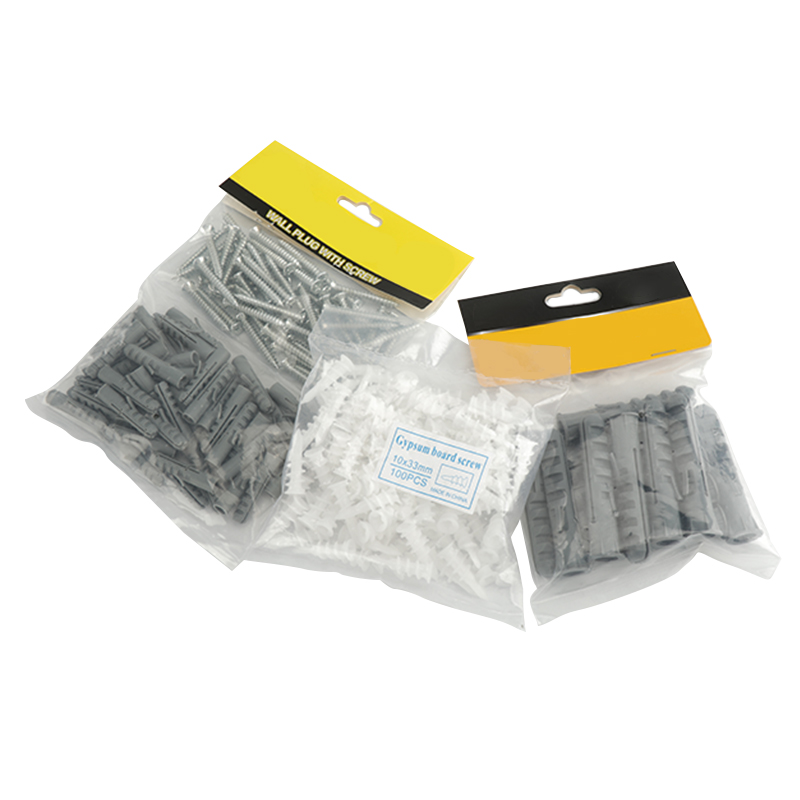
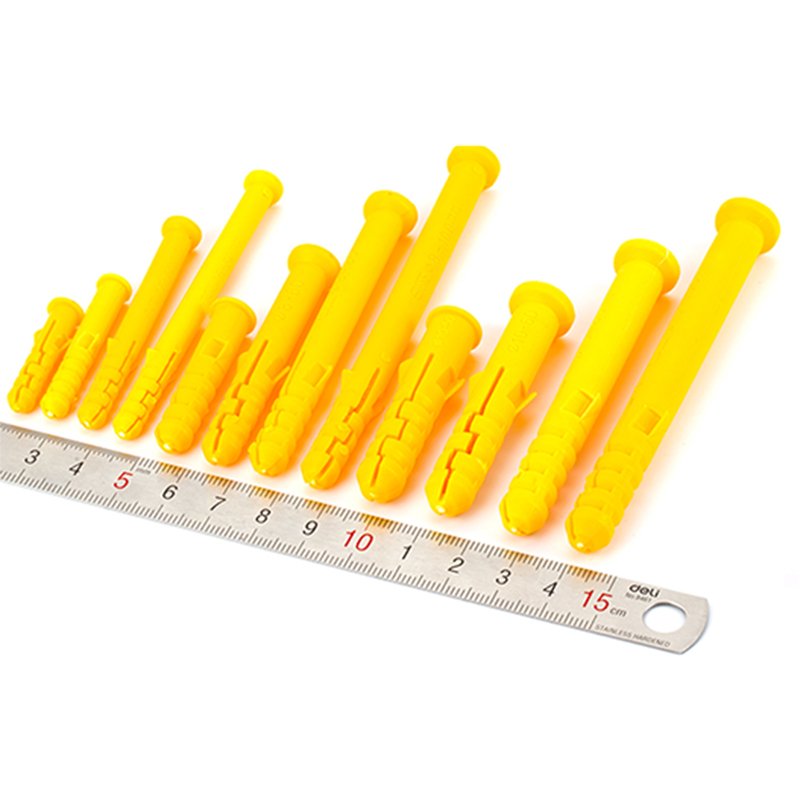
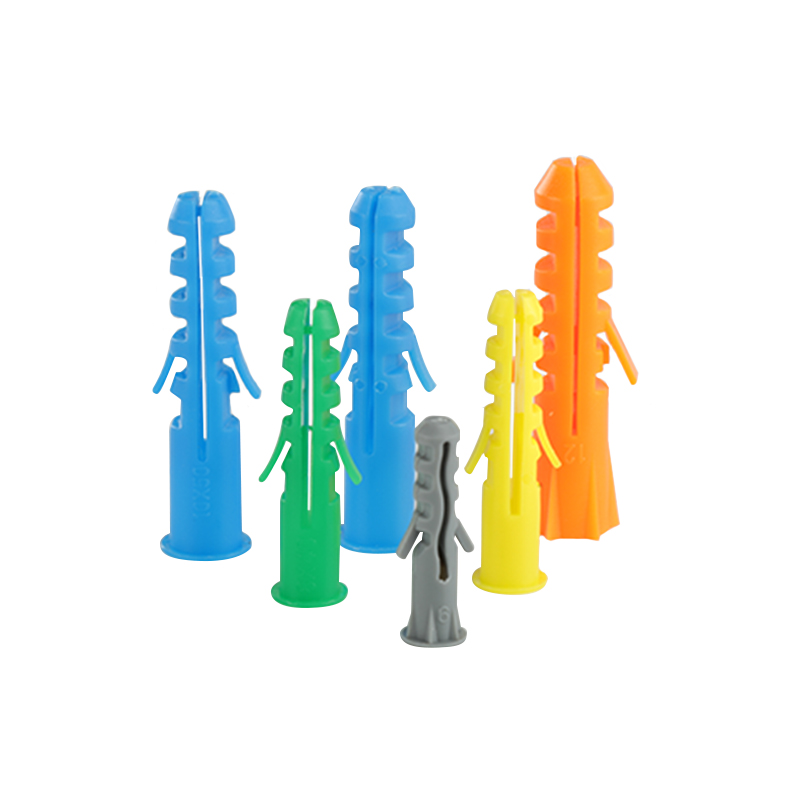
Images link to Niuli product pages (open in a new window). For soft AAC, drill to the plug’s specified bore, hold ±0.2 mm, and choose the nylon grade for repeated-torque duty.
Frequently Asked Questions
What does “±0.2 mm drill-bit tolerance” mean for a wall plug?
It is the narrow diameter band (per ANSI B212.15) a masonry bit is held to so the hole matches the anchor’s required bore. A 6.35 mm (1/4″) bit is allowed 6.60–6.81 mm, a 9.53 mm (3/8″) bit 9.91–10.11 mm. Stay inside it and the plug keeps the interference fit it needs to grip.
Why does a wall plug spin in AAC but not in dense concrete?
Dense concrete holds the bit true, so the hole comes out near the bit diameter. Soft AAC lets the bit wander and spall the bore 5–10 % wider than the label, destroying the plug’s interference. The same ±0.2 mm overshoot that is harmless in hard concrete is fatal in AAC.
How much interference does a wall plug need?
A typical nylon plug is moulded roughly 0.3–0.5 mm larger than its specified bore, so it compresses on insertion and then expands hard against the wall when screwed. Lose that interference to an oversized hole and the plug rotates instead of biting.
Is a 6 mm wall plug drilled with a 6 mm bit correct?
No. The plug’s nominal size is not the bit size. A 6 mm plug calls for a bore around 6.6 mm, so you use a ~6.6 mm masonry bit. Drilling the literal 6 mm leaves too much clearance and the plug will spin, especially in AAC.
Can over-tightening fix a spinning plug?
No — over-driving is the most common cause of a spinning plug. More torque crushes or strips the plug instead of gaining grip. The fix is a correctly sized, in-tolerance hole, not more force.
Why does a worn drill bit spin plugs in AAC?
Once a bit’s cutting edge wears past about 0.2 mm it drills a hole larger than its rating. In AAC that pushes the bore outside the interference window, so the plug no longer expands against the wall and simply turns with the screw.
Should I use hammer mode in AAC?
Use a low impact setting, not full hammer. AAC is brittle and high percussion energy spalls the bore round and wide, which is exactly how you lose the ±0.2 mm tolerance and end up with a spinning plug.
What if the plug is already spinning in the wall?
You cannot rescue it in place. Step up to the next plug size, pack the void with setting filler and re-drill, or use a chemical resin anchor that fills the gap. Prevention — drilling to tolerance — is far cleaner.
Which Niuli plug for soft AAC fixings?
For AAC that gets re-seated or bumped, use Niuli’s nylon wall plugs (high-toughness PA6/PA66 family, CE/RoHS/REACH/SGS) that resist splitting under repeated torque. The PP wall plugs suit light static loads. Either way, hold the bore inside ±0.2 mm.
Does drilling dust really affect the grip?
Yes. Packed AAC dust stops the plug seating to full depth, so it never develops full interference at the back of the hole. Vacuum or blow the bore clean before inserting the plug.
Conclusion
A wall plug spins in soft aerated autoclaved concrete because the hole lost the interference fit the plug depends on — and in AAC that happens easily, since the bit wanders and the crumbly bore opens 5–10 % wider than the label. The ±0.2 mm drill-bit tolerance band (ANSI B212.15) exists to stop exactly this: by holding the bit to a tight window around the anchor’s specified bore, it preserves the 0.3–0.5 mm interference a nylon plug needs to expand and bite. Drill with a fresh, in-tolerance bit to the plug maker’s bore callout, use low impact on AAC, clean the dust, and stop at snug — and the plug stays put instead of turning with the screw. For repeated-torque AAC duty, Niuli’s nylon wall plugs are the high-toughness, “not-easy-to-break” choice; reserve the PP wall plugs for light static loads.
Fixing into soft AAC? Hold the bore inside ±0.2 mm and use Niuli’s high-toughness nylon wall plugs.
Related:
High-Toughness PA66 Wall Plugs vs PE in Shear ·
Nickel-Plated Steel Terminals & 400°C Ovens ·
Flag Female Quick Disconnects & Meter Clearance