


Cable Glands · Ingress Protection
By Niuli Electric · Cable Gland Engineering Team · 10 min read
Key Takeaways
- A PG-to-metric adapter only mechanically bridges two thread standards — it is not a seal by itself.
- Ingress protection at the gland-to-enclosure joint depends on a compressed O-ring between the adapter flange and the panel.
- Omit the O-ring and micro-gaps let water and dust wick straight through the thread clearance, collapsing the IP68 rating.
- Niuli stocks both PG and metric glands — for a legacy PG enclosure, fit a PG gland directly and skip the adapter (and its extra seal interface) entirely.
If you retrofit a European machine, you will eventually face a PG hole with metric gland stock (or vice versa). The fix everyone reaches for is a PG-to-metric thread adapter. It works mechanically — but only if the sealing O-ring is present. Remove that one small ring and the port silently loses its ingress protection. Here is the mechanism, the failure modes, and the correct install.
Why a PG-to-Metric Adapter Is Not a Seal
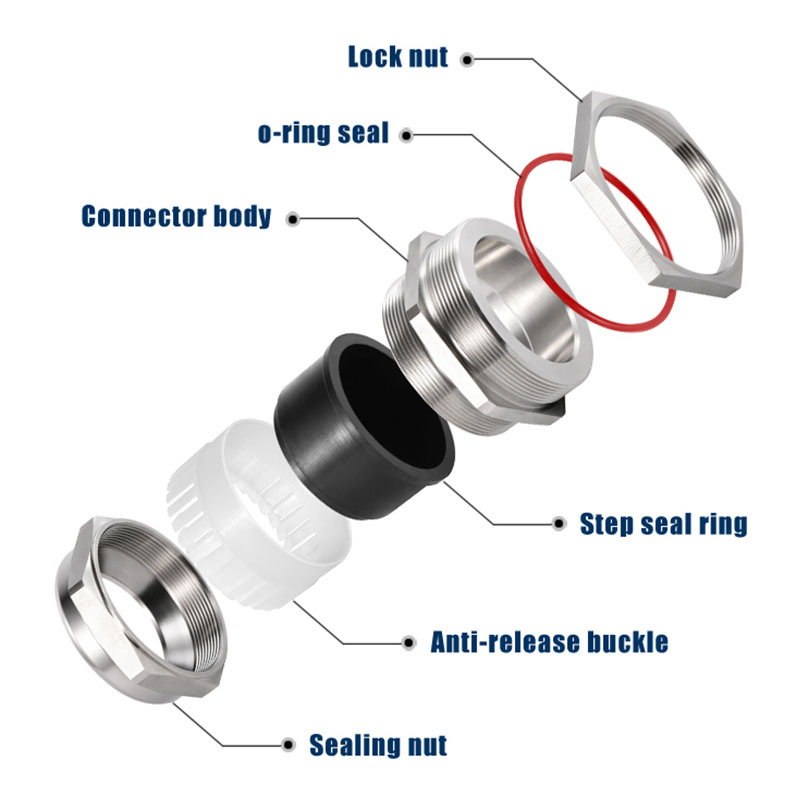
The first misunderstanding is treating the adapter as if it “seals” because it screws in tight. It does not. A cable gland’s IP rating comes from two separate seals, and neither of them lives in the thread:
- Seal 1 — the cable seal: the elastomer insert (NBR on Niuli glands) grips the cable jacket so water cannot travel down the cable.
- Seal 2 — the panel seal: a flat O-ring or gasket compressed between the gland (or adapter) flange and the enclosure surface blocks water at the wall.
The threads only hold the assembly in place. Screw threads are not sealing surfaces — they have intentional clearance, and that clearance is exactly the path water takes when no gasket closes it.
Quick definitions: PG (Panzergewinde, DIN 40430) uses an 80° thread angle with a fine pitch; Metric (IEC 60423 / EN 62444) uses a 60° angle with a coarser pitch. PG13.5 and M20 look almost identical (≈20 mm diameter) but are not the same thread — forcing them together cross-threads the joint.
Where Ingress Protection Actually Comes From
An IP68 rating describes the assembly as tested — gland plus enclosure plus its seal. When you add a PG-to-metric adapter, you actually create two seal interfaces instead of one:
| Interface | What seals it | Fails if… |
|---|---|---|
| Adapter → enclosure (PG male into panel) | O-ring compressed against panel | O-ring omitted or pinched |
| Gland → adapter (metric female) | Gland’s own panel O-ring | gasket not seated flat |
| Cable → gland | NBR clamping insert | wrong cable diameter |
Every extra joint is a new place to leak. That is why cabexindia and hxcablegland both warn that an adapter’s IP rating is only as good as its weakest seal — and the panel-side O-ring is the one installers forget.
The O-Ring’s Job in a Thread Adapter
The O-ring (typically NBR or EPDM) is the only compliant part of the joint. Its job:
- Conform to surface imperfections — paint, mill marks, slight panel warp — that rigid metal cannot.
- Maintain constant contact force as the panel expands and contracts with temperature.
- Stay resilient under vibration, so the seal does not relax and open a gap over time.
Metal-to-metal contact plus thread friction gives a false sense of “tight,” but it leaves microscopic channels. Only the compressed elastomer closes them.
What Physically Happens When the O-Ring Is Omitted
Without the O-ring, the adapter threads into the hole but never seals the wall. Four things then occur:
- Micro-channels form. The thread clearance between adapter and panel is a spiral path; water follows it by surface tension.
- Capillary wicking. Even without pressure, moisture creeps inward along the thread — the classic “ghost fault” weeks later.
- Pressure differential forces ingress. During an IP66/67/68 spray or immersion test, water is pushed straight through the gap.
- Vibration and thermal cycling open it further. With no elastomer to absorb movement, the joint loosens and the gap grows.
The result: the port drops from IP68 to effectively IP0X at that location — dust and water enter freely, even though the gland’s cable seal and its own label still say “IP68.”
PG-to-Metric Adapter IP Failure Modes
| Scenario | Seal outcome | Effective IP |
|---|---|---|
| Adapter + O-ring, seated flat | Panel sealed correctly | Holds rated IP (weakest joint) |
| Adapter, O-ring omitted | Thread clearance open | IP0X — ingress |
| Adapter, O-ring pinched/twisted | Partial leak path | Below rated IP |
| Correct gland in correct hole (no adapter) | One sealed interface | Full rated IP68 |
Correct Installation Checklist
If you must use an adapter, install it so the O-ring actually does its job:
- Confirm the enclosure thread. Measure outer diameter and pitch with calipers — PG13.5 ≈ 20.4 mm, M20 = 20.0 mm. That 0.4 mm is the difference between a seal and a strip.
- Use a genuine adapter that ships with an O-ring. Confirm material (NBR/EPDM) suits the temperature and chemical exposure.
- Seat the O-ring flat against a clean, degreased panel face. No twist, no pinch, no paint ridge under it.
- Hand-tighten, then ~¼ turn with a wrench. Over-torque crushes the gasket and reduces sealing area.
- Tighten the gland’s compression nut so the cable cannot move; verify the gland’s own panel O-ring is also flat.
- Plug every unused port with a certified sealing blank — an open hole defeats the whole enclosure.
- Test before energizing (see below).
How to Verify the IP Rating
Ingress protection is verified per IEC 60529. For an IP68 claim you prove both dust exclusion and continuous immersion protection; for IP66/IP67, a defined water-jet or temporary-immersion test. In the field, a practical check is a dye-penetrant or soap-bubble test at the adapter-to-panel joint under light pressure, followed by a controlled spray-down. Any weeping at the thread means the O-ring is not doing its job. Ask our engineers for a test procedure →
Niuli PG & Metric Glands — Avoid the Adapter When You Can
The cleanest fix is often no adapter. Niuli manufactures the same IP68 nylon gland in every common thread, so you can match the enclosure directly:
- PG cable glands (GER standard, DIN 40430) for legacy European machines and sensors.
- Metric cable glands (M-series, IEC 60423) for new global projects.
- Nickel-plated brass glands and stainless-steel glands where metal body or EMC is required.
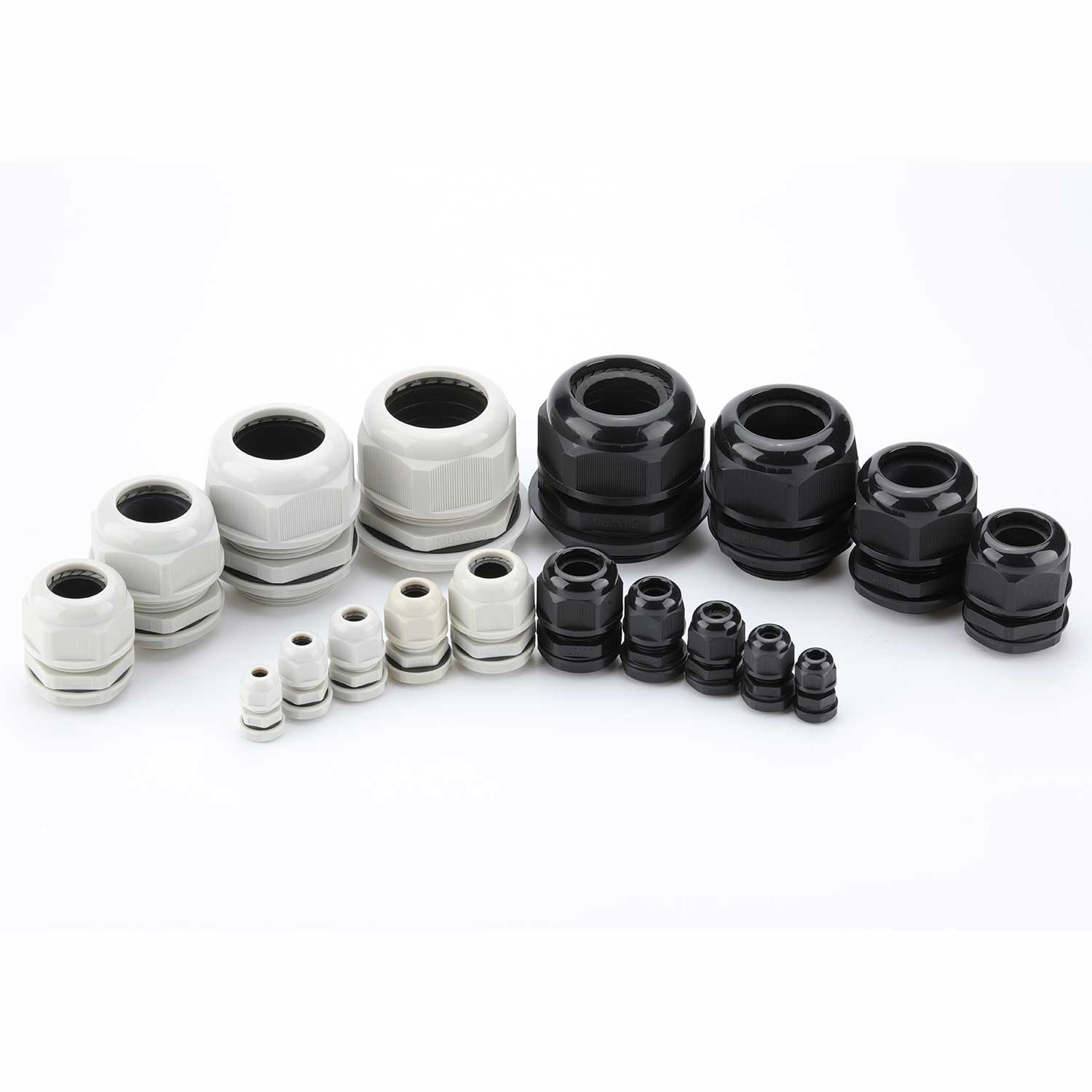
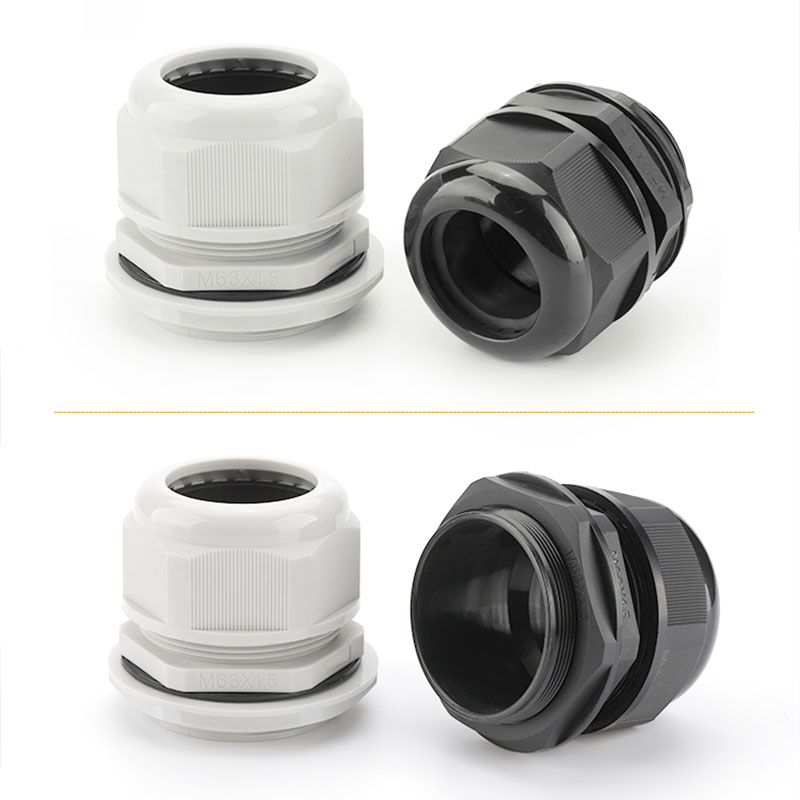
For a PG-tapped enclosure, fit a PG gland straight in — one sealed interface, no adapter, no second O-ring to forget. Explore the full cable gland range to match the thread exactly.
Frequently Asked Questions
Do PG and metric cable gland threads seal on their own?
No. Screw threads have intentional clearance and are not sealing surfaces; the waterproof seal comes from the compressed O-ring at the panel, not from the thread engagement. See Niuli PG glands →
What exactly does the O-ring do in a thread adapter?
It is the only compliant part of the joint: it conforms to panel imperfections, holds constant contact force under thermal cycling, and stays resilient under vibration so the seal never relaxes. Get the spec sheet →
What happens if the O-ring is omitted?
Micro-gaps let water and dust wick through the thread clearance by capillary action and pressure differentials. The port drops from IP68 to effectively IP0X at that location. Browse sealed options →
Can thread sealant or PTFE tape replace the O-ring?
No. Tape or sealant does not correct the pitch mismatch or close the panel gap; it can even trap debris and hide a leaking joint. Use the specified O-ring and seat it flat. Ask an engineer →
Does adding an adapter lower the overall IP rating?
Yes, if either seal is weak. Every adapter adds a seal interface, and the assembly’s IP is only as good as its weakest joint — so the adapter’s O-ring matters as much as the gland’s. See metric glands →
How do I tell if my enclosure is PG or metric?
Measure the thread outer diameter and pitch. PG13.5 ≈ 20.4 mm, M20 = 20.0 mm; PG uses an 80° fine pitch, metric a 60° coarser pitch. A caliper decides it in seconds. Send us your drawing →
Can I fit a PG gland into a metric hole with an adapter but no O-ring?
You can thread it in, but it will not be waterproof — the panel gap stays open. Always include the O-ring, or better, fit the correct-thread gland with no adapter. Check brass options →
What torque should I use on the adapter?
Hand-tighten, then about a quarter turn with a wrench. Over-tightening crushes the gasket and shrinks the sealing area; under-tightening lets it loosen under vibration. Get torque values →
How do I verify the adapter seal holds IP68?
Test per IEC 60529 — water jet (IP66) or immersion (IP67/68) — plus a field dye-penetrant or bubble check at the joint. Any weeping at the thread means the O-ring is not sealing. Explore the range →
Does Niuli stock both PG and metric glands so I can skip the adapter?
Yes. Niuli makes the same IP68 nylon gland in PG, metric, UK, and NPT threads — so a legacy PG enclosure can take a PG gland directly, with one sealed interface and no adapter to forget. Brass gland basics →
Conclusion
A PG-to-metric adapter is a mechanical bridge, not a seal. The O-ring is what actually blocks ingress at the enclosure — omit it and the IP68 rating fails through capillary wicking and vibration gaps. When you can, match the enclosure thread and skip the adapter entirely; when you must adapt, seat the O-ring flat, torque correctly, and test. For the shielding side of the same enclosure, see our guide on EMC brass glands and 360° shield grounding.
Need the right thread — PG, metric, or no adapter at all?
Niuli Electric is a cable gland manufacturer offering nylon (PG/metric/UK/NPT), nickel-plated brass, and stainless-steel glands rated IP68 with CE/RoHS/SGS. Specifications above are general guidance; confirm ratings against your enclosure drawing and applicable standard (IEC 60529 / EN 62444) before installation.
