


LED fixtures run hotter than most buyers expect. Spec the wrong tie and it softens, loosens, or snaps—leaving live wiring exposed. Here is how to pick a heat-resistant cable tie rated for your fixture’s real temperature.
Key Takeaways
- LED fixtures create sustained heat (often 60–110°C near drivers and heat sinks); standard nylon ties soften and fail there.
- Choose heat-stabilised nylon 66 ties rated to at least 105–120°C, or stainless steel above ~150°C.
- Match the tie’s continuous rating to the fixture’s hottest zone—not the room temperature.
- Black ties add UV resistance for fixtures near windows or outdoors; verify flammability (UL 94V-2).
- Niuli supplies UL, CE, RoHS, REACH & SGS-certified high-temperature nylon 66 ties in B2B volumes.
10+ years manufacturing nylon cable ties · 100% fresh PA66 from the USA · 32 production lines · 10,000+ m² factory.
In this article
Why This Matters for B2B Buyers
For fixture OEMs, distributors, installers, and MRO teams, a failed cable tie inside an LED luminaire is not a small defect. It means loose or exposed wiring, field returns, warranty claims, and rework cost. Specifying the correct heat-resistant tie up front protects your product’s reputation and your margin.
Why Standard Ties Fail in LED Fixtures
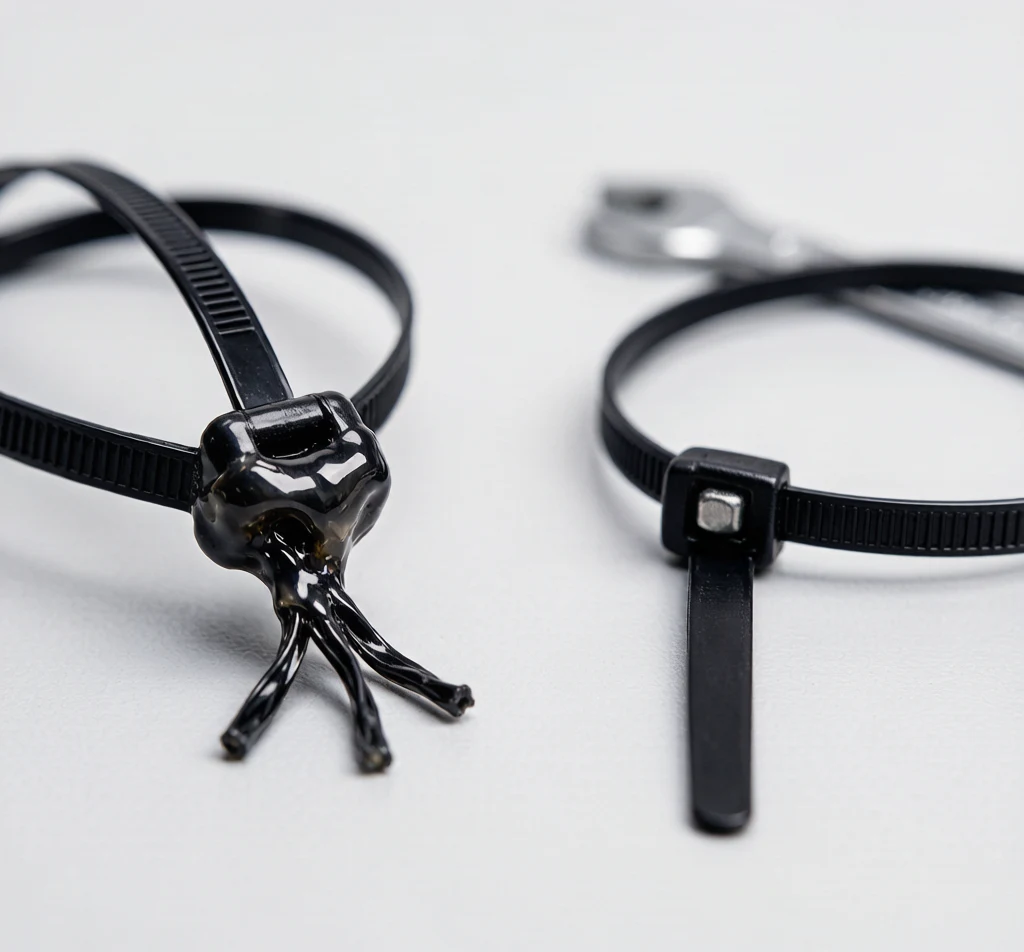
Standard nylon 66 works well up to about 85°C, but it degrades near sustained heat. LED drivers, transformers, and heat sinks routinely run hotter than that. Under continuous heat the tie softens, loses tension, cracks, and finally snaps—exactly where you need it to hold. A heat-stabilised grade is engineered to keep its strength in that band.
How Hot Do LED Fixtures Actually Get?
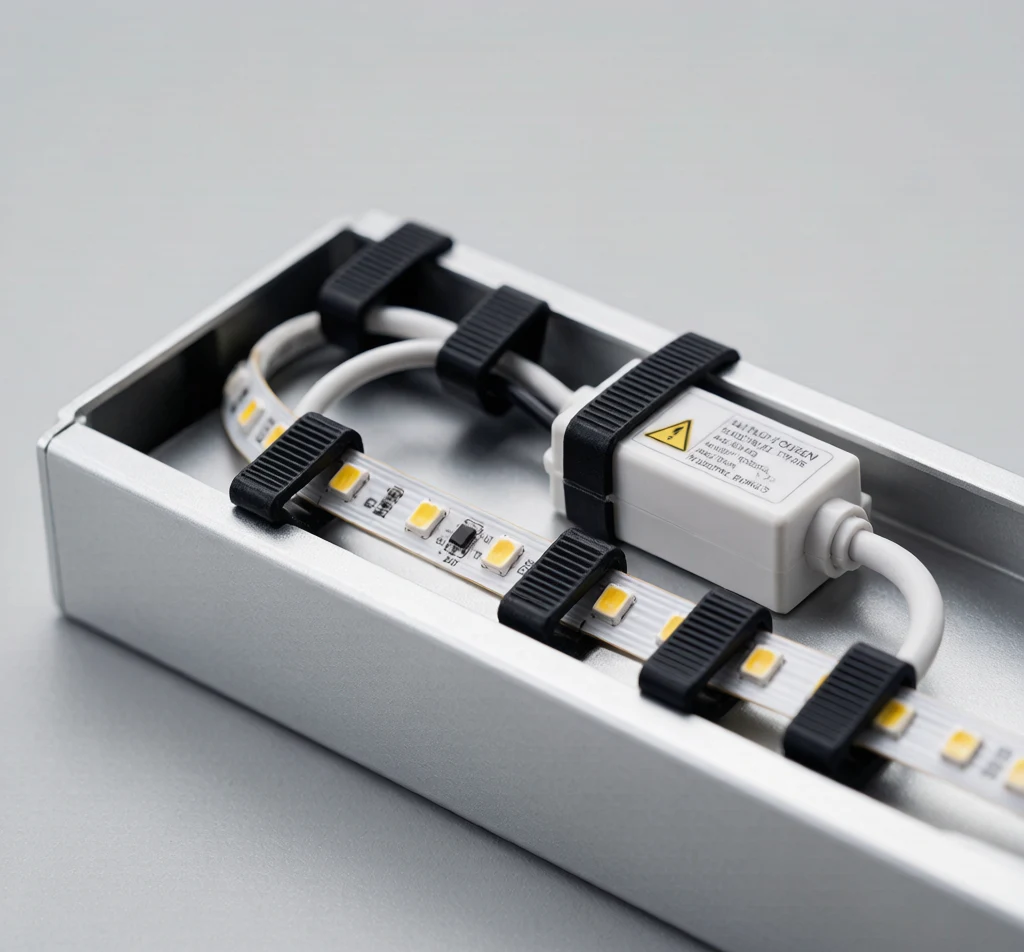
LEDs convert only part of their power into light; the rest becomes heat that concentrates at the driver and heat sink. Typical sustained hotspots:
- LED strip / aluminium profile: 60–85°C
- LED panel / downlight driver: 70–90°C
- LED high-bay / floodlight: 90–110°C
- Enclosed / poorly vented fixtures: can exceed the above
Always measure or spec the hottest zone, not the ambient room temperature. That number drives your tie choice.
Understanding Temperature Ratings
Cable-tie temperature ratings are usually a continuous working range. Standard nylon 66 is about −40 to 85°C; heat-stabilised nylon 66 reaches 105–120°C; PTFE goes higher; stainless steel handles extreme heat (hundreds of °C) but is conductive. Choose a rating with margin above your measured hotspot.
Quick Selector: Fixture Zone → Recommended Niuli Tie
| LED fixture / zone | Typical hotspot | Recommended Niuli tie |
|---|---|---|
| LED strip / aluminium profile | 60–85°C | Heat-stabilised Nylon 66 (120°C) |
| LED panel / downlight driver | 70–90°C | High-Temp Nylon 66 Ties |
| LED high-bay / floodlight | 90–110°C | High-Temp Nylon 66 (120°C) |
| Extreme / enclosed >150°C | Very high | Stainless Steel Ties |
| HVAC / warm equipment rooms | Heat + vibration | HVAC Cable Ties |
Material Choice: Heat-Stabilised Nylon 66 vs Stainless Steel
For most LED fixtures, heat-stabilised nylon 66 (rated to 120°C, UL 94V-2, electrically insulating) is the cost-effective default. Choose stainless steel only when the zone exceeds ~150°C or fire-rating demands it—but remember steel is conductive, so keep it clear of live contacts or use isolation. For adjacent warm environments like air-handling units, our HVAC cable ties are purpose-built for heat and vibration.
How to Select the Right Tie
- Measure the hotspot at the driver/heat sink under real load.
- Add margin—pick a tie rated at least 20°C above that hotspot.
- Pick the material—nylon 66 to 120°C, stainless above.
- Size by bundle—use our cable tie size selection guide to match width/length to bundle diameter and tensile need.
- Choose colour—black adds UV resistance for window-adjacent or outdoor fixtures.
Installation Tips
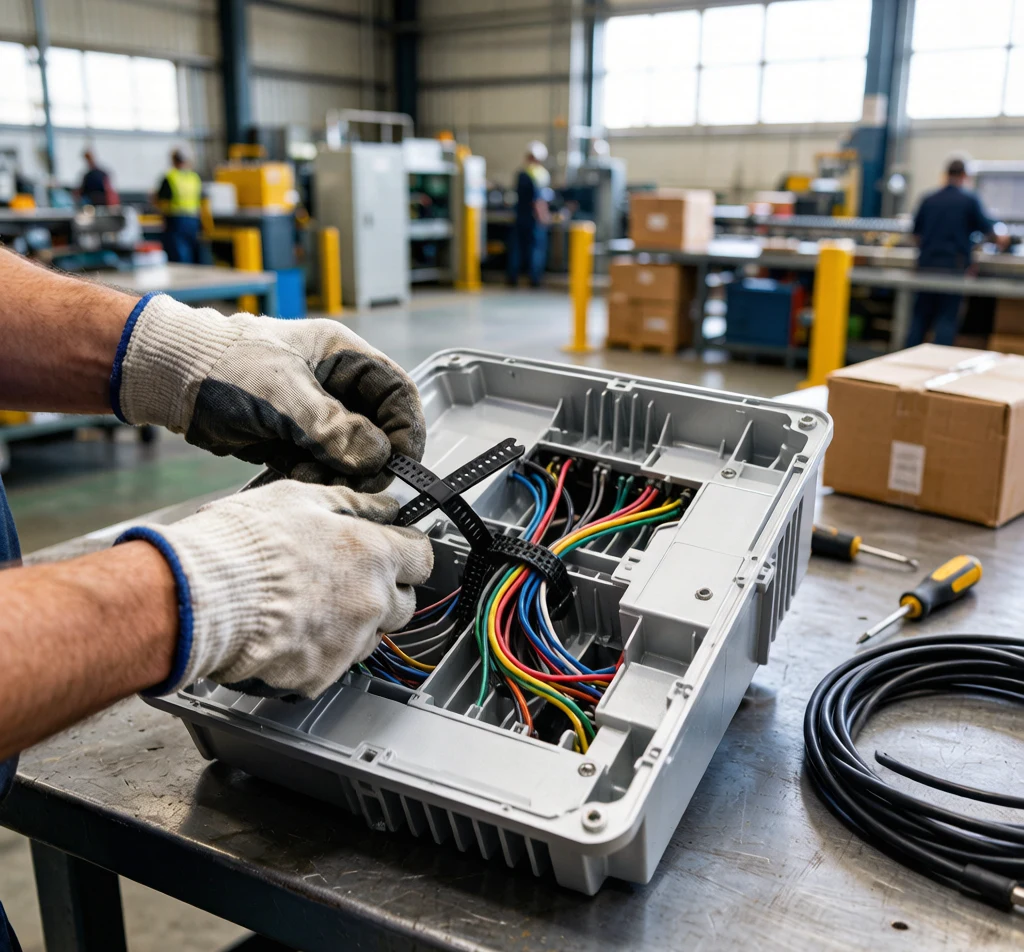
- Don’t overtighten—thermal expansion can stress the tie and the cable jacket.
- Keep ties clear of the single hottest metal surface where possible.
- Leave a little slack for expansion; use a proper tensioning tool.
- Where light hits the fixture, prefer black ties (see our black vs white cable ties comparison).
See our high-temp ties in your own fixture—request free samples.
Frequently Asked Questions
What temperature can cable ties withstand inside an LED fixture?
Standard nylon 66 is reliable to about 85°C; heat-stabilised nylon 66 (like Niuli’s high-temp grade) works continuously to 120°C. For zones above ~150°C, use stainless steel ties.
Are standard nylon cable ties safe for LED lights?
Only in low-heat zones. Near drivers or heat sinks they soften and loosen over time. For any hotspot above ~85°C, switch to a heat-resistant grade.
Heat-stabilised nylon 66 or stainless steel—which for LED fixtures?
Nylon 66 to 120°C is the default: insulating, cheaper, easy to use. Stainless steel suits extreme heat or fire-rated needs, but it is conductive—isolate it from live parts.
Do LED fixtures really get hot enough to matter?
Yes. High-bay and floodlight drivers commonly reach 90–110°C, and enclosed fixtures run hotter. That is well beyond standard nylon’s comfort zone.
Should I use black or natural cable ties inside LED fixtures?
For purely internal, low-light bundles either works. If the fixture sits near windows or outdoors, choose black—carbon black adds UV resistance and hides any yellowing.
How do I find the right temperature rating for my fixture?
Measure the hottest point under full load, add ~20°C margin, then pick a tie whose continuous rating meets or exceeds that. Our selector table above maps common fixtures to the right grade.
Can heat-resistant ties handle vibration in mounted LED fixtures?
Yes. Heat-stabilised nylon 66 keeps its tensile strength and locking reliability under heat plus vibration—important for high-bay, street, and stage lighting that is permanently mounted.
Specifying the right tie avoids returns and rework. Talk to a reliable cable tie manufacturer.
Conclusion
LED fixtures run hotter than they look, and standard ties fail in that heat. Match a heat-stabilised nylon 66 tie (rated to 120°C) or stainless steel to your fixture’s real hotspot, size it correctly, and you get safe, long-lasting wire management with far fewer field failures.
Related Resources
- How to Choose the Right Cable Tie Size
- Black Cable Ties vs White Cable Ties: Which Lasts Longer Outdoors?
- How to Choose a Reliable Cable Tie Manufacturer (Buyer’s Guide)
- Heating, Ventilation and Air Conditioning Cable Ties
Recommended future posts (not yet published): “Cable Tie Temperature Ratings Explained: Nylon vs Stainless Steel” and “Wire Management Inside LED Signs & Displays”.
Need heat-resistant cable ties at B2B volume?
Get a quote from Niuli Electric’s engineers—UL/CE/RoHS/REACH-certified high-temp nylon 66 ties, OEM & ODM supported.
Niuli Electric is a China-based manufacturer of nylon cable ties, cable glands, clips, and soldering accessories, certified to UL, CE, RoHS, REACH, SGS & BSCI. This article is general technical guidance; confirm specifications with our engineering team for your application.
