



A spool of solder is not inert. Left in a damp storeroom or opened and re-wound a dozen times, the wire oxidises, the flux ages, and the next joint you make balls up, grains, or refuses to wet the pad. For a production line or a repair bench, spoiled solder means rework, cold joints, and warranty claims that trace straight back to storage. The good news is that oxidation is slow and predictable, and a few simple storage rules keep a spool usable for years. This guide explains why solder degrades, the conditions that stop it, and a step-by-step setup that any workshop can follow.
Why Solder Oxidizes in the First Place
Solder wire is a metal alloy — traditionally tin-lead, and increasingly lead-free tin-copper, tin-silver-copper or similar. The tin in the alloy reacts with oxygen in the air to form a dull oxide layer on the surface. In itself that layer is thin, but it raises the temperature the solder needs to wet, and it interferes with the flux that is supposed to clean the joint. Humidity accelerates the process, and heat cycling drives moisture in and out of the reel. Lead-free alloys are especially prone because they run at higher temperatures and the oxides form more readily than on tin-lead.

The flux core is the other half of the problem. Rosin and no-clean fluxes are stable when sealed but lose activity once exposed to air and contaminants. A spool left unwound on an open bench slowly loses the very thing that makes it flow. Pairing fresh solder with a calibrated electric soldering station keeps the whole joint consistent.
Ideal Storage Conditions
The aim is to keep the wire dry, cool, and sealed away from contaminants. Three variables matter most.
Temperature and Humidity
Store solder at a stable, moderate room temperature — roughly 10°C to 30°C — and keep relative humidity low, ideally below 60%. Avoid sheds, van boots, and anywhere that sees condensation. Every cycle of warm-and-damp to cold-and-dry pumps moisture into the reel and out again, and each cycle adds a little more oxidation.
Original Packaging and Desiccant
Keep solder in its original sealed bag or a zip-sealed container with a desiccant pouch. The factory pack exists precisely to exclude air and moisture; once opened, re-sealing with a fresh pouch slows ageing dramatically. Label the date so the oldest spool gets used first.
Avoid Temperature Cycling
A storeroom that bakes by day and chills by night is worse than a steady cool room. If the only available space cycles, move the solder into an insulated cabinet or a sealed box that buffers the swings. Stability beats a slightly lower average temperature.
Step-by-Step: Setting Up Proper Solder Storage
A five-minute setup protects every spool on the bench.
Step 1: Audit What You Have
Collect every open and sealed spool, note the alloy and date, and separate lead-free from tin-lead so they are never confused. Mixed alloys on one reel holder are a recipe for wrong-spec joints.
Step 2: Re-Seal Open Spools
Drop each opened spool into a zip-lock bag with a desiccant pouch, squeeze out the air, and seal. For high-value or long-shelf reels, a vacuum-seal bag is even better.
Step 3: Choose a Stable Cabinet
Place the bags in a closed cabinet away from windows, radiators and outside walls that sweat. A small silent desiccant or humidity indicator in the cabinet lets you confirm the environment at a glance.
Step 4: Set a First-In-First-Out Rule
Mark incoming stock with the arrival date and always draw from the oldest reel. Rotating stock this way means no spool sits long enough to degrade before it is used.
Recognizing Oxidation and Spoilage
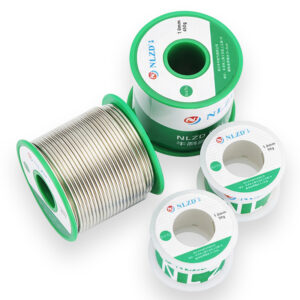
A healthy spool is bright and shiny; an oxidised one looks dull grey or chalky, and the wire may feel rough. In use, the warning signs are a joint that balls up instead of flowing, solder that will not wet the pad, or a grainy, crystalline fillet. Before blaming the iron or the technique, wipe the wire with a clean cloth — if it stays dull, the spool is the culprit. A quick test on a scrap pad confirms it: good solder flows into a smooth, shiny fillet; spoiled solder leaves a grey, rough one. For a reliable alternative that sidesteps wire oxidation entirely, consider pre-fluxed solder ring connectors.
Handling on the Bench
Storage is only half the story; bench habits matter too. Dispense solder from a covered reel holder rather than leaving the spool loose, and avoid handling the wire with oily or sweaty fingers — skin oils leave a film that fights the flux. Cut only the length you need so the remaining wire stays sheltered, and never re-wind a used length back onto a fresh spool. A clean dispenser with a short exposed tail is the difference between a spool that lasts and one that spoils in a month. After soldering, seal and insulate the joint with heat shrink tubing to keep moisture off the connection.
Lead-Free vs Tin-Lead Storage Notes
Lead-free solders are less forgiving. They oxidise faster and need a hotter, well-tinned tip, so their storage margin is thinner. Give lead-free reels the strictest sealing and the lowest humidity, and consider smaller spools that are used up quickly rather than large reels that sit open for months. Tin-lead is more stable but still benefits from the same rules, especially in humid climates where even mild oxidation shows up as poor wetting. Good storage only pays off if the joint is made well, so pair it with a properly calibrated iron — our soldering station selection guide covers wattage, ESD and tip care.
When to Discard
Discard a spool when the wire is heavily oxidised, when the flux no longer flows, or when you cannot get a clean joint after re-tinning the tip and confirming the iron temperature. The cost of a reel is trivial next to the cost of a field failure from a cold joint. If in doubt, retire it — solder is cheaper than rework and recalls.
Shelf Life by Alloy and Environment
Storage life is not a single number. Sealed tin-lead in a dry room stays usable for years; opened lead-free in a humid tropical storeroom can degrade within months. Treat any printed date as a guide for sealed stock and judge opened reels by condition, not the calendar. Rotating stock so the oldest is used first is the practical way to keep every reel within its real usable life, and it stops a forgotten spool from silently spoiling at the back of a shelf.
Climate-Specific Storage Advice
In humid or coastal climates, step up the discipline: sealed bags, fresh desiccant, and a dehumidified cabinet are worth it because the oxidation rate climbs sharply with moisture. In very dry or cold climates, condensation on warming is the risk, so avoid moving cold reels straight into a warm room — let them equilibrate sealed, then open. Match the storage method to the local climate rather than applying one rule everywhere, because the failure mode changes with the weather.
Auditing a Shared Storeroom
On a shared bench, solder gets mixed, opened and forgotten. A weekly glance at the sealed bags, the desiccant colour, and the first-in-first-out labels catches problems before they reach a joint. A simple log of opened reels and their date keeps accountability and makes it obvious when a spool has been hanging around too long to trust, which is the difference between a controlled store and a mystery pile.
Frequently Asked Questions
Does solder really expire if kept sealed?
Sealed, stored cool and dry, solder stays usable for many years — often well beyond any printed date. The expiry matters most once the pack is opened and exposed to humidity, which is why re-sealing opened reels is the key habit.
Can I clean oxidation off a spool to save it?
Surface dullness can sometimes be worked through with a fresh tip and active flux, but heavily chalky or grainy wire should be replaced. Wiping helps, but it does not restore lost flux in the core.
Should lead-free and tin-lead solder be stored separately?
Yes. Keep them in clearly labelled, separate containers so a reel is never grabbed by mistake. Mixing alloys in one joint or on one reel holder risks joints that do not meet the spec.
Is a refrigerator a good place to store solder?
Only if it is a dedicated, sealed dry cabinet. A kitchen fridge adds moisture through condensation when the reel warms, which is worse than a dry room. Use a desiccant cabinet, not a food fridge.
How do I tell if the flux inside has gone bad?
Bad flux shows up in the joint: the solder balls, smokes excessively, or will not wet even on a clean, hot pad. If a fresh tip and correct temperature still will not flow, the core flux has lost activity and the spool should be replaced.
Want solder and tools that arrive fresh and stay that way?
Niuli Electric supplies solder ring connectors and electric soldering stations suitable for production and field work. Ask about batch dating and packaging that keeps flux active from shipment to bench.
