



Key Takeaways
- A clip should snap clean at the break line, not crack up the stem during wedging.
- Premature cracking comes from impure or recycled resin and thin cross-sections.
- Over-wedging and twisted wedges add sideways load that breaks weak clips.
- High-purity resin clips snap at the scored line and leave a flat, lip-free joint.
- Match clip thickness to tile gauge so the break line sits at the surface.
Tile leveling clips exist to do one job: hold two tiles level while the mortar sets, then snap off cleanly at a scored line so the joint is flush. When a clip cracks up the stem or shatters instead of snapping, you are left with a ragged lip and a fiddly cleanup. The cause is usually the clip itself — impure resin and weak geometry — made worse by how it is wedged.
What a Clip Should Do
A good clip has a thinned break line at the tile surface. Once the wedge has levelled the tiles, you kick or snip the stem and it parts exactly there, leaving both tile edges supported and the seam flat. The clip below the floor stays buried; the part above snaps away. Clean snap-off is the whole point, and it depends on the break line being the weakest, predictable point.
Why Clips Crack Early
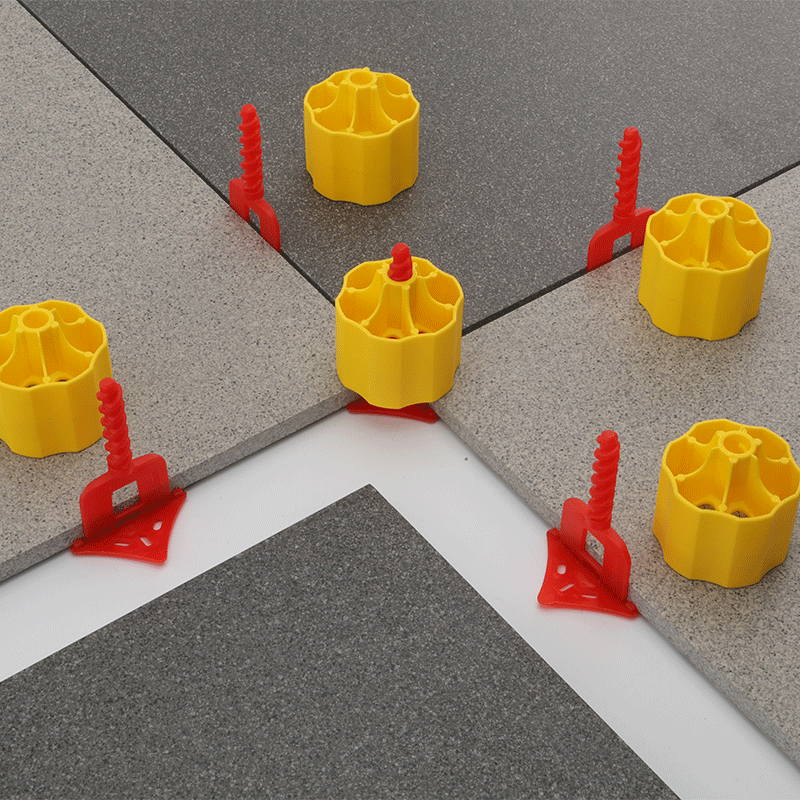
Clips that crack prematurely fail at a random point up the stem, not at the scored line. That happens when the plastic is not uniformly weak at the break line — often because the resin is impure, contains recycled filler, or the section is unevenly moulded. The stress then finds the worst spot anywhere in the stem and the clip splits there, leaving a stub proud of the floor.
Resin Purity and Cross-Section
| Clip | Break behaviour | Result |
|---|---|---|
| Pure-resin, scored | Snaps at line | Flat seam, easy clean |
| Impure / filled | Cracks random | Stub, ragged lip |
| Thin cross-section | Easy snap | But weak in use |
| Thick, clean | Strong, snaps at line | Best of both |
Table 1. Resin quality decides clean snap-off.
High-purity resin moulds to a consistent thickness and a true scored line, so the clip always parts where it should. Recycled or filled resin varies batch to batch and leaves weak spots away from the score. The fix is not a harder kick — it is a clip made from clean material with a deliberate, thin break line.
Wedging Errors
Even a good clip breaks wrong if wedged badly. Driving the wedge in too far pushes the tiles apart and loads the stem sideways; a twisted or off-centre wedge does the same. The clip is designed for axial snap load, not a bending load, so over-wedging and mis-alignment crack it up the stem. Seat the wedge square and stop at level — do not keep turning.
Getting a Flat Joint
After a clean snap the two tile edges meet at the same plane and the grout line is flush. A cracked stub means grinding or chiselling the remnant flat, which risks chipping the tile. Choosing a clip whose break line matches the tile thickness (so it sits at the surface, not buried) also helps the snap land where you want it.
Choosing Clips
Buy clips by resin purity and by the break line, not by the lowest price. A clean-resin clip sized to your tile gauge snaps where scored, saves cleanup and protects the edge. For repeat work, the small premium on material is repaid in time and in fewer chipped tiles.
Mortar Timing and the Snap Window
A clip is designed to snap after the mortar has grabbed but before it is fully hard. Snap too early and the tile can float and the seam opens; snap too late and the mortar holds the stem so firmly that it cracks up instead of parting at the line. The window depends on the mortar and the room temperature, so on a warm fast-set bed you snap the same day, while a slow bed may wait overnight. Read the mortar cure time, test one clip, and set the crew’s snap schedule to it rather than to the clock. A consistent snap window is what turns a pile of clips into a flat, repeatable floor.
- Snap after the mortar grabs, before it hardens.
- Match the snap schedule to mortar cure, not the clock.
- Test one clip to find the window.
- Warm beds snap sooner; slow beds may wait.
Worked Example: A Large-Format Floor
A large-format floor was laid with bargain clips that cracked up the stem instead of snapping at the line, leaving stubs proud of the tile. The installer had to grind each one flat, chipping two edges. Switching to clean-resin clips sized to the tile gauge, the stems snapped at the scored line and the seams were flush. The small material premium repaid itself in cleanup time and unchipped tiles.
Common Pitfalls
- Do not buy the cheapest clips; check resin purity.
- Do not over-wedge or twist the wedge.
- Size the clip so the break line sits at the surface.
- Snap at the line; grind only if it cracks wrong.
Niuli Tile Levelers
Niuli Electric supplies tile levelers with clean-resin clips and wedges sized to common tile gauges, engineered to snap at the scored line for a flat, lip-free joint.
Quick Selection Checklist
- A clip should snap clean at the break line, not crack up the stem during wedging.
- Premature cracking comes from impure or recycled resin and thin cross-sections.
- Over-wedging and twisted wedges add sideways load that breaks weak clips.
- High-purity resin clips snap at the scored line and leave a flat, lip-free joint.
- Match clip thickness to tile gauge so the break line sits at the surface.
Frequently Asked Questions
Why did my clip crack up the stem?
Impure resin or weak geometry; it failed away from the score line.
What makes a clean snap?
Pure resin and a true thinned break line at the surface.
Does over-wedging break clips?
Yes, excess and twisted wedges bend the stem and crack it.
Recycled resin problem?
Variable quality leaves weak spots away from the score.
How do I avoid a stub?
Snap at the line; use clips matched to tile thickness.
Twist the wedge?
No, seat it square and stop at level.
Thin clip better?
Easy snap but weak in use; want clean resin, not just thin.
Cleanup if it cracks?
Grind the stub flat carefully to avoid chipping the tile.
Size clip to tile?
Yes, so the break line sits at the surface.
Are Niuli clips pure resin?
Made from clean resin with a scored break line.
Related Resources
Use clean-resin clips that snap at the line — send your tile gauge and we will size the leveler.
