



- Reusable T-pin levelers save cost but the pin tip wears and the thread clogs with slurry.
- Plain steel pins rust in wet cement; stainless pins resist slurry corrosion.
- Wear shows as sloppy fit and uneven twist, so leveling drifts out of spec.
- Rinse and dry pins after each use; never let slurry set hard on the thread.
- Retire a pin when the tip or thread is worn past the point of a square, firm fit.
Reusable tile leveling needles (the T-pin type) are the economic choice for repeat tiling: instead of a disposable clip per joint, a steel T-pin twists through a reusable cap or wedge to pull tiles level, and you clean and reuse the pin job after job. The catch is maintenance — the pin tip wears and wet cement slurry corrodes plain steel, and both quietly wreck your leveling accuracy if ignored.
Why Reusable Needles
The reusable system pays back on volume. One set of T-pins serves a whole project and the next, against the per-joint cost of clip-and-wedge. The trade is that the pin is now a tool you maintain, not consumable you bin. Treat it like a measuring tool: its accuracy depends on the tip and thread staying true.
T-Pin Tip Wear
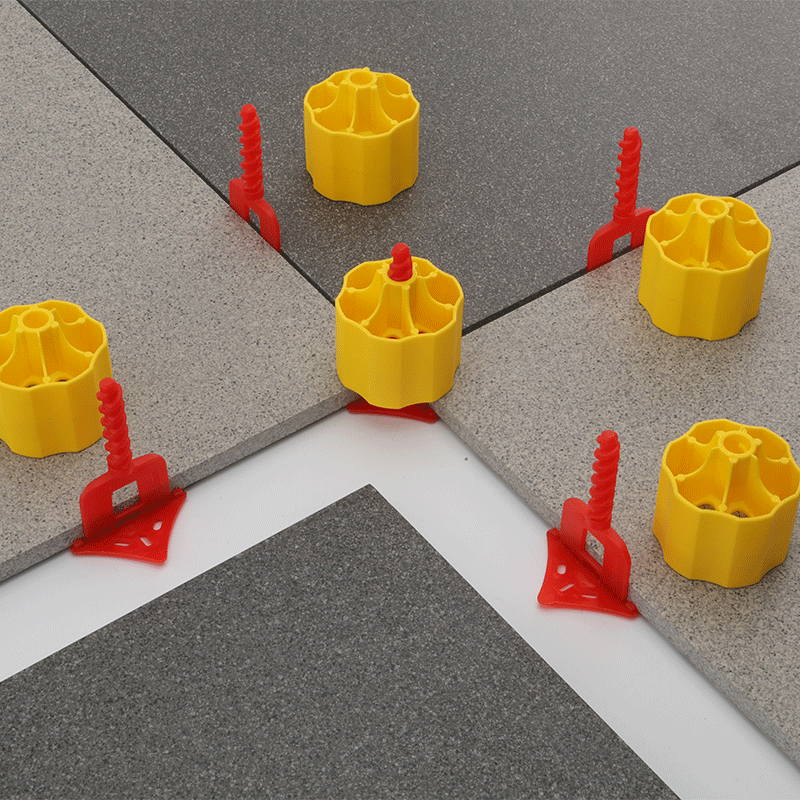
The T-pin bears on the cap and the tip seats in the base; with use the tip and the thread wear, first as a slight slop, then as uneven twist resistance. A worn tip no longer squares the cap, so the tile can twist a fraction off level and the seam drifts. Wear is slow but cumulative, and on a large floor it shows as inconsistent lippage you cannot see until grouting.
Cement Slurry Corrosion
| Issue | Plain steel | Stainless |
|---|---|---|
| Wet cement | Rusts fast | Resists |
| Slurry set-on | Clogs thread | Rinses off |
| Tip wear | Faster (soft) | Slower (hard) |
| Life | Short | Long |
Table 1. Plain vs stainless T-pin in slurry.
Cement slurry is alkaline and abrasive; plain steel pins left wet rust and the rust jams the thread so the pin will not turn smoothly. Stainless pins shrug off the slurry, and a quick rinse keeps the thread clear. The corrosion is not just cosmetic — a rusted, pitted thread gives uneven torque and the cap sits unevenly.
Cleaning and Storage
After each session, rinse the pins in water, brush the thread free of slurry, dry them and store where they will not sit wet. A light oil on the thread prevents any surface rust between jobs. Ten minutes of cleaning at the end of the day is what keeps a reusable set accurate for a season instead of a week.
When to Retire a Pin
Retire a pin when the tip is rounded past a firm square seat or the thread feels sloppy and gritty even after cleaning. A pin that no longer gives a consistent, square twist cannot level to spec, and reusing it just spreads lippage across the floor. Keep a spare set so a worn pin never holds up the job.
Stainless vs Plain
For any wet, alkaline or outdoor tiling, stainless T-pins are the clear choice: they resist slurry corrosion and hold their tip longer. Plain steel pins are cheaper but need aggressive drying and still rust; they suit dry, one-off indoor work where you will not reuse them much. Spend on stainless if the pins are meant to last.
Matching Pin to Cap and Base
A reusable needle only levels the floor if the pin, cap and base are made as one set. Mixing a T-pin from one maker with a cap from another often means a tip that will not seat square or a thread pitch that binds half a turn in, and the leveling drifts even with a perfect pin. Keep the set together and buy caps and bases to the same gauge as the pins, because a cap sized for a different tile thickness changes the pull height and the seam. Check that the pin length covers your thickest tile plus the cap with thread to spare, so the twist always lands square. A mismatched cap is a quiet, common source of lippage that gets blamed on the pin when the real fault is the pairing. Standardise one system per crew so every joint uses the same known-good geometry, and the accuracy you paid for actually shows up in the floor.
- Keep pin, cap and base as one matched set.
- Buy caps to the same tile gauge as the pins.
- Check pin length covers tile plus cap with margin.
- Standardise one system per crew to avoid mix-ups.
- Blame the pairing, not the pin, for drift.
Worked Example: A Repeat Contractor
A tiling contractor reused plain steel T-pins across jobs without rinsing. After a few wet floors the threads rusted and jammed, giving uneven twist and drifting lippage. Moving to stainless pins and a rinse-dry-oil routine at end of day, the set stayed accurate for a full season. The reusable system only paid off once the pins were treated as maintained tools, not binned consumables.
Common Pitfalls
- Do not leave plain steel pins wet in cement slurry.
- Rinse, brush the thread, dry and lightly oil after use.
- Retire a pin when the tip or thread wears past a firm fit.
- Use stainless for wet, alkaline or outdoor tiling.
Niuli Leveling Needles
Niuli Electric supplies tile levelers with reusable stainless steel T-pins built to resist slurry corrosion and hold their tip, so the leveling stays consistent across repeat jobs.
Quick Selection Checklist
- Reusable T-pin levelers save cost but the pin tip wears and the thread clogs with slurry.
- Plain steel pins rust in wet cement; stainless pins resist slurry corrosion.
- Wear shows as sloppy fit and uneven twist, so leveling drifts out of spec.
- Rinse and dry pins after each use; never let slurry set hard on the thread.
- Retire a pin when the tip or thread is worn past the point of a square, firm fit.
Frequently Asked Questions
Why reuse T-pins?
Lower cost per joint across repeat tiling work.
What wears first?
The tip and thread; slop leads to uneven leveling.
Why does slurry rust pins?
Cement is alkaline and abrasive; plain steel rusts and jams.
Stainless better?
Yes, resists slurry and holds the tip longer.
How to clean pins?
Rinse, brush the thread, dry, light oil; never let slurry set.
When retire a pin?
Tip rounded or thread sloppy after cleaning.
Plain steel OK?
Only dry one-off indoor; it rusts in wet cement.
Does rust affect leveling?
Yes, pitted thread gives uneven torque and cap seat.
Store pins wet?
No, dry and lightly oiled between jobs.
Are Niuli pins stainless?
Reusable stainless T-pins for slurry resistance.
Related Resources
Use stainless reusable pins and clean them — send your tile format and we will kit the leveler.
