



- Tensile strength is the loop load at which the tie breaks, not the bundle weight it holds.
- A safe rule is to choose a tie rated several times the actual sustained load.
- 18 lb ties suit light wire and sensors; 40-50 lb covers most general harnesses.
- 120 lb and heavy-duty ties are for rigid bundles and conduit; 250 lb stainless for harsh duty.
- Environment (UV, heat, chemical) moves you up a class even at low load.
The number printed on a cable tie bag — 18 lb, 50 lb, 120 lb — is its tensile strength: the straight-pull loop load at which the tie breaks in a lab. It is not the bundle weight the tie will comfortably hold in service. Real bundles see vibration, temperature swing and shock, so you should pick a tie rated well above the sustained load. The trick is mapping bundle size and duty to the right class so the tie holds without being oversized and wasteful.
What Tensile Strength Means
Tensile strength is measured on a single tie pulled in a loop until failure. In the field the tie is bent around a bundle, exposed to heat and movement, and loaded off-axis, all of which lower the effective capacity. A common design rule is to treat the working load as a fraction (often a quarter to a third) of the rated tensile, leaving margin for shock and ageing. So an 18 lb tie is not for an 18 lb bundle — it is for a few pounds of light wire.
18 lb: Light Duty
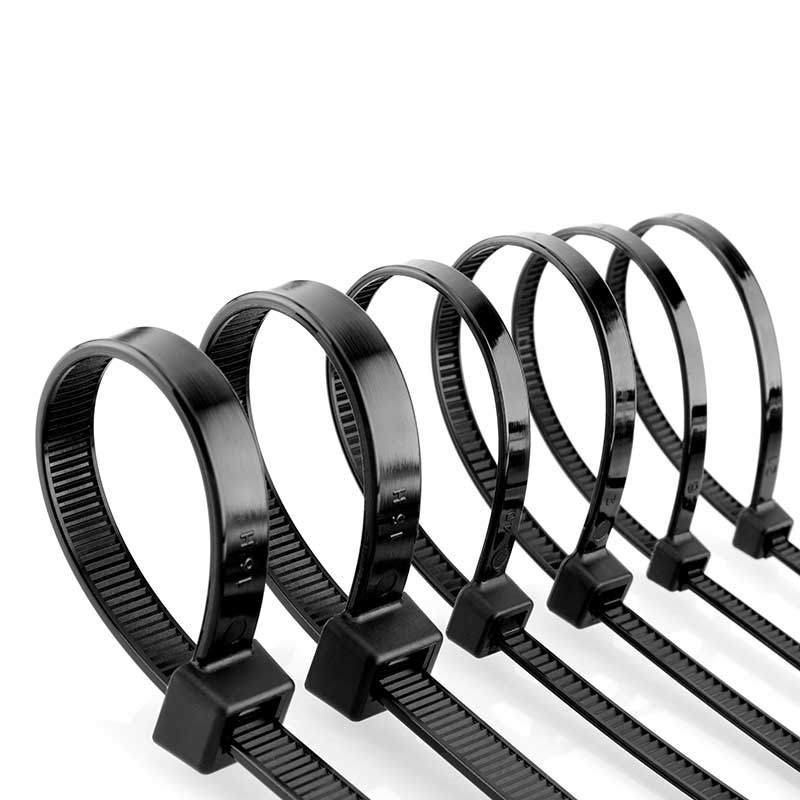
The 18 lb (sometimes 8 kg) tie is the small, thin strap for light indoor wire, sensor leads and tidy work where the load is grams to a couple of pounds. It is cheap, easy to pull by hand and perfect for dressing signal cable. It is not for bundles that carry weight or sit in sun and weather, where UV and load will beat the small section quickly.
40-50 lb: General Duty
The 40 lb and 50 lb ties (around 18-22 kg) are the workhorses for general harnesses: power cable bundles, panel dress and most machinery wiring. They take a real bundle load, fit a tension tool, and cover the bulk of industrial use. If you are not sure and the bundle is a typical mixed loom, a 50 lb tie with the right environment rating is the safe default.
120 lb: Heavy Duty
| Class | Typical use | Bundle feel |
|---|---|---|
| 18 lb | Light wire, sensors | Grams to a few lb |
| 40-50 lb | General harness | Typical loom |
| 120 lb | Rigid bundle, conduit | Heavy, stiff |
| 250 lb | Stainless, harsh duty | Very heavy / corrosive |
Table 1. Tensile class by application.
The 120 lb (about 50 kg) heavy-duty tie is for stiff, heavy bundles — grouped conduit, thick cable runs and anything that wants to spring apart. Its wider, thicker section resists the levering a fat bundle applies to a small tie. Use it where a 50 lb tie would be stretched to its limit or where vibration could work a lighter tie loose.
250 lb: Stainless / Harsh
At the top, stainless steel ties (often around 250 lb and up) handle the duties nylon cannot: high heat, direct sun for decades, chemical plants and places where a failed plastic tie is a safety event. They cost more and need a steel-tie tool, but where the environment or the consequence of failure is severe, the rating and the material decide the choice, not the bundle weight alone.
When Environment Wins
A low-load tie in a harsh place still needs a high class. UV, heat and chemicals attack the polymer and drop its real strength over time, so an outdoor or oven-adjacent run should step up to UV-stable, high-temperature or stainless ties even if the held weight is tiny. Match the material to the environment first, then the tensile class to the load.
Selection Quick Pick
Quick rule: light signal wire to a few pounds — 18 lb; normal loom — 40-50 lb; stiff heavy bundle or conduit — 120 lb; heat, sun or chemical and safety-critical — stainless 250 lb. Always leave margin: rate the tie at several times the sustained load, and confirm the environment rating before the tensile class.
Worked Example: A Thick Power Bundle
A group of thick power cables was bundled with 18 lb ties because they were on hand; the ties stretched and the bundle sprang apart under its own spring. Moving to 120 lb heavy-duty ties, the bundle stayed compressed and the ties showed no lever crack. The load was never near 18 lb in straight pull, but the off-axis spring of a fat bundle needed the wider section. Rate the tie by bundle behaviour, not just weight.
Common Pitfalls
- Do not treat tensile strength as the held weight.
- Leave margin: rate the tie at several times the load.
- Step up a class for UV, heat or chemical duty.
- Use stainless where failure is a safety event.
Niuli Tie Range
Niuli Electric manufactures standard cable ties (light), super-strong cable ties (heavy), UV-resistant, high-temperature and stainless steel ties across the 18-250 lb range with declared tensile class and environment ratings.
Quick Selection Checklist
- Tensile strength is the loop load at which the tie breaks, not the bundle weight it holds.
- A safe rule is to choose a tie rated several times the actual sustained load.
- 18 lb ties suit light wire and sensors; 40-50 lb covers most general harnesses.
- 120 lb and heavy-duty ties are for rigid bundles and conduit; 250 lb stainless for harsh duty.
- Environment (UV, heat, chemical) moves you up a class even at low load.
Frequently Asked Questions
Is tensile strength the bundle weight?
No, it is the break load; use a fraction of it as working load.
What is an 18 lb tie for?
Light wire and sensors, grams to a few pounds.
When do I need 40-50 lb?
General harnesses and most machinery wiring — the common default.
What is 120 lb for?
Stiff heavy bundles and conduit where a small tie would lever open.
Why stainless 250 lb?
Heat, UV, chemical and safety-critical duty nylon cannot handle.
How much margin should I leave?
Rate the tie at several times the sustained load.
Does environment beat load?
Yes, harsh places step you up a class even at low weight.
UV outdoors on an 18 lb tie?
Use UV-stable or stainless; small ties age fast in sun.
Can I tension these with a tool?
Yes, use the calibrated tool set to the tie class.
Are Niuli tensile classes declared?
Yes, each tie states its class and environment rating.
Related Resources
Size the tie to load and environment — send the bundle and duty and we will pick the class.
