



- A steel nail into hard masonry sends a shock load through the clip body.
- Brittle or thin polymer clips crack before the nail is home under heavy conduit.
- Clip grade (super-strong vs light) decides how much shock and load it survives.
- Pre-drilling the hard substrate removes the shock and protects the clip.
- Spread the load: use more clips and saddles for heavy, rigid conduit.
A cable clip is meant to be tapped in with a hammer, but when the conduit is heavy and the wall is hard, that same tap can split the clip before the nail is home. The failure is not the nail — it is the polymer body cracking under the shock wave of a steel nail driven into unyielding masonry while a stiff conduit tries to lever the saddle open.
The Shock Load of Hammering
Driving a hardened steel nail into concrete or brick is a percussive event: the energy has nowhere to go in the hard substrate, so a large share travels up the nail and into the clip body. A light clip with a thin saddle concentrates that energy and cracks. The heavier the conduit already pressing on the saddle, the less extra shock the clip can absorb before it fails.
Polymer Fracture Dynamics
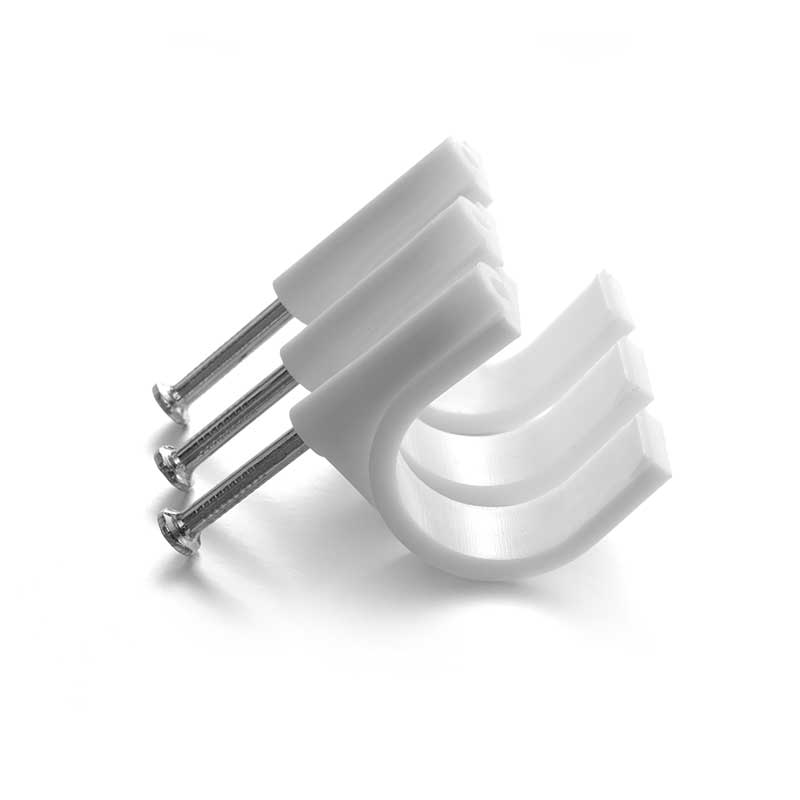
Clips are moulded polymer, and like any plastic they have a fracture toughness — a threshold of energy below which they deform and above which they crack. A sharp blow from a steel nail on a hard wall can exceed that threshold locally at the nail boss. Super-strong grades use a tougher blend and thicker sections at the stress point, so the same hammer blow is absorbed as flex instead of a crack.
Clip Grade and Nail
| Clip | Nail | Best for |
|---|---|---|
| Light / flat | Fine steel | Light cable, soft wall |
| Super-strong | Hardened steel | Heavy conduit, hard wall |
| Double-nail | Two steel | High pull-out, vibration |
| Circle | Steel | Rounded bundle, tidy run |
Table 1. Match clip grade to the load and wall.
The nail is as important as the body. A hardened, straight nail drives true; a soft or bent nail wanders and levers the saddle sideways, cracking it. Pair a super-strong clip with a quality hardened nail and the hammer energy is spent seating the nail, not splitting the clip.
Hard Substrates and Pre-Drill
On concrete, hard brick or stone, pre-drilling a pilot hole removes almost all the shock. The nail then simply follows the hole and the clip body never sees the percussive spike. Where you cannot pre-drill, use the toughest clip grade and tap, do not strike hard — let the nail cut in rather than slam.
Load From Heavy Conduit
Heavy rigid conduit adds a steady side load and, when it moves, a levering force on the saddle. A clip spaced too far from its neighbour lets the conduit sag and amplify that lever, popping the clip or cracking it. Closer spacing and a saddle that fully encircles the conduit share the load and keep each clip within its rating.
Better Fixing Method
For heavy runs, prefer a saddle or clamp that wraps the conduit, pre-drill hard walls, step up to a super-strong or double-nail clip, and shorten the spacing. If a clip cracks on the first tap, the cause is the combination of hard wall plus shock plus load — change the method, not just the brand.
Clip Material: Nylon vs PP
| Property | Nylon clip | PP clip |
|---|---|---|
| Toughness | High | Moderate |
| Heat resistance | Better | Softer sooner |
| UV / outdoor | Good | Chalks faster |
| Cost | Higher | Lower |
| Best use | Hard wall, heavy | Light, indoor |
Table 2. Nylon vs PP clip body for heavy-conduit duty.
Most super-strong clips use a nylon (PA) body because it absorbs the hammer shock and holds its shape under the steady side load of heavy conduit; a polypropylene body is cheaper and fine for light indoor cable but softens and cracks sooner under the same shock and load. If a clip keeps fracturing on a hard wall, check that the body is nylon and not PP, because the material, not just the grade name, decides whether it survives the first tap. Pair the nylon body with a hardened steel nail and the fixing is built for the duty.
Worked Example: A Workshop Conduit Run
A heavy rigid conduit was clipped to a poured concrete wall with light flat clips and a hard strike. The first clip cracked on the third tap and the conduit sagged. Pre-drilling a pilot hole, stepping up to super-strong clips with hardened nails and halving the clip spacing, the run went in clean: no cracked bodies, even support, and the conduit stayed put under its own weight. The fix was method and grade, not brand.
Common Pitfalls
- Do not hammer hard on a hard wall; pre-drill instead.
- Use super-strong or double-nail clips for heavy conduit.
- Shorten clip spacing so the conduit cannot lever the saddle.
- Pair the clip with a hardened, straight nail.
Niuli Cable Clips
Niuli Electric supplies super-strong cable clips, double-nail clips, flat clips and circle clips with hardened nails for hard-wall and heavy-conduit duty.
Quick Selection Checklist
- A steel nail into hard masonry sends a shock load through the clip body.
- Brittle or thin polymer clips crack before the nail is home under heavy conduit.
- Clip grade (super-strong vs light) decides how much shock and load it survives.
- Pre-drilling the hard substrate removes the shock and protects the clip.
- Spread the load: use more clips and saddles for heavy, rigid conduit.
Frequently Asked Questions
Why did my clip crack on hammering?
Shock from a steel nail into hard wall exceeded the clip fracture toughness.
Does conduit weight matter?
Yes, heavy rigid conduit levers the saddle and lowers the failure threshold.
Should I pre-drill?
On hard walls, yes — it removes the shock that cracks clips.
Which clip for heavy conduit?
Super-strong or double-nail with a hardened steel nail.
Is the nail important?
Yes, a hardened straight nail drives true and avoids side-levering.
Why space clips closer?
It shares the load and stops the conduit levering the saddle open.
Tap or strike hard?
Tap; let the nail cut in rather than slam the body.
Do circle clips hold heavy conduit?
They suit rounded bundles; use super-strong for heavy rigid runs.
Can I reuse a cracked clip?
No, fit a new one; a crack propagates under load.
Are Niuli clips hardened-nail?
Yes, supplied with hardened nails for hard substrates.
Related Resources
For heavy conduit on hard walls use super-strong clips and pre-drill — send the run and we will spec spacing.
