



- A hand-pulled tie is tensioned by feel and is almost always over-tightened.
- Over-tension deforms the jacket and can shear internal conductors or damage the bundle.
- A calibrated tool stops at a set tension and cuts off flush, every time.
- Right tension protects delicate wiring and stops the tie neck fracturing from fatigue.
- Use the tension class matched to the tie size and the bundle sensitivity.
Cable ties are meant to be snug, not strangled. Pulled up by hand, a tie is almost always over-tensioned: the installer keeps pulling until the tail breaks or the pawl slips, and by then the bundle is crushed. For delicate harnesses that over-tension shears internal conductors, deforms the jacket and sets the tie neck up for fatigue failure. A tension-controlled tool removes the guesswork by cutting the tie at a calibrated tension.
The Problem With Hand Tensioning
Hand tensioning has no stop. The force a person applies varies with the job, the glove and the day, so two ties on the same harness can sit at very different tensions. The natural instinct is to keep pulling until it feels secure, which usually means past secure and into damage. Consistent, repeatable tension needs a mechanism, not a feel.
Conductor Shear and Damage
When a tie is over-tightened around a cable, the strap acts like a vice on the jacket. Soft insulation deforms, and if the bundle contains fine or fragile conductors they can be pinched and partially sheared, raising resistance or breaking intermittently. Fibre or fluid lines can be restricted. The damage is invisible from outside until the circuit fails, which is why it shows up as a mystery fault months later.
How a Calibrated Tool Works
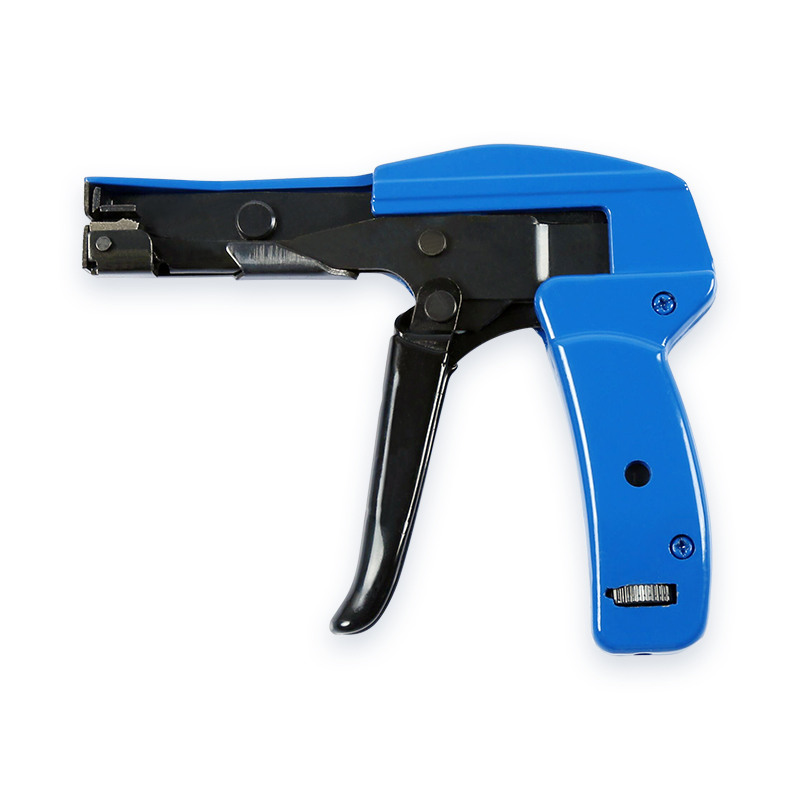
A tension-controlled (calibrated) tool tensions the tie to a preset value and then automatically cuts the tail flush at that tension. The pawl advances until the strap reaches the set force, a clutch releases, and the cutter severs the excess. Every tie leaves the tool at the same tension regardless of who pulls the trigger, so the bundle is held firmly but not crushed.
Tension Classes
| Tie size | Typical tension class | Use |
|---|---|---|
| Small (2.5 mm) | Low | Delicate wire, sensors |
| Standard (3.6-4.8 mm) | Medium | General harness |
| Heavy (7-9 mm) | High | Conduit, bundles |
| Stainless | High | Metal ties, harsh duty |
Table 1. Match the tool tension class to the tie and bundle.
Set the tool to the class the tie is rated for. Too low and the tie slips; too high and you are back to over-tension damage. Most tools are adjustable across a range, so one tool covers several tie sizes if you set it per job.
Nerve and Fatigue Failure
An over-tensioned tie also fails by fatigue: the neck and the bundle are pre-loaded, so every vibration cycles the stress and the strap eventually cracks at the pawl. Under-tension is not free either — a loose tie lets the bundle move and chafe. The calibrated tool lands in the narrow band where the tie holds without pre-loading the neck, which is exactly where it survives vibration.
Choosing the Tool
For production or any harness where reliability matters, use a tension-controlled tool sized to your ties, set the class per tie, and verify the cut is flush (a long tail snags and a short one can undo). For field work on delicate wiring, the low class protects the conductors; for heavy bundles, step up. The tool pays for itself in avoided harness rejects.
Verifying Tool Calibration
A tension tool is only as good as its last calibration. Over a long production run the clutch spring relaxes and the cut point drifts, so a tool that was perfect last month can over-tension one batch and under-tension the next. Check it on a schedule: tension a sample tie and confirm the tail cuts flush at the rated feel, then, where the harness matters, pull a handful of ties to break and compare the result with the class rating on the bag. On critical wiring, set a re-check interval and keep a known-good reference tie so drift shows up as a change in cut feel before it becomes a field failure. A tool that cuts early leaves ties loose and chafing; one that over-tensions is straight back to crushing the bundle. The check takes minutes and insures a whole batch of ties.
- Re-check clutch calibration on a fixed schedule.
- Confirm the tail cuts flush at the set class.
- Pull-test a few ties against the rated class.
- Keep a reference tie to spot drift early.
- Service or retire a tool that drifts past its class.
Worked Example: A Sensor Harness
A sensor harness with fine leads was being tied by hand, and two circuits failed intermittently weeks later from crushed insulation. Switching to a calibrated low-class tension tool, the ties left the tool snug but not crushing, and the tails cut flush. Re-testing showed the conductors intact and the bundle stable under vibration. The tool removed the variable that was over-tensioning the delicate wire.
Common Pitfalls
- Do not hand-tension delicate or sensor wiring.
- Set the tool class to the tie size and bundle.
- Cut the tail flush; a long tail snags.
- Do not under-tension or the bundle chafes.
Niuli Tie Tools
Niuli Electric supplies nylon cable tie cutting tools and metal cable tie cutting tools for calibrated tensioning, plus the ties they pair with across the tension classes.
Quick Selection Checklist
- A hand-pulled tie is tensioned by feel and is almost always over-tightened.
- Over-tension deforms the jacket and can shear internal conductors or damage the bundle.
- A calibrated tool stops at a set tension and cuts off flush, every time.
- Right tension protects delicate wiring and stops the tie neck fracturing from fatigue.
- Use the tension class matched to the tie size and the bundle sensitivity.
Frequently Asked Questions
Why not hand-tension ties?
Feel varies; ties end up over-tightened and damage the bundle.
What does over-tension do?
Crushes jacket, can shear fine conductors, pre-loads the neck.
How does a calibrated tool help?
Cuts at a set tension every time, flush, no over-pull.
Which tension class?
Match the tie size and bundle sensitivity from the chart.
Can over-tension cause fatigue?
Yes, the pre-loaded neck cracks under vibration.
Loose tie is fine?
No, a loose tie lets the bundle chafe and move.
Flush cut important?
Yes, a long tail snags; set the tool to cut flush.
Metal ties need a special tool?
Yes, use the metal-tie cutter class.
Do Niuli tools cover sizes?
Adjustable tools cover several tie sizes per class range.
When is a tool worth it?
Any production or reliability-critical harness.
Related Resources
- Nylon Cable Tie Cutting Tool
- Metal Cable Tie Cutting Tool
- Standard Cable Ties
- Super-Strong Cable Ties
Use a calibrated tool to stop tie damage — send your tie sizes and we will match the tension class.
