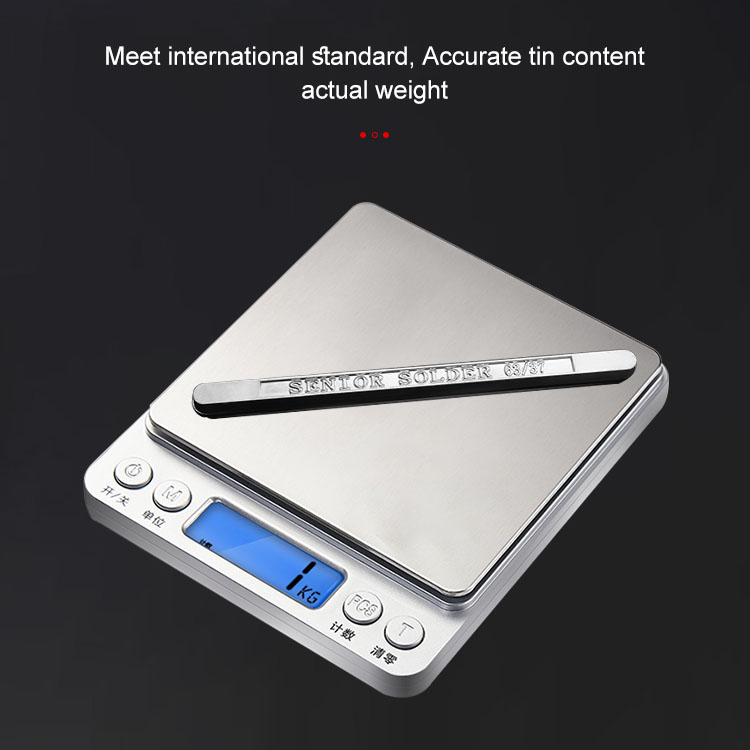
1.Material: Tin(Sn) and Lead(Pb)
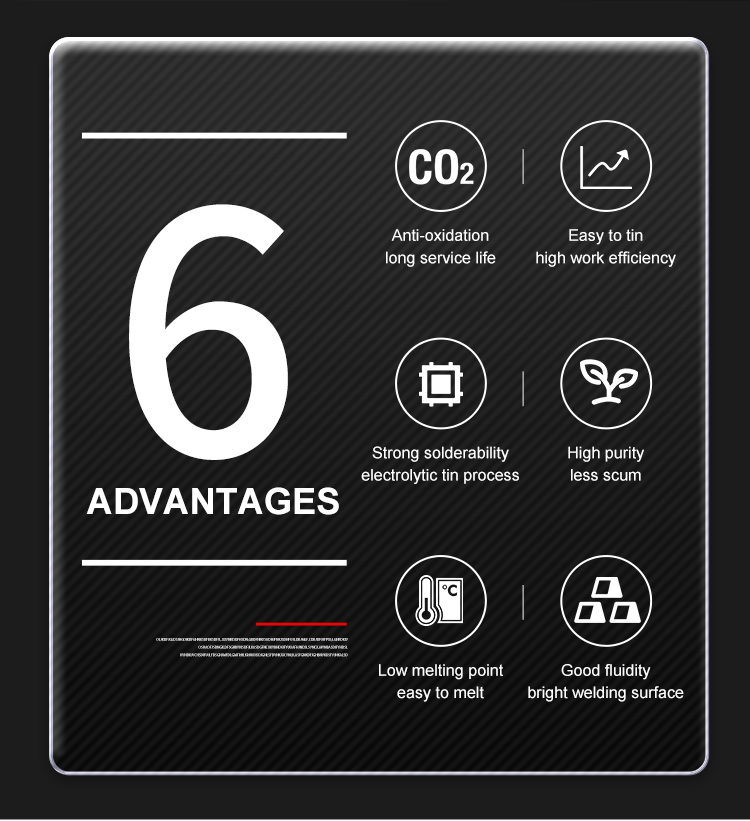
2.Features: Smooth solder joint, low melting point, strong welding, no cleaning, accurate tin and lead content, stable quality.
3.Weight: for one piece, 500 grams, 1 kg, 2 kg, other weight can be customized.
4.Certificates: CE
Niuli Tin Lead Solder Bars are available in a wide range of Sn/Pb alloy ratios for wave soldering, dip soldering, tinning and industrial solder-pot applications. Common grades include Sn63Pb37, Sn60Pb40, Sn50Pb50, Sn40Pb60 and higher-lead alloys for applications requiring different melting ranges and process temperatures.
Tin content directly affects melting behavior, flow, solderability and material cost. We control the Sn/Pb ratio according to the ordered specification. COA and alloy composition reports can be provided by batch, helping customers verify the actual material supplied.
Sn63Pb37
Eutectic alloy with a melting point of 183°C. Excellent flow and widely used for through-hole wave soldering and electronics applications. Indium describes it as the most common SnPb alloy for through-hole wave soldering. Melting range approximately 183–191°C. Commonly used for general soldering and tinning; Kester notes that its wider plastic range can provide a slightly thicker solder coating.
Sn50Pb50 / Sn40Pb60 / Sn30Pb70
Higher melting-range alloys suitable for selected dip-tinning, electrical and general industrial soldering applications.
High-Lead Alloys
Available for specialized higher-temperature soldering applications where their use is permitted.
Soldering performance depends on more than the alloy itself. Flux, solder-pot temperature, oxidation, equipment settings and contamination all affect wetting, hole fill, bridging and dross formation.
Regular solder-bath analysis and correct replenishment help maintain stable alloy composition during long-term production.
Depending on product and customer requirements, documentation can include:
COA · Alloy Composition Report · SDS · TDS
For electronic-grade applications requiring IPC J-STD-006, please specify the required standard before ordering. J-STD-006 defines solder products by alloy composition, purity/impurity limits and solder form.
| Model | Ingredient | Melting Point(℃) | Recommended Solder Pot Temperature(℃) | Density(g/cm²) | Main function |
| NLSW-63% | 63% Sn 37% Pb | 183 | 240-260 | 8.4 | Need low temperature welding or good fluidity, it is suitable for welding of high precision circuit boards such as home appliances, communications and computers. |
| NLSW-60% | 60% Sn 40% Pb | 183-190 | 240-260 | 8.5 | |
| NLSW-60A | 55% Sn 45% Pb | 183-203 | 280-320 | 8.7 | |
| NLSW-1# | 50% Sn 50% Pb | 183-215 | 280-320 | 8.9 | Suitable for instrument, instrument, automobile water tank, steel ware, electric box, aluminum pipe leakage prevention, etc. |
| NLSW-2# | 45% Sn 55% Pb | 183-221 | 280-330 | 9.1 | |
| NLSW-3# | 40% Sn 60% Pb | 185-235 | 300-340 | 9.3 | |
| NLSW-4# | 35% Sn 65% Pb | 185-245 | 300-350 | 9.5 | Suitable for welding lamp holder, safety tube, etc. |
| NLSW-5# | 30% Sn 70% Pb | 185-255 | 330-360 | 9.7 | |
| NLSW-6# | 25% Sn 75% Pb | 185-267 | 330-370 | 9.9 | |
| NLSW-7# | 20% Sn 80% Pb | 185-279 | 350-380 | 10.2 | |
| NLSW-8# | 15% Sn 85% Pb | 270-290 | 350-390 | 10.4 | / |
| NLSW-9# | 10% Sn 90% Pb | 270-305 | 350-400 | 10.6 | |
| NLSW-10# | 5% Sn 95% Pb | 300-330 | 370-420 | 10.9 |
| Alloy | Melting | Main Characteristic | Typical Application |
|---|---|---|---|
| Sn63Pb37 | 183°C | Eutectic / excellent flow | Wave soldering / electronics |
| Sn60Pb40 | 183–191°C | Wider plastic range | Tinning / general soldering |
| Sn50Pb50 | 183–215°C | Higher melting range | Dip tinning / industrial |
| Sn40Pb60 | ~185–235°C | Lower tin content | Industrial soldering |
| Sn30Pb70 | ~185–255°C | Higher-temperature range | Selected industrial uses |
| Sn10Pb90 / Sn5Pb95 | Higher | High-lead alloy | Specialized high-temperature applications |
| Buyer Problem | Niuli Solution |
|---|---|
| Actual tin content lower than quotation | Batch composition verification |
| Poor wetting / hole fill | Correct alloy + process recommendation |
| Excessive dross | Controlled material + solder-pot guidance |
| Solder bath becomes contaminated | Periodic bath-analysis recommendation |
| Different alloy prices are hard to compare | Clear Sn/Pb composition on quotation |
| Documentation required | COA / SDS / composition report |
Q1: What tin-lead alloy ratios are available for your solder bars?
We supply standard industrial alloys including Sn63/Pb37 (eutectic alloy for quick melting and minimal dross), Sn60/Pb40, and custom tin-lead proportions tailored for high-volume wave soldering and DIP soldering applications.
Our high-purity tin lead solder bars are refined through an anti-oxidation manufacturing process. This significantly reduces solder dross formation, lowers material maintenance costs, improves fluid fluidity, and ensures defect-free solder joints on PCBs.
Q3: Do you provide technical datasheets (TDS) and RoHS/MSDS certifications?
Yes, every batch comes with official Material Safety Data Sheets (MSDS), Technical Data Sheets (TDS), and SGS chemical composition analysis reports to ensure full quality control.
Q4. What causes excessive solder dross?
Dross is affected by oxidation, solder-pot temperature, agitation and contamination—not only by the solder bar itself.
Q5. Can you verify the alloy composition?
Yes. COA and alloy composition reports can be provided according to order requirements.
Get factory-direct pricing, custom alloy proportions (Sn63/Pb37, Sn60/Pb40), and SGS technical datasheets for your wave soldering line.
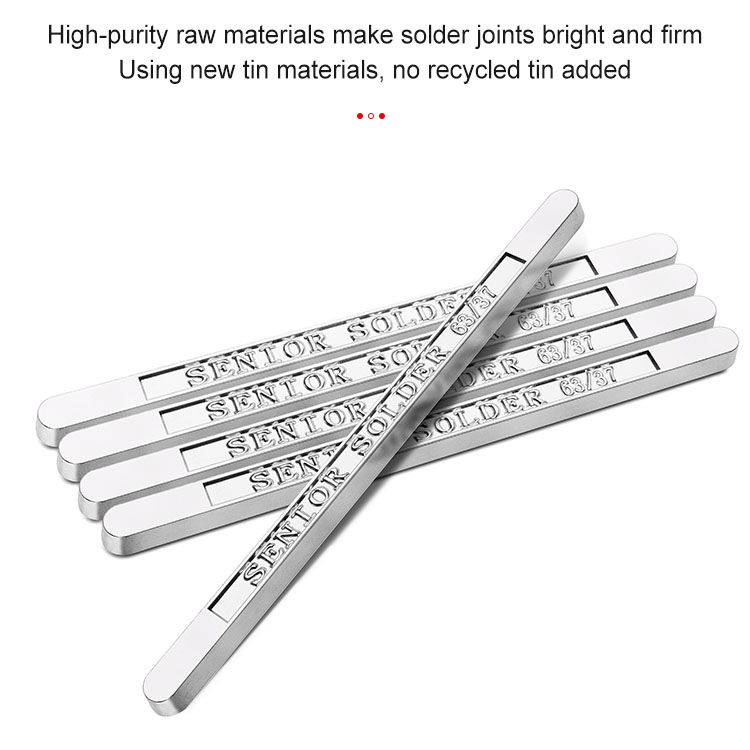
Composition-controlled Sn/Pb solder bars available from Sn63Pb37 to high-lead alloys for wave soldering, dip soldering, tinning and industrial solder-pot applications.
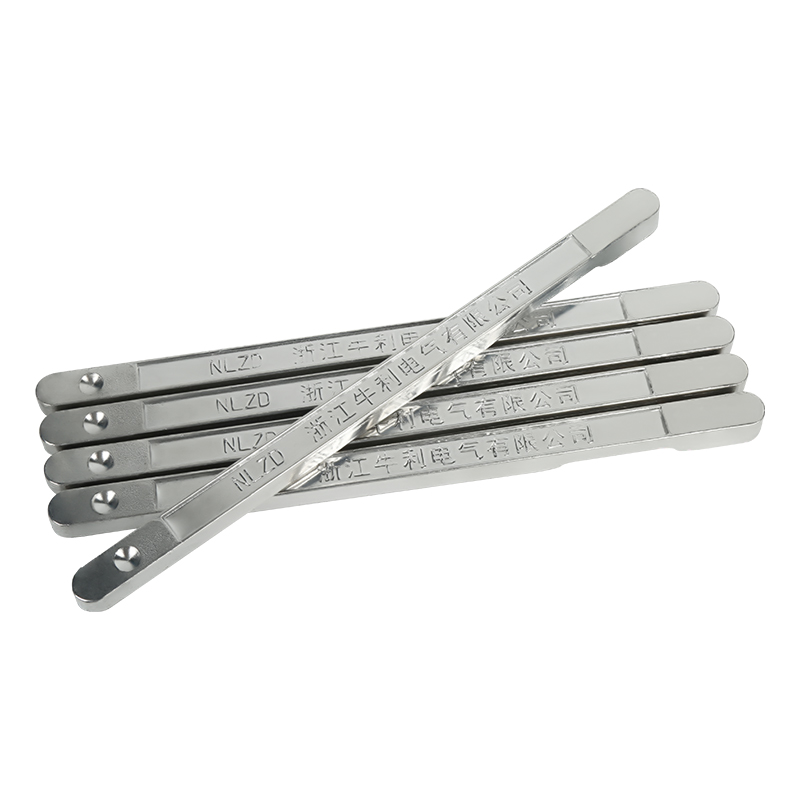
High-purity lead-free solder bars available in SAC, SnCu and other tin-based alloys for wave soldering, selective soldering and solder-pot applications.
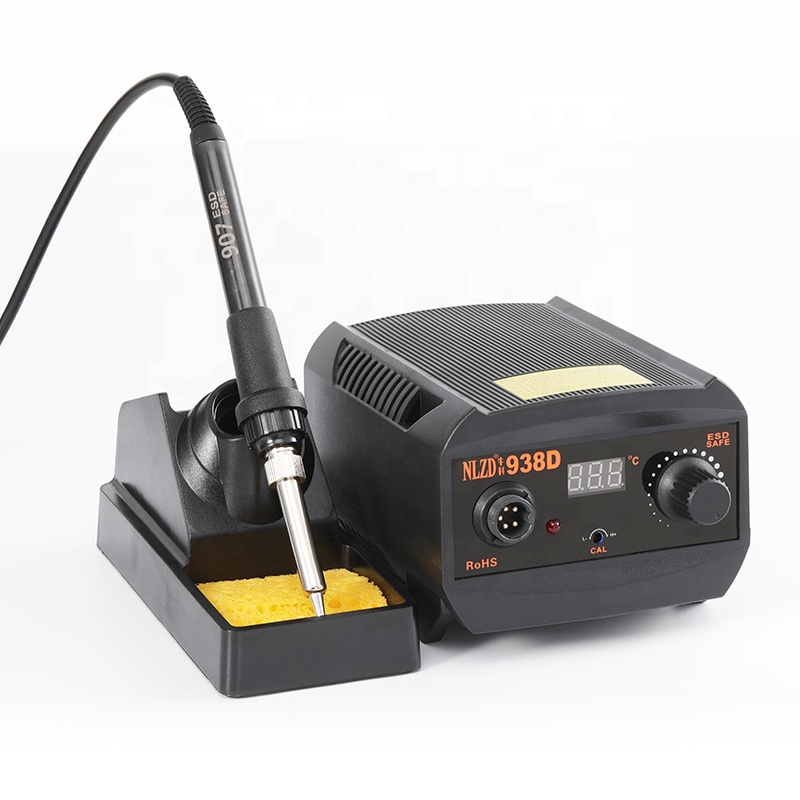
Features: 200-500 ℃ temperature adjustment, fast temperature recovery, anti-static, sufficient variable voltage full power, safety control
Products: power station, iron stand, clean sponge, soldering iron handle.
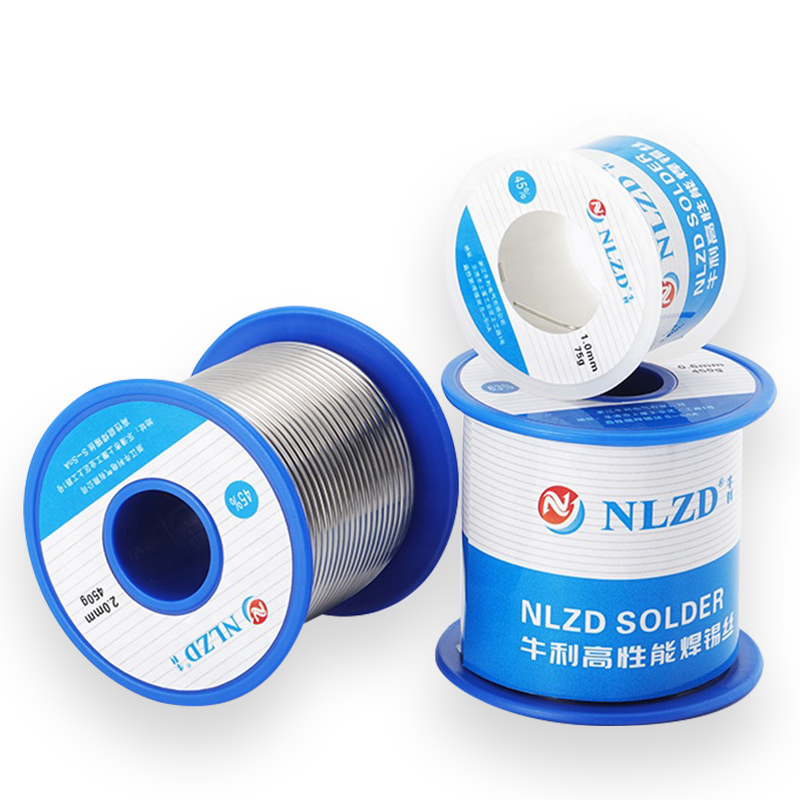
Flux-cored tin-lead solder wire available in Sn63Pb37, Sn60Pb40 and other Sn/Pb ratios, with controlled alloy composition, consistent wire diameter and customized flux options for reliable soldering.
 Optimized by Seraphinite Accelerator