



When installing electrical systems in industrial, commercial, or harsh outdoor environments, ensuring secure connections is vital. But how does a cable gland work to protect your wiring?
Simply put, a cable gland (also known as a cord grip or cable connector) is a mechanical device designed to secure, seal, and ground electrical cables as they enter an enclosure, panel, or piece of equipment. In this guide, we will break down the working principle of cable glands, their key components, and why they are essential for industrial safety
Cable glands play a critical role in managing and protecting electrical cables that enter equipment enclosures. While they may seem like simple fittings, their design and functionality are essential for ensuring electrical safety and system reliability. In this article, we explain how a cable gland works and why it is an important component in electrical installations.
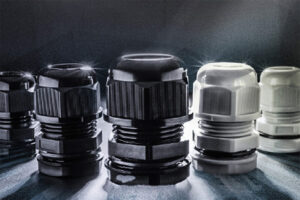
Main Functions of a Cable Gland
Cable glands serve several purposes:
-
Providing strain relief
-
Sealing the cable entry point
-
Preventing the ingress of dust, water, and chemicals
-
Ensuring grounding and earthing for armored cables
Components of a Cable Gland

A typical cable gland includes:
-
Gland body: The main housing that inserts into the equipment
-
Sealing nut: Tightens the gland to form a seal around the cable
-
Clamping or compression ring: Applies pressure to the cable
-
Locknut: Secures the gland from inside the panel or enclosure
How Does a Cable Gland Work?
The primary function of a cable gland is to act as a boundary barrier. It performs three crucial mechanical and environmental tasks simultaneously:
-
Environmental Sealing (IP Rating): As the outer nut (cap nut) is tightened, it compresses an internal rubber seal (sealing ring) tightly around the cable jacket. This prevents the ingress of dust, moisture, water, and corrosive chemicals, often achieving IP66, IP67, or IP68 ratings.
-
Mechanical Retention & Strain Relief: The clamping mechanism inside the gland grips the cable firmly. This ensures that any accidental pulling or tension on the external cable is absorbed by the gland rather than straining the internal terminal connections.
-
Earthing and Grounding (For Armored Cables): In armored cable applications, a specialized metallic cone and armor clamp establish a low-resistance, continuous electrical path between the cable armor and the equipment enclosure, protecting against short circuits and electrical faults.
Working Principle
When the sealing nut is tightened, it compresses the internal sealing ring around the cable. This creates a tight, secure seal that holds the cable firmly in place while preventing contaminants from entering the enclosure.
In armored cable glands, an extra clamping mechanism ensures that the metallic sheath is grounded, preventing electrical faults and enhancing safety.
Mechanical Protection and Strain Relief
Cable glands also protect cables from being pulled out or damaged due to mechanical force. The strain relief mechanism ensures that any external force applied to the cable does not affect internal connections or terminals.
Environmental Protection
High-quality cable glands come with IP ratings that ensure protection against water, dust, or even explosive gases. This makes them suitable for harsh outdoor or industrial environments.
Conclusion
A cable gland works by clamping onto a cable and sealing the entry point into an enclosure. It provides both mechanical support and environmental protection, ensuring the integrity of the electrical connection. Understanding how cable glands function helps in selecting the right type and installing them correctly for maximum performance and safety.
FAQs
Q1: Can cable glands be used outdoors? A: Yes. High-quality nylon (PA66) or metallic (brass/stainless steel) cable glands with proper IP ratings (like IP68) are specifically designed to withstand UV radiation, extreme temperatures, and heavy moisture in outdoor environments.
Q2: How do I choose the right size cable gland? A: You must match the cable gland size to the outer diameter (OD) of your cable. Using a gland that is too large or too small will compromise the liquid-tight seal and strain relief performance.
Q3: What is the difference between armored and unarmored cable glands? A: Unarmored cable glands are designed for standard cables without metallic protection, focusing purely on sealing and strain relief. Armored cable glands include extra components (like armor cones and clamping rings) to terminate and earth the metal wire braid or tape armor.
