



Key Takeaways
- UL94 measures how a plastic sample burns and whether it drips flaming particles.
- V-0 self-extinguishes fastest and must not drip flaming debris; V-2 may drip.
- In an enclosed public-transit space a drip can ignite material below the run.
- Specify V-0 for sleeving in buses, trains and other occupied enclosures.
- Flame rating is per material; verify the actual sleeve grade, not the family.
In a bus, train or any occupied enclosure, a cable sleeve that catches fire is more than a damaged loom — it is a flame and falling embers inside a space full of people. Plastics are rated for fire behaviour by UL94, and the two grades you will meet for sleeving are V-0 and V-2. The difference is small in a lab but large in a real enclosure, and it comes down to dripping.
What UL94 Actually Tests
UL94 is a vertical-burn test on a sample strip: a flame is applied twice and the lab measures how long the material keeps burning after the flame is removed, and whether it drops particles that are still on fire. The rating (V-0, V-1, V-2) is set by those two numbers. It is a material test, not a full-system fire test, but it is the standard way to compare sleeve plastics.
V-0 Explained
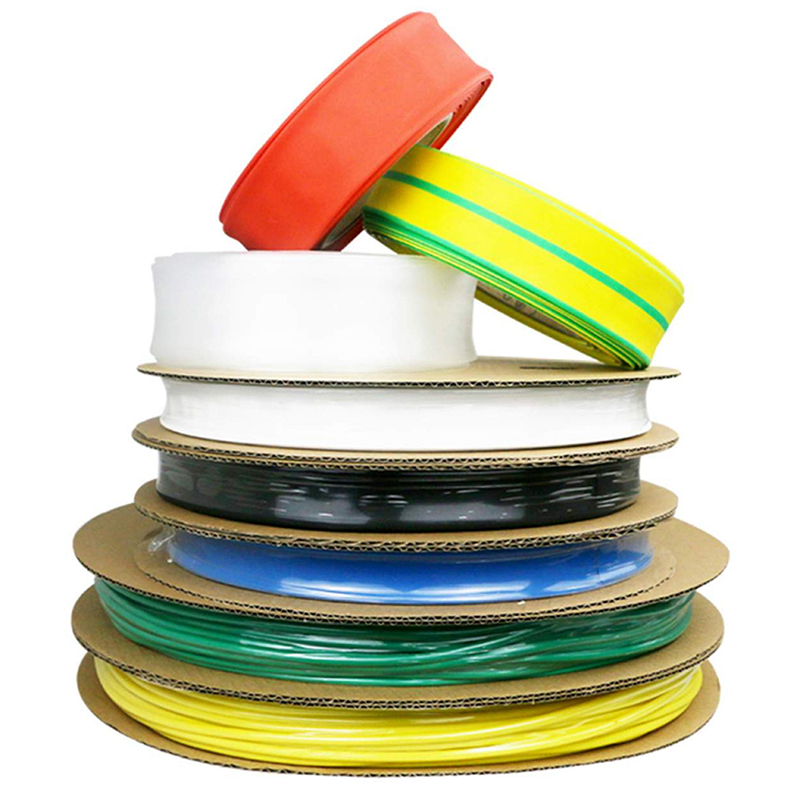
V-0 is the strictest of the three. After the flame is removed the sample must stop burning within 10 seconds, and it must not release any flaming particles that fall. In practice a V-0 sleeve chars and self-extinguishes and leaves nothing burning dropping onto the material below. For occupied enclosures that is the property you want.
V-2 Explained
V-2 allows the same short after-flame time but permits flaming droplets. The sleeve may put itself out yet still shed burning bits that fall onto insulation, seating or wiring looms underneath. In an open, well-ventilated space that may be acceptable; inside a sealed transit enclosure it is a second ignition source you did not need.
Why Dripping Matters in Enclosures
| Behaviour | V-0 | V-2 |
|---|---|---|
| After-flame (max) | 10 s | 30 s |
| Flaming drip | Not allowed | Allowed |
| Enclosed-space risk | Low | Higher (falling embers) |
| Typical use | Transit, occupied | Open, low-risk |
Table 1. The dripping clause is the real difference.
The decisive clause is the drip. A flame that goes out but drops a burning pellet onto a seat cushion or a lower loom has simply moved the fire. In an enclosed transit vehicle the air is still and the contents are close, so a drip is far more likely to start a second fire than in open air.
Specifying for Transit
Public-transit and rolling-stock specifications usually call out V-0 (often with a low-smoke, halogen-free requirement on top). When a buyer writes ‘UL94 V-0’ they are removing the drip risk by default. Do not substitute V-2 to save cost on a transit job; the audit and the insurance will flag it. If low smoke and toxicity matter, add the LSZH (low-smoke zero-halogen) requirement to the sleeve material as well.
Material and Thickness
The rating is per actual product, not per polymer family. A thin-wall PP wrap and a thick PA12 conduit of the same colour can land in different classes, and a sleeve that is V-0 as moulded can lose that rating if it is made thinner or with a different filler. Ask for the test report for the exact sleeve you will fit, and keep a margin by choosing V-0 over V-2 wherever people are enclosed.
Reading the Flame Test Report
A ‘UL94 V-0’ line on a datasheet is only as good as the test report behind it. When you verify a sleeve, check four things: the test lab and standard edition, so it is a recognised UL94 method and not a look-alike; the exact sample thickness tested, because the rating drops as the wall gets thinner; the actual result, with after-flame time and a clear ‘no flaming drip’ statement; and the date, because polymers and fillers change between batches. A reputable supplier provides the report on request, while one that cannot is a risk on a transit job where the spec is audited. Keep the report with the bill of materials so a later reviewer can confirm the class without re-testing.
- Confirm the test lab and UL94 edition.
- Note the sample thickness the rating applies to.
- Look for an explicit no-flaming-drip result.
- Store the report with the BOM for audit.
Worked Example: A Bus Floor Harness
A bus floor harness passes under seating where a dropped ember would be hard to reach. The original sleeve was V-2 to save cost; the spec was changed to V-0 with an LSZH requirement after a review. In a bench test the V-2 sample put out flaming droplets onto a mock seat below, while the V-0 sample self-extinguished with none. For an occupied, enclosed space the no-drip clause was the deciding point, and the V-0 grade became the standard for the fleet.
Common Pitfalls
- Do not substitute V-2 for V-0 on transit work.
- Add LSZH where smoke and toxicity matter.
- Verify the exact product rating, not the polymer family.
- Remember UL94 is a material test, not a system fire test.
Niuli Flame-Rated Sleeves
Niuli Electric supplies heat-shrink tubing and corrugated conduit in flame-rated grades suitable for enclosed and transit wiring, with the ratings documented so a specifier can verify the class before purchase.
Quick Selection Checklist
- UL94 measures how a plastic sample burns and whether it drips flaming particles.
- V-0 self-extinguishes fastest and must not drip flaming debris; V-2 may drip.
- In an enclosed public-transit space a drip can ignite material below the run.
- Specify V-0 for sleeving in buses, trains and other occupied enclosures.
- Flame rating is per material; verify the actual sleeve grade, not the family.
Frequently Asked Questions
What is the main V-0 vs V-2 difference?
V-0 must not drip flaming particles; V-2 may drip.
Is V-0 harder to ignite?
Not necessarily; the test measures extinction and drip, not ease of ignition.
Why does drip matter in transit?
Falling embers can ignite material below inside a still, enclosed space.
Can I use V-2 on a train?
Usually no; transit specs call V-0 plus low-smoke requirements.
Is UL94 a full fire test?
No, it is a material burn test; pair it with system standards.
Does thickness change the rating?
Yes, the rating is per actual product; verify the exact sleeve.
What is LSZH?
Low-smoke zero-halogen material, often added on top of V-0 for transit.
Are Niuli sleeves V-0?
Flame-rated grades are available with documented test ratings.
V-0 after-flame time?
Must self-extinguish within 10 seconds, no flaming drip.
What about V-1?
Between V-0 and V-2; also no drip but longer after-flame than V-0.
Related Resources
Spec V-0 for enclosed transit runs — send the sleeve size and we will confirm the flame rating on file.
