



- Drag-chain flex is a fatigue test, not a static rub; the sleeve must survive millions of bends.
- Expandable PET braid springs back and resists the fraying that PP wrap shows at cut edges.
- PP wrap is lighter and cheaper but hardens and cracks sooner under heat and UV.
- Use PET braid for high-cycle, high-flex arms; PP wrap for light, static-ish dress.
- Secure both ends so the sleeve cannot walk and bunch inside the chain.
A CNC drag chain flexes thousands of times a day, bending the cable and its sleeve through the same arc over and over. This is fatigue, not steady rubbing, and it exposes the weak point of any protection sleeve: the cut edge and the material’s ability to recover its shape. Two common sleeves — expandable PET (polyester) braided sleeving and polypropylene (PP) wrap — age very differently under that duty.
What a Drag Chain Does to Sleeves
Inside a drag chain the sleeve is compressed on the inside of the bend and stretched on the outside, cycle after cycle. A good sleeve returns to shape each time; a poor one work-hardens, the cut ends fray, and the bundle is left partly bare. The failure mode is not a single scrape but accumulated micro-damage at the open edges and at every tie point.
Expandable PET Braided Sleeving
PET braid is a woven, open mesh tube that expands to slip over a bulky connector and then hugs the bundle. The braid structure absorbs flex: the filaments shift rather than crack, and the woven edge resists fraying far better than a slit film. It tolerates a wide temperature range and shrugs off most oils and solvents found in machine shops. For high-cycle robot and CNC arms it is the default sleeve.
Polypropylene Wrap
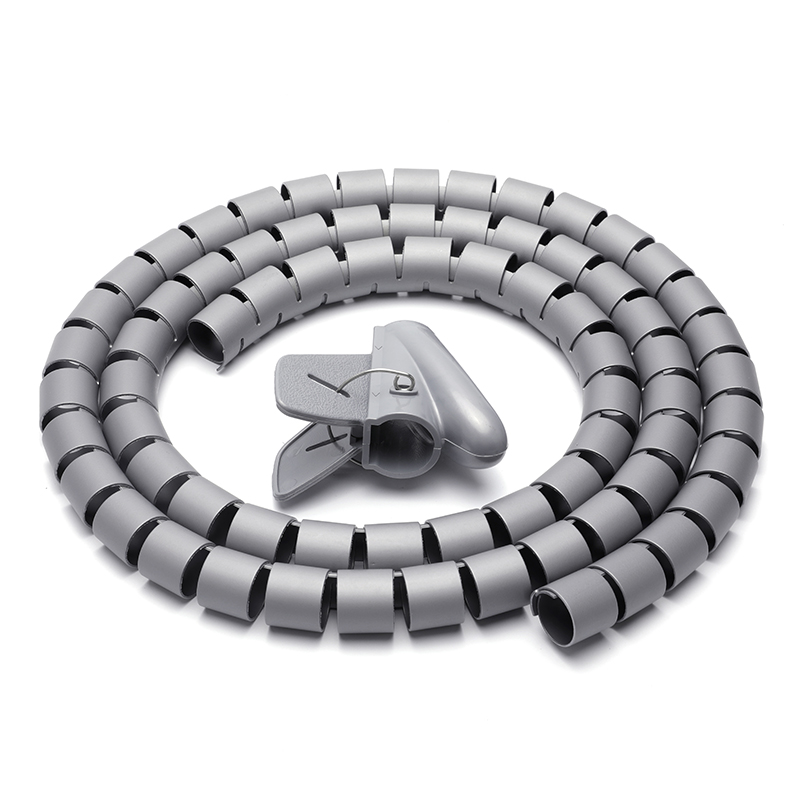
PP wrap is a flat, often split film coiled around the loom. It is light, cheap and easy to apply, and it dresses a bundle neatly. Under gentle, infrequent flex it performs well. Under continuous drag-chain cycling and shop heat, PP work-hardens, the coil edges curl, and it can crack and shed, exposing the cable. It is the right choice for light duty, not for a constantly moving arm.
Abrasion Life Comparison
| Property | PET Braid | PP Wrap |
|---|---|---|
| Flex recovery | Excellent | Poor (work-hardens) |
| Edge fray | Low (woven) | High (cut film) |
| Cycle life | Very high | Moderate |
| Weight | Light | Lighter |
| Cost | Higher | Low |
| Best use | High-cycle arms | Light dress |
Table 1. Sleeve life in continuous flex duty.
In side-by-side drag-chain rigs the PET braid typically runs several times the cycles of PP wrap before the cable shows through. The braid’s woven edge is the key: a slit film has a free edge that lifts and frays, while the braid has none.
Heat and UV Ageing
Machine shops run warm and sometimes oily. PET braid holds its properties across a broader temperature band and resists common cutting fluids; PP softens and ages faster near heat sources and chalks under UV if the chain is exposed. Keep sleeves away from direct chip splash and hot manifolds regardless of material.
Fitting and End Security
A sleeve that walks along the bundle does more harm than good. Secure both ends with a cable tie or a moulded cap so the braid cannot bunch inside the chain, and size the sleeve for the bent (not straight) diameter so it is not stretched on the outside of the arc. Leave a little slack at the chain ends to avoid pulling the sleeve tight at full extension.
Cost per Cycle, Not per Metre
When a buyer compares PET braid and PP wrap on price, the per-metre figure favours PP and the decision looks made. But the sleeve is not a metre of material, it is a component that either lasts the life of the machine or gets replaced during a breakdown. Divide the sleeve cost by the flex cycles it survives and the picture flips: a PET braid that runs several times the cycles of PP wrap is cheaper per cycle even at a higher price, and it removes the labour and downtime of a mid-life harness swap. For a low-cycle, static-ish dress where PP is genuinely fine, the cheaper film is the right call, but on any arm that moves all day, pay for the braid and count cycles, not metres.
- Price the sleeve per flex cycle, not per metre.
- A longer-life braid removes mid-life harness-swap labour.
- Use PP wrap only where flex is genuinely low.
- Add the cost of a breakdown reject to the PP saving.
Worked Example: A Router Table Arm
A 3-axis router dress uses a braided PET sleeve on the moving arm. At first the shop used PP wrap to save cost; after a few weeks of continuous flex the wrap curled at the cut edges and the cable showed through near the bend. Swapping to expandable PET braid and tying both ends with a cable tie, the same arm ran for months with the sleeve intact. The braid cost more per metre but removed a recurring harness reject.
Common Pitfalls
- Do not use PP wrap in a high-cycle drag chain.
- Tie or cap both sleeve ends so it cannot walk.
- Size the sleeve to the bent, not straight, diameter.
- Keep sleeves away from hot manifolds and chip splash.
Niuli Sleeve Options
Niuli Electric supplies cable tidy kits and spiral wrapping bands for harness dress, plus cable ties to lock the sleeve ends. For high-cycle CNC and robot arms, spec the braided sleeve and secure it properly.
Quick Selection Checklist
- Drag-chain flex is a fatigue test, not a static rub; the sleeve must survive millions of bends.
- Expandable PET braid springs back and resists the fraying that PP wrap shows at cut edges.
- PP wrap is lighter and cheaper but hardens and cracks sooner under heat and UV.
- Use PET braid for high-cycle, high-flex arms; PP wrap for light, static-ish dress.
- Secure both ends so the sleeve cannot walk and bunch inside the chain.
Frequently Asked Questions
Which sleeve lasts longer in a drag chain?
PET braid; it recovers shape and resists fraying where PP wrap work-hardens.
Why does PP wrap fail in flex?
The slit film edge lifts and cracks; it work-hardens instead of springing back.
Is PET braid expandable?
Yes, it opens to pass connectors then hugs the bundle.
Does PP wrap work for light duty?
Yes, it is cheap and fine for static or low-cycle dress.
How do I stop the sleeve walking?
Tie or cap both ends so it cannot bunch inside the chain.
Does heat affect PP more than PET?
Yes, PP softens and ages faster near heat and UV.
Can braid resist cutting fluid?
Most PET braids resist common shop oils and coolants.
Size sleeve to straight or bent diameter?
Bent diameter, so it is not over-stretched on the outside arc.
Are Niuli tidy kits braided?
Kits include braided and wrap options for different flex duties.
Which is cheaper?
PP wrap is lower cost; PET braid costs more but lasts far longer in flex.
Related Resources
For high-cycle arms use PET braid and tie the ends — send the chain bend radius and we will size the sleeve.
