



- Outdoor cables fail from abrasion, water wicking and UV, not just the load they carry.
- Corrugated tube is a sealed, ribbed armour that sheds water and takes impact better.
- Spiral wrapping bands are faster to fit on long runs and stay open for service.
- For wet, dirty or impact-prone routes choose corrugated tube; for quick harness dress choose spiral wrap.
- Match the material (PA6 vs PA12, PP) to heat, oil and UV at the site.
Outdoor and field cables live a hard life: wind-driven grit, repeated flexing against brackets, standing water and years of sun. The conductor is rarely the weak point — the jacket and the support around it are. Two low-cost sleeving families do most of the protection work: corrugated conduit (tube) and spiral wrapping bands. They look similar on a reel but behave very differently on site, and picking the wrong one is a common cause of premature cable failure.
Why Outdoor Cables Need Armour
A bare jacket rubbing on a sharp edge or a vibrating frame loses its outer layer in months. Once the jacket is gone, water wicks along the conductor and the insulation breaks down. Sleeving moves that abrasion onto a replaceable, tougher layer and, in the case of conduit, keeps water and grit off the cable entirely. The choice between tube and spiral wrap comes down to how much sealing, impact resistance and service access the run needs.
Corrugated Tube
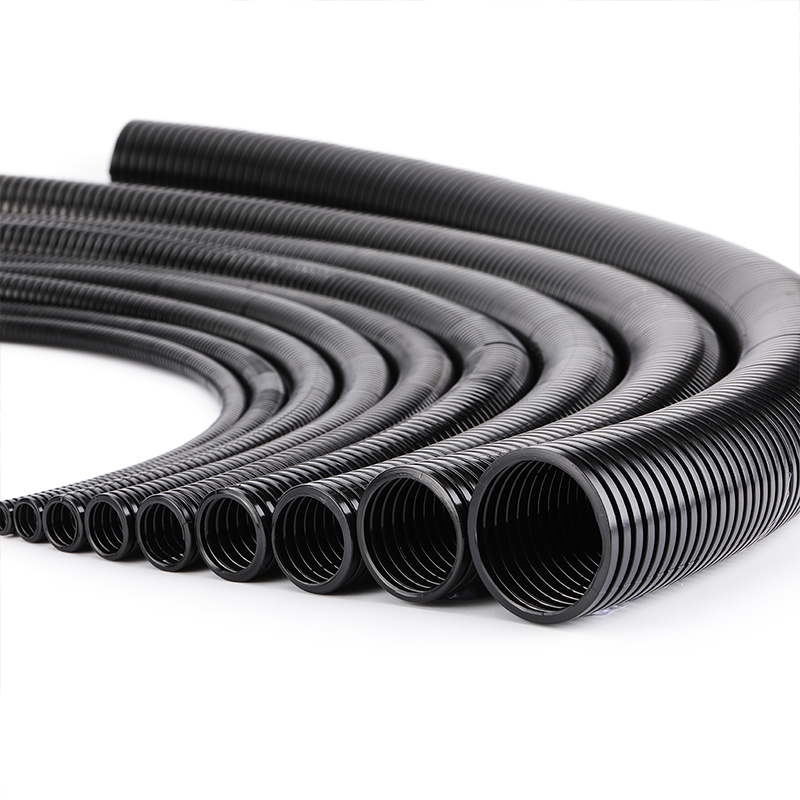
Corrugated tube is a continuous, ribbed plastic sheath with a hollow centre the cable threads through. The ribs give it flexibility while the wall takes impact and scraping. Because it is closed, it sheds rain and spray and stops grit getting to the cable. Split (slit) versions let you lay the loom in afterwards; unsplit versions seal better but must be threaded during build. For wet, dirty or exposed routes, conduit is the safer default.
Spiral Wrapping Bands
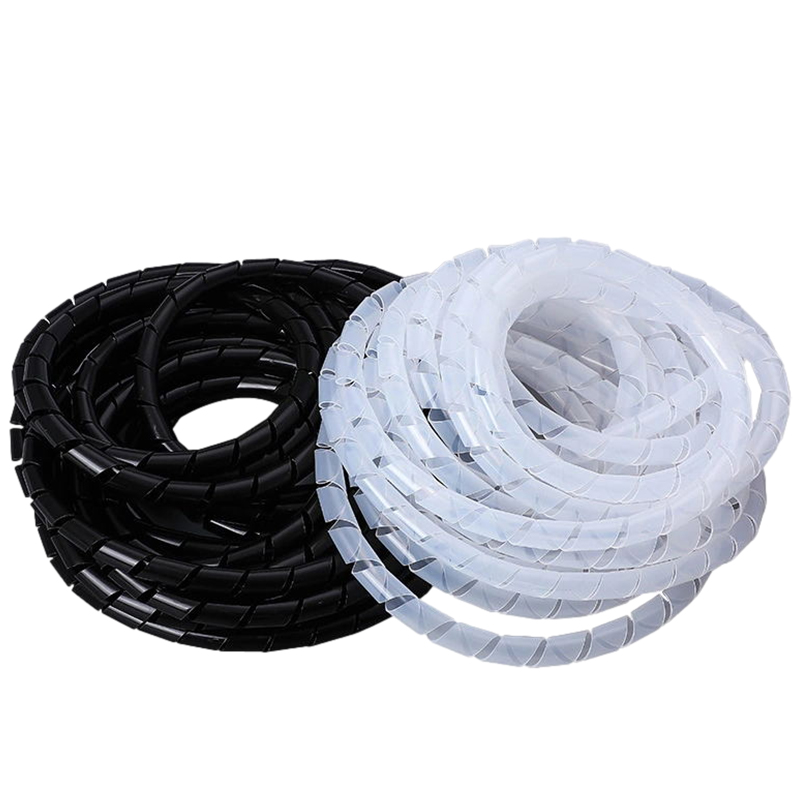
Spiral wrapping bands are a continuous coil of flat strap that you wind around the bundle by hand or with a dispenser. They hug the shape of the loom, stay open so you can break out a branch anywhere, and are very fast to apply to long, complex harnesses. They breathe, so they do not seal against water, but they add a solid abrasion layer and keep the bundle neat. Where the cable must be opened for service along its length, spiral wrap wins on labour.
Abrasion Resistance
| Factor | Corrugated Tube | Spiral Wrapping Bands |
|---|---|---|
| Impact / scrape | High (rigid wall) | Medium (strap layer) |
| Continuous rub | Good | Good |
| Edge protection | Excellent | Fair |
| Water seal | Seals (unsplit) | Open |
| Service access | Split only | Anywhere |
Table 1. Tube vs spiral wrap for outdoor abrasion duty.
In drag-chain and constant-flex tests the wrapped bundle survives far longer than a bare cable, but a conduit wall outlasts both where the hazard is a single sharp edge or a falling object. Use conduit where impact is the risk; use spiral wrap where repetitive light rubbing is the risk.
Water, Debris and UV
Standing water is the enemy of spiral wrap because it sits in the coils and wicks to the jacket. Corrugated tube, especially unsplit, keeps the cable dry. Both materials need a UV-stable grade for sun exposure; PA12 conduit and UV-stabilised PP wrap hold colour and flexibility far longer outdoors than untreated PA6. Where the run is buried or splashed, choose the sealed tube.
Install Speed and Service
Spiral wrap is dramatically faster on a long, branching loom: one person winds it on in minutes and any branch can be pulled out without cutting the sleeve. Conduit needs clips, bends and end fittings, and breaking out a branch means cutting and reconnecting. For production harnesses that are built once, conduit is fine; for field retrofits and service-heavy routes, spiral wrap saves real hours.
Temperature and Material
Match the polymer to the site. PA6 conduit is the cheap workhorse for mild, dry routes; PA12 resists water take-up, oil and cold far better and is the grade for engine bays and fuel-adjacent runs. PP spiral wrap is light and economical for general indoor-outdoor use. Check the temperature rating and keep a margin below it, because a softened sleeve no longer protects.
Worked Example: A Garden Lighting Run
A low-voltage garden lighting loom runs 20 m along a fence in sun and rain. Specified in spiral wrap to save time, the first winter showed water sitting in the coils and the jacket of the lowest cable going grey. Redone in unsplit corrugated tube clipped to the posts, the cable stays dry and the only service point (a buried joint) is reached by opening one split section. The tube cost a little more and took longer to fit, but the lighting stopped failing every wet season.
Common Pitfalls
- Do not use spiral wrap where water stands; it wets the jacket.
- Use a UV-stable grade outside or PA6 chalks and cracks.
- Secure conduit ends so grit cannot enter the run.
- Pick PA12 over PA6 near oil, fuel or cold.
Niuli Sleeving Range
Niuli Electric supplies corrugated tube, spiral wrapping bands, corrugated tube connectors and cable tidy kits in the grades needed for outdoor and industrial duty, so you can specify the right seal and flexibility per run.
Quick Selection Checklist
- Outdoor cables fail from abrasion, water wicking and UV, not just the load they carry.
- Corrugated tube is a sealed, ribbed armour that sheds water and takes impact better.
- Spiral wrapping bands are faster to fit on long runs and stay open for service.
- For wet, dirty or impact-prone routes choose corrugated tube; for quick harness dress choose spiral wrap.
- Match the material (PA6 vs PA12, PP) to heat, oil and UV at the site.
Frequently Asked Questions
Which protects better from water?
Unsplit corrugated tube seals the cable; spiral wrap stays open and wets the jacket.
Is spiral wrap faster to install?
Yes, it winds on quickly and lets you break out branches anywhere along the run.
Which takes more impact?
Corrugated tube; its rigid ribbed wall absorbs scrapes and falling objects better.
PA6 or PA12 for outdoors?
PA12 resists water, oil and cold far better; PA6 suits mild dry routes.
Can I use spiral wrap in a drag chain?
Yes for light rub; for sharp-edge impact prefer conduit.
Does corrugated tube breathe?
Split versions partly; unsplit seals but traps no water if ends are closed.
Which is cheaper?
Spiral wrap is usually lower labour and material cost on long runs.
Do I need UV-stable grade outside?
Yes, untreated PA6 chalks and cracks; use UV-stable or PA12.
Can I mix both on one harness?
Yes: conduit on the exposed risk zone, spiral wrap on the service length.
Are Niuli connectors available?
Yes, corrugated tube connectors join and branch the conduit runs.
Related Resources
Specify tube vs spiral wrap by hazard — send the run length and exposure and we will kit the right sleeve.
