



Key Takeaways
- Screw-clamp uses a tightened screw; spring-cage uses a stainless spring; push-in uses a spring latch you stab the wire into.
- Spring-cage and push-in do not loosen under vibration, so they lead in train and rail service.
- Screw-clamp is cheapest and most familiar, but needs re-torque checks in vibration.
- Push-in is fastest to wire but needs a ferrule or solid wire and a release tool to remove.
- For high-vibration trains, specify spring-cage or push-in with ferrules; keep screw-clamp for static panels.
On a DIN rail, the terminal block is where field wires meet the control system. The way the wire is held — screw, spring or push-in — decides whether the joint stays tight after a million kilometres of track vibration. For static panels screw-clamp is fine; for trains and other moving plant, the connection technology is a reliability decision, not a price one.
The Three Connection Technologies
All three clamp a stripped conductor inside a metal current bar; they differ only in the force source. Screw-clamp uses a slotted screw that drives a clamp plate onto the wire. Spring-cage uses a stainless steel spring that constantly presses a clamp onto the wire. Push-in (spring-clamp push-in) uses a spring latch you push the wire past; the latch snaps behind the conductor and holds it. The spring types need no periodic re-torque because the spring force is set by the metal, not by a screw.
Screw-Clamp: Familiar and Cheap
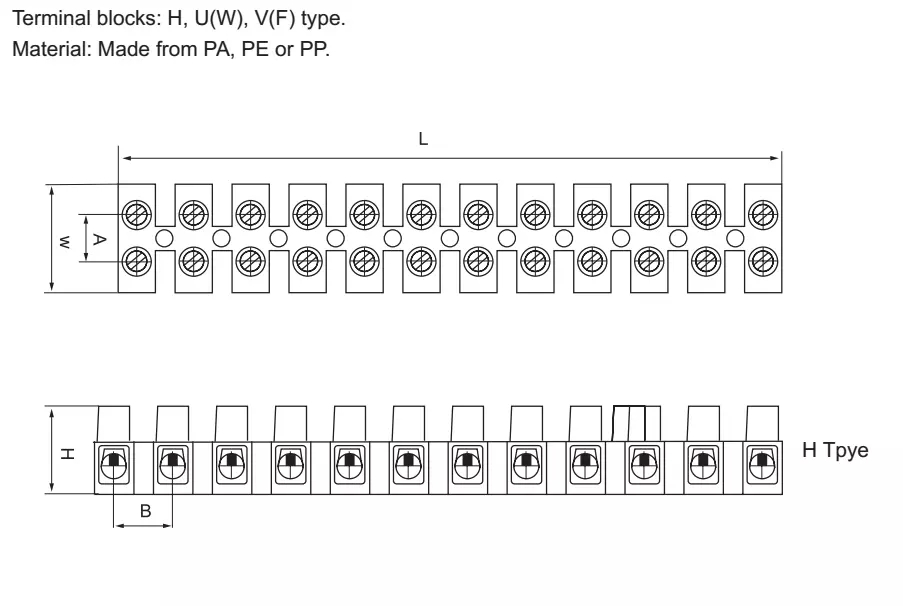
Screw-clamp is the default worldwide: low cost, easy to understand, works with solid or stranded wire, and easy to undo with a driver. Its weakness is that a screw can loosen under sustained vibration, slowly raising resistance and heat. In a train that means a scheduled re-torque program. For static panels and low-vibration cabinets it remains the economical choice.
Spring-Cage: Vibration-Proof
A spring-cage terminal holds the wire with a fixed stainless spring force that vibration cannot relax. There is no screw to back off, so the contact pressure — and therefore the resistance — stays constant for the life of the install. It accepts stranded wire (best with a ferrule) and is the workhorse for rail, machinery and any vibrating plant. The only drawback is a slightly higher unit cost and the need for a screwdriver or ferrule to open the cage for rewiring.
Push-In: Fastest Wiring
Push-in (often “PUSH-IN” or spring-clamp push-in) lets you stab a prepared wire straight in — no tool to insert, a release button or blade to remove. It is the fastest to wire in volume and shares the vibration immunity of spring types. It prefers a ferrule or solid conductor; fine-stranded wire without a ferrule can splay and not seat. For high-volume train harness termination, push-in cuts labour sharply.
Comparison Table
| Factor | Screw-Clamp | Spring-Cage | Push-In |
|---|---|---|---|
| Vibration loosening | Possible | No | No |
| Rewire speed | Medium | Medium | Fastest |
| Tool to insert | Driver | Driver/ferrule | None |
| Cost | Low | Mid | Mid-High |
| Best wire | Any | Stranded+ferrule | Ferrule/solid |
| Train use | Re-torque needed | Ideal | Ideal |
Table 1. Connection technologies for DIN rail terminals.
Why Trains Favour Spring/Push-In
A train is a vibration lab on wheels: bogie bounce, traction harmonics and track noise shake every joint for decades. Screw terminals there need a re-torque schedule and still drift; spring types do not. Rail operators therefore standardise on spring-cage or push-in for both power and signal terminals, accepting the small unit-cost premium to avoid in-service loosening and the fire risk of a hot joint.
Wire Prep and Ferrules
Whichever spring type you pick, prepare the wire right: strip to the marked length and fit a cord-end-terminals on stranded conductors. The ferrule keeps the strands bundled so they seat fully and the cage grips metal, not loose hairs. Skipping the ferrule is the main cause of a “spring terminal that failed” — usually it was never a good connection to begin with.
Worked Example: A Bogie Wiring Cabinet
A train bogie cabinet sees decades of track vibration. Screw-clamp terminals there would need a re-torque schedule and still drift, so the build specifies spring-cage blocks with ferruled, tinned stranded wire. Push-in blocks are used on the high-volume signal harness for speed. A sister static cabinet in the depot uses screw-clamp to save cost, because it never moves. Same rail, same DIN foot — different connection technology chosen by whether the joint vibrates.
Niuli DIN Terminal Options
Niuli Electric supplies terminal-block and the matching non-insulated-terminals / tinned terminals and cord-end-terminals for a complete, vibration-stable connection. For train and mobile plant, pair spring-cage or push-in blocks with ferruled, tinned stranded wire.
Quick Selection Checklist
- Screw-clamp uses a tightened screw; spring-cage uses a stainless spring; push-in uses a spring latch you stab the wire into.
- Spring-cage and push-in do not loosen under vibration, so they lead in train and rail service.
- Screw-clamp is cheapest and most familiar, but needs re-torque checks in vibration.
- Push-in is fastest to wire but needs a ferrule or solid wire and a release tool to remove.
- For high-vibration trains, specify spring-cage or push-in with ferrules; keep screw-clamp for static panels.
Frequently Asked Questions
Do spring terminals loosen on trains?
No — the spring force is fixed by the metal, so vibration cannot relax it the way a screw backs off.
Is push-in as reliable as spring-cage?
Yes, it uses the same spring principle; it just inserts without a tool. Both are vibration-proof.
Why use a ferrule with spring terminals?
It bundles the strands so they seat fully and the cage grips solid metal, not splayed hairs.
Can I use screw-clamp on a train?
You can, but plan a re-torque program; spring types avoid that and are the rail standard.
Are push-in terminals harder to remove?
You press a release button or blade; not hard, just different from a screw.
Do spring terminals need re-torquing?
No. The spring sets the force; there is no screw to drift.
What wire do push-in terminals prefer?
A ferrule or solid conductor; fine stranded wire without a ferrule may not seat well.
Are Niuli terminals tinned?
The copper terminals are tin-plated for corrosion resistance in damp service.
Which is cheapest?
Screw-clamp is lowest cost; spring and push-in cost a little more but save labour and re-torque.
Can I mix types on one DIN rail?
Yes, they share the same rail foot; mix by function (push-in for volume, screw for infrequent changes).
Related Resources
Specify spring or push-in terminals for vibration duty — send your wire sizes and we will build the block and ferrule kit.
