


Key Takeaways
- Nylon (PA66) is chemically inert toward common wire insulation (PVC, XLPE, silicone, PTFE) and will not melt or dissolve it under normal temperatures.
- The real risk to thin electric wire insulation comes from over-tightening, sharp cut tails, and long-term vibration abrasion.
- Protect delicate wires with narrow ties (2.5–3.6 mm), soft hook and loop wraps, and a flush-cut tool.
Category: Cable Management | Read time: 7 min | Updated: August 2026
A leading China nylon cable ties manufacturer with 10+ years of experience, UL/CE/RoHS/REACH-certified, supplying more than 500 brands across 100+ countries.
Nylon cable ties are the default choice for bundling wires on control panels, inside vehicles, and within appliances. But if you work with thin electric wire insulation—think 22–28 AWG signal wires, delicate silicone leads, or thin PVC-jacketed cables—you may worry that a nylon cable tie can crush or cut into the jacket. The short answer: the plastic itself is harmless, but the way you install it can cause real damage. This guide explains exactly when and how nylon cable ties threaten thin insulation, and the field-proven steps to prevent it.
Do Nylon Cable Ties Chemically React With Wire Insulation?
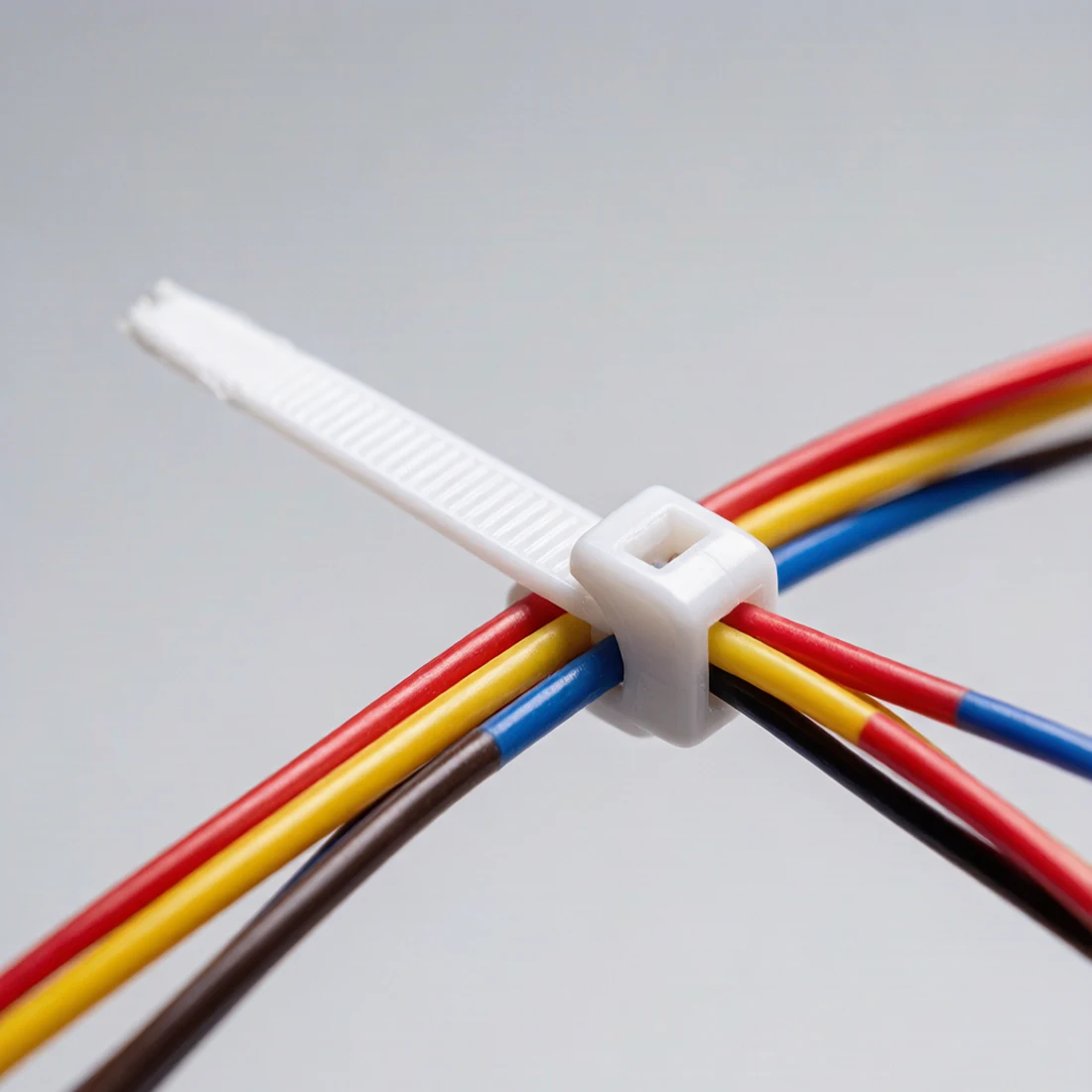
No. Nylon cable ties from a reputable manufacturer are made from Nylon 66 (PA66), a thermoplastic that is chemically stable across its working range of roughly −40°C to 85°C (−40°C to 120°C for heat-stabilized grades). Common insulation materials—PVC, cross-linked polyethylene (XLPE), THHN, silicone, and PTFE/Teflon—are not attacked by nylon at these temperatures. The tie will not melt, soften, or chemically dissolve standard insulation. So the classic fear of “the plastic eats the wire” does not apply. The damage that does occur is mechanical, not chemical, and it is almost always install-driven. For the full list of failure modes across all cable types, see our guide on how cable ties can damage cables.
The 3 Real Ways Cable Ties Damage Thin Wire Insulation
When thin insulation fails after being tied, one of three mechanisms is usually responsible. Knowing which one you are exposed to tells you which fix to apply.
1. Over-tightening (radial crush)
A standard cable tie can develop 18–50+ lbs (8–22+ kg) of clamping force. Thin insulation—especially small-gauge PVC or soft silicone—has very little wall thickness and deforms or cracks under that radial pressure. Crimped insulation raises the risk of intermittent faults and exposed conductors. The thinner the wire, the lower the safe tension.
2. Sharp cut tails (abrasion and puncture)
Cutting a tie with side cutters often leaves a pointed, raised tail. Inside a moving harness or a tight enclosure, that tail rubs against—or punctures—an adjacent wire’s insulation. This is one of the most common “mystery” shorts in field installations.
3. Vibration and abrasion (long-term wear)
In vehicles, HVAC units, and machinery, a cinched tie can rub against a wire over thousands of cycles. Even a correctly tensioned tie eventually wears through a thin jacket. Brittle, UV-aged ties outdoors make this worse, because the tie itself can crack and cut into the bundle.
| Mechanism | Typical symptom | Prevention |
|---|---|---|
| Over-tightening | Flattened, cracked, or split jacket | Narrow tie + finger-tight tension |
| Sharp cut tail | Scuff mark or puncture on neighbor wire | Flush-cut with a proper tool |
| Vibration abrasion | Worn-through jacket after months | Padded/releasable tie or fixed clip |
How to Bundle Thin Wires Safely
Protecting delicate insulation is mostly about tie selection and installation discipline. Follow these steps on every thin-wire job:
- Use a narrow tie. Choose 2.5 mm or 3.6 mm width instead of 4.8 mm+; less material means lower clamping force on a small bundle.
- Tension by feel, not by force. Snug the tie until the bundle is held, then stop. A tensioning tool on its lowest setting helps consistency. See our guide on how tight cable ties should be for safe settings by application.
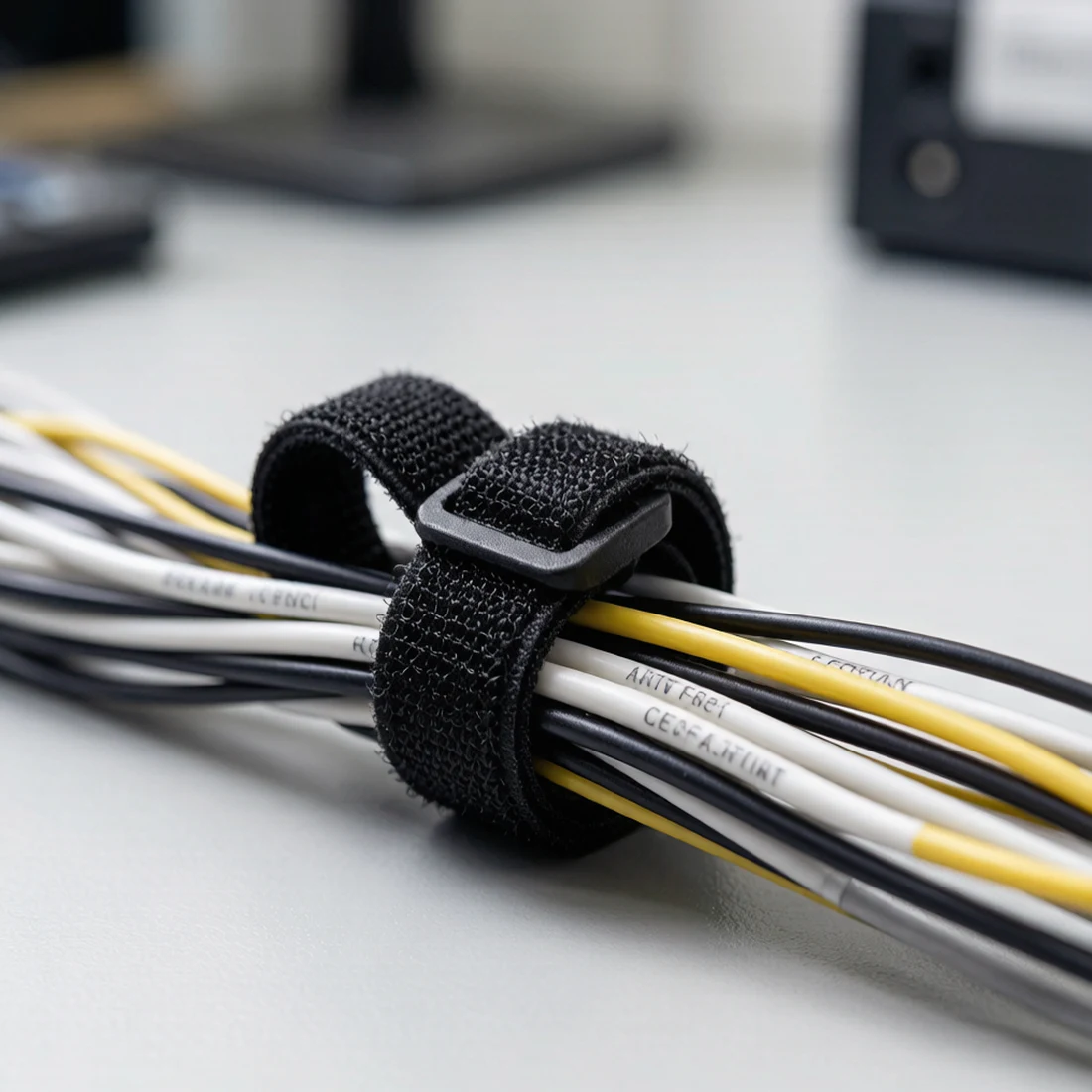
- Switch to hook and loop for the most delicate wires. Reusable hook and loop cable ties wrap softly and will not crush signal or thin power lines—ideal where over-tightening would otherwise affect transmission or insulation.
- Cut flush, every time. A dedicated cable tie cutting tool leaves a smooth, flush tail so nothing can abrade neighboring insulation.
- Fix the route instead of cinching. For permanent thin-wire routing, use cable clips or adhesive bases so the wire is held without radial pressure.
Cable Tie Size & Tension Quick-Reference for Thin Wires
| Wire / bundle | Tie width | Safe tension | Recommended tie |
|---|---|---|---|
| Single 22–28 AWG wire | 2.5 mm | Hand-snug only | Hook and loop / releasable |
| Bundle of 2–6 thin wires (<10 mm) | 2.5–3.6 mm | Finger-tight + 1 click | Standard nylon |
| Bundle 10–20 mm | 3.6–4.8 mm | Tension tool, low | Standard nylon |
| Silicone / PTFE insulation | Any | Avoid over-tightening | Hook and loop |
| Vibrating environment | 3.6–4.8 mm + anti-UV | Route with clip | Clip / saddle preferred |
Need a Safer Way to Bundle Thin Wires?
Request free hook and loop and narrow nylon tie samples from a UL/CE-certified manufacturer, and let our engineers match the right tie to your wire gauge.
Choosing the Right Tie for Delicate Wiring
If your application is permanently delicate (medical leads, sensor wiring, data cables), favor non-cinching options. Releasable cable ties let you adjust tension and re-open the bundle without cutting, which removes both the crush risk and the sharp-tail risk in one move. For outdoor thin-wire runs, pick anti-UV or heat-stabilized grades so the tie stays flexible instead of going brittle and cutting into the jacket.
FAQs
Do nylon cable ties chemically react with wire insulation?
No. Nylon 66 is chemically stable against PVC, XLPE, silicone, and PTFE insulation at normal operating temperatures. It will not melt or dissolve the jacket. Any damage is mechanical, from installation, not chemical reaction.
Can over-tightening a cable tie crack thin wire insulation?
Yes. A standard tie can exert 18–50+ lbs of force. Thin insulation on 22–28 AWG wires has little wall thickness and can flatten or crack under that pressure. Tension by feel and use narrow (2.5–3.6 mm) ties to stay safe.
Are thin wires like 22–28 AWG safe to bundle with standard cable ties?
Only with care. Use the narrowest tie, snug it by hand, and never crank it tight. For single small-gauge wires or delicate insulation, switch to hook and loop or releasable ties to avoid crush damage entirely.
How do I stop cable tie cut tails from damaging nearby insulation?
Always cut flush with a proper cable tie cutting tool. A flush tail removes the sharp point that otherwise rubs or punctures an adjacent wire’s jacket over time.
Do nylon cable ties lose grip over time and damage wires (cold flow)?
Nylon experiences “cold flow” under constant load, which slightly relaxes grip over time—this reduces pressure rather than increases it. It does not crush wires, but a loose tie can let a bundle shift and abrade. Re-tension or use a clip for critical routes.
Which cable tie type is safest for delicate or thin insulation?
Hook and loop (Velcro) ties are safest because they wrap softly without radial crush and are reusable. Releasable ties are the next best option. Both avoid the two biggest risks: over-tightening and sharp cut tails.
Can cable ties be used on wires in vibrating environments like cars or HVAC?
Yes, but add protection. Use anti-UV or heat-stabilized ties, route the bundle with a clip or saddle to limit movement, and avoid letting a cinched tie rub directly on a thin jacket for thousands of cycles.
Are nylon cable ties safe for outdoor thin-wire installations?
Use anti-UV or heat-stabilized grades. Standard nylon left in sunlight becomes brittle and can crack, and a brittle tie can cut into the insulation. UV-resistant ties stay flexible and protect the bundle outdoors.
What size or width cable tie should I use for thin wires?
Use 2.5 mm or 3.6 mm width for thin wires and small bundles. Wider ties (4.8 mm+) apply more clamping force and are unnecessary for delicate wiring. Width matters more than length for crush risk.
How tight should a cable tie be on thin wiring?
Just tight enough to hold the bundle—no tighter. On a tensioning tool, use the lowest setting; by hand, snug and stop. Over-tension is the single most common cause of cracked thin insulation.
Conclusion
A nylon cable tie will not chemically harm thin electric wire insulation—but poor installation can. The threats are over-tightening, sharp cut tails, and vibration abrasion, and all three are preventable with the right tie width, a gentle hand, hook and loop or releasable options, and a flush cut. Match the tie to the gauge, and your thin wires stay protected for the life of the installation.
Related Resources
- Can Nylon Cable Ties Damage Cables? 6 Ways They Do & How to Prevent It — the broader failure-mode guide.
- How Tight Should Cable Ties Be? A Tension Guide — safe tension by application.
- How to Remove Cable Ties Safely — avoid damage when reworking a bundle.
- Nylon Cable Ties: Types, Uses, Materials & Buying Guide — full product overview.
Recommended future posts: “Hook and Loop vs Releasable Cable Ties for Sensitive Wiring”, “Best Cable Clips for Permanent Thin-Wire Routing”, “AWG Gauge vs Tie Tension: A Field Chart”.
Talk to a Cable-Tie Engineer
Not sure which tie protects your thin wires best? Get free samples and a specification check from Niuli Electric’s engineering team.
