



-
Introduction
Cable gland installation looks simple enough: pass the cable through the gland, tighten the sealing nut, and check that everything is secure. In practice, the tightening step can decide whether the cable entry stays watertight or causes trouble later.
That’s especially true for armored cables with a lead sheath. The gland has to grip and seal the cable without putting excessive pressure on a relatively soft outer layer. Too little tightening leaves a path for water. Too much can deform the sheath, damage the seal, or distort the cable construction.
Which brings up a common installation question:
What torque value in Nm guarantees an IP68 seal without deforming the lead sheath?
The answer is not a single number. The correct torque depends on the gland design, sealing system, cable diameter, sheath material, and the manufacturer’s installation procedure. Some manufacturers specify torque directly; others specify the required number of turns or a different installation method.
A reliable installation therefore starts with the correct gland and cable combination, not with a generic torque table.
-
Why Does Cable Gland Torque Matter for IP68 Sealing?
A cable gland has two jobs at the cable entry point: retain the cable mechanically and seal the opening against the outside environment.
When the sealing nut is tightened, the gland compresses an internal sealing element around the cable. This creates the contact pressure needed to limit the passage of water, dust, and other contaminants. Niuli describes this basic function in its cable-gland technical guide and identifies sealing, strain relief, and environmental protection as key functions of a cable gland.
IP68, though, is not created by torque alone.
The IP Code comes from IEC 60529, which defines the degrees of protection provided by enclosures.
Cable glands themselves are covered by IEC 62444, which specifies requirements and tests for their construction and performance. The standard covers complete cable glands supplied by the manufacturer and addresses mechanical, electrical, environmental, and sealing-related characteristics.
So when a gland is rated IP68, that rating belongs to a tested product configuration. Applying a particular torque to a different gland does not automatically produce the same result.
For installers, the practical relationship is:
Too little compression → possible water ingress
Correct compression → sealing system works as designed
Too much compression → possible seal or cable damage
That’s why “tighten until it feels tight” is not a sound engineering specification.

-
What Determines the Correct Cable Gland Torque?
3.1 Cable Diameter and Sealing Range
The first number to check is the cable diameter.
Every cable gland is designed for a particular sealing range, and the seal has to compress around the cable within that range. A cable that’s too small may not generate enough sealing pressure; a cable near or beyond the upper limit can require excessive force or prevent proper assembly.
With armored cable, overall diameter may not be enough.
Depending on the gland construction, installers may also need to know:
- Overall cable diameter
- Lead sheath diameter
- Inner bedding diameter
- Armor diameter
- Armor wire or tape dimensions
- Sealing range
These dimensions can determine whether the gland can clamp the armor and seal the cable correctly.
This is one reason gland selection should come before torque selection. No amount of extra tightening can compensate for a gland chosen for the wrong cable dimensions.
Gland Material and Sealing-Grommet Design
Two glands with the same nominal thread size can have completely different tightening requirements.
A cable gland may use different sealing-ring geometries, elastomer compounds, compression mechanisms, and internal components. Friction between the threaded parts also changes how much of the applied torque turns into useful compression.
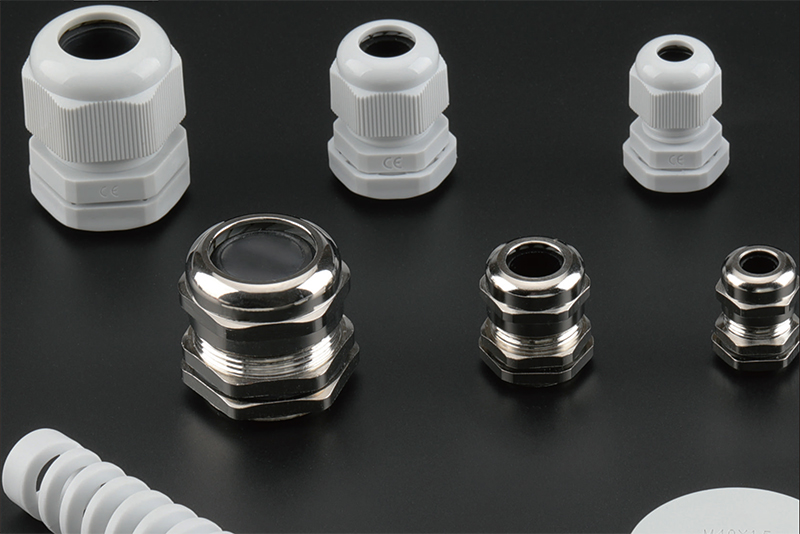
For example, Niuli currently offers several IP68 cable-gland families using different materials. Its standard nylon PA66 glands use an NBR sealing ring, while its stainless steel cable glands use a 304 stainless steel body and nut with an NBR seal ring. Niuli specifies IP68 protection and a working temperature of -40°C to 100°C for these standard cable-gland ranges.
The sealing material and mechanical design have to be considered together. A torque value from one gland family should never be copied to another just because both products use the same thread size.
Cable Sheath Material and Compression Limits
Lead-sheathed armored cable requires extra care because lead is soft and deforms easily compared with stainless steel and many polymer cable jackets.
If the sealing system is tightened excessively, the compression force can transfer into the cable sheath. A visible indentation may appear around the gland, but the more important issue is what happens below the surface.
Possible consequences include:
- Permanent sheath deformation
- Localized pressure on the cable
- Distortion of cable geometry
- Damage to the sheath surface
- Changes in the sealing interface
The exact allowable compression depends on the cable construction and gland design.
For that reason, a gland intended for a lead-sheathed armored cable should be selected using the manufacturer’s cable-dimension requirements, not merely the cable’s nominal outer diameter.
Manufacturer-Specified Torque and Installation Tolerance
The manufacturer’s installation instructions should be treated as the primary reference.
Where a manufacturer gives an Nm value, use that value with the specified assembly conditions. Where the manufacturer gives a number of tightening turns or another visual/mechanical indicator, follow that procedure instead.
Why the difference?
Torque is affected by thread friction, lubrication, surface finish, component tolerances, seal material, and assembly condition. Two installers can apply the same torque to two different gland designs and end up with different seal compression.
This is also why a calibrated torque wrench is useful when the manufacturer has provided a torque specification. It turns a subjective tightening operation into a repeatable installation process.
-
How Much Torque Is Needed for an IP68 Seal?
Why There Is No Universal Torque Value
There is no reliable universal rule such as:
“IP68 armored cable glands require 15 Nm.”
That number might be correct for one particular gland. It could be excessive for another and insufficient for a third.
The sealing result depends on the complete assembly.
IEC 62444 deals with cable-gland construction and performance, but it does not provide a single installation torque applicable to every cable gland on the market.
The same point applies to IP68. A gland’s IP rating comes from its product design and testing under defined conditions; it is not generated by torque alone.
For lead-sheathed armored cables, there’s another reason not to guess. The installer is balancing two requirements at the same time:
enough compression to seal the entry
against
enough restraint to avoid damaging the cable sheath
The correct torque or tightening procedure is the point at which the manufacturer’s tested sealing system achieves the required performance.
How to Read a Cable Gland Torque Specification
When reading a gland datasheet, first find out which component the torque value applies to.
It may refer to:
- Sealing nut
- Locknut
- Armor-clamping component
- Compression element
- Accessory or earth component
Do not assume that all listed torque values mean the same thing.
Also check the cable conditions used for the specification:
- Cable diameter
- Sealing range
- Sheath material
- Armor construction
- Seal material
- Lubrication requirements
- Installation position
The installation document may also specify a starting position, number of turns, or visual indicator.
For a lead-sheathed armored cable, these details matter more than the nominal gland thread. A metric M25 thread, for example, says something about the connection to the enclosure; it tells you nothing about how much force the sealing ring should apply to the cable.
Torque Wrench Installation and Verification
When a manufacturer gives a torque value, a calibrated torque wrench is the simplest way to make installation repeatable.
A good installation routine is:
- Confirm the gland model and cable construction.
- Verify the cable diameter against the gland’s sealing range.
- Check the lead sheath and armor dimensions where required.
- Inspect the seal, threads, and gland components.
- Assemble the gland in the specified order.
- Tighten to the manufacturer’s stated torque.
- Check any visual installation indicators.
- Inspect the cable sheath for abnormal deformation.
If the manufacturer specifies turns rather than Nm, use the specified turns. Don’t invent a torque value by estimating it from the thread size.
This approach is particularly useful on large projects, where dozens or hundreds of glands may be installed and consistent assembly matters as much as the performance of an individual gland.
-
What Happens When Torque Is Too Low or Too High?
Under-Tightening and Water Ingress
When the sealing element isn’t compressed enough, a small clearance can remain between the seal and the cable surface.
That can lead to:
- Water ingress
- Moisture entering the enclosure
- Reduced environmental protection
- Loss of the intended IP performance
The problem may not be obvious right away. A gland can look fully assembled while still lacking the compression its sealing system requires.
This matters most outdoors, where cable entries may see rain, condensation, washdown, or temporary immersion.
Over-Tightening and Cable Sheath Deformation
The opposite mistake is assuming more torque always means a better seal.
Once the sealing element has reached its intended compression, additional torque does little for ingress protection. It just increases pressure on the cable sheath or distorts the sealing element.
With lead-sheathed armored cable, this is a particular concern because lead is relatively soft.
Possible signs of excessive tightening include:
- Visible indentation in the sheath
- Deformed seal
- Damaged threads
- Distorted gland components
- Difficulty removing the gland during maintenance
The installer should never use excessive torque to compensate for a cable that falls outside the gland’s specified sealing range.
Long-Term Seal Compression and Thermal Cycling
A gland must stay effective after installation, not just at the initial inspection.
Cable glands see temperature changes, vibration, cable movement, and repeated thermal expansion and contraction. These effects can shift the mechanical relationship between the gland, seal, and cable.
IEC 62444 includes mechanical and environmental performance requirements for cable glands, reflecting the fact that the components have to perform under more than a single static installation condition.
This is one reason manufacturer-specific installation procedures matter. A gland assembled correctly within its designed compression range has a better starting point for maintaining the seal in service than one that was simply tightened as far as possible.
-
How to Install Armored Cable Glands Without Damaging the Lead Sheath?
For lead-sheathed armored cable, correct gland selection comes first.
Before installation, measure the cable dimensions specified by the gland manufacturer. For an armored cable this may include the overall diameter, lead sheath diameter, bedding diameter, and armor dimensions.
Then follow the manufacturer’s cable-preparation instructions carefully. Improper stripping can expose the cable to mechanical damage before the gland is even tightened.
During assembly:
- Make sure the cable is fully seated in the gland.
- Ensure the armor is positioned correctly where the gland requires armor clamping.
- Keep sealing surfaces clean.
- Do not force components into place.
- Use the specified torque or tightening procedure.
- Check the lead sheath after final tightening.
A common mistake is treating torque as the solution when the real problem is gland selection. If the cable is too large for the sealing range, increasing torque is not a valid workaround.
The same principle applies if the gland isn’t designed for the cable’s particular armor or sheath construction.
For project-critical installations, the gland manufacturer should confirm compatibility before bulk installation.
-
How to Verify IP68 Sealing Performance After Installation?
A torque reading by itself does not prove that an installed cable entry is IP68.
First verify that the correct gland model was used and installed according to its documented procedure.
Then check:
- Cable diameter and sealing range
- Correct gland components
- Correct seal position
- Tightening torque or specified tightening turns
- Cable sheath condition
- Enclosure interface
- Required accessories
IEC 60529 provides the framework for IP protection classifications, while the cable gland itself is covered by the requirements and tests of IEC 62444.
The actual IP68 claim should therefore be tied to the manufacturer’s tested product configuration.
This matters because the gland-to-cable seal is only one part of the enclosure’s overall ingress protection. The threaded interface, locknut, O-ring where applicable, enclosure wall, and cable preparation can all affect the final result.
-
Why Choose Niuli Electric Cable Glands?
Niuli Electric currently offers a range of cable glands for electrical and industrial cable entry applications, including Metric (M), PG, G, NPT, nylon PA66, brass, stainless steel, multi-hole, and spiral cable glands. The company lists IP68 protection for these product families.
For applications where a metal gland is preferred, Niuli’s Stainless Steel Cable Glands use a 304 stainless steel body and nut, Nylon anti-release buckle, and NBR sealing ring. The product is listed with IP68 protection, a working temperature range of -40°C to 100°C, and CE, RoHS, and SGS certifications.
For general electrical enclosures, Niuli also offers PA66 cable glands with NBR seals. These are likewise listed as IP68 and are available in different thread standards and cable-size ranges.
The range gives industrial buyers several options depending on enclosure material, cable diameter, thread standard, environmental exposure, and installation requirements.
There is one important qualification for the specific application discussed in this article: Niuli’s general cable-gland pages do not currently identify the standard IP68 models as dedicated lead-sheathed armored cable glands with a published universal torque value. For a lead-sheathed armored cable, the exact gland model and cable construction should therefore be confirmed with Niuli before ordering.
That’s not a limitation of the general IP68 cable-gland range; it’s a matter of making sure the sealing and armor-clamping design matches the cable construction.
For standard IP68 industrial cable entries, Niuli can provide a range of material and thread options. For a specialized armored-cable installation, the cable dimensions and application details should be provided when requesting the product.
-
FAQs
Q1. What torque value guarantees an IP68 cable-gland seal?
There is no universal torque value. The correct value depends on the specific cable gland, sealing system, cable diameter, and manufacturer’s tested installation procedure.
Q2. Can I use the same Nm value for all M20 or M25 cable glands?
No. M20 and M25 describe nominal thread sizes, not complete sealing designs. Different manufacturers and gland constructions can require different tightening methods.
Q3. Why is over-tightening a problem with lead-sheathed armored cables?
Lead is relatively soft, so excessive compression can deform the sheath. It can also damage the sealing element without necessarily improving the seal.
Q4. Does higher torque give a better IP68 seal?
Not necessarily. Once the sealing element reaches its intended compression range, additional torque provides little sealing benefit and can increase the risk of damage.
Q5. What dimensions should I measure for an armored cable gland?
At minimum, check the overall cable diameter. Depending on the gland design, you may also need the lead sheath diameter, bedding diameter, and armor dimensions.
Q6. Is a torque wrench required for cable gland installation?
Only when the manufacturer’s procedure specifies a torque value, or where the project procedure requires controlled torque. If the manufacturer specifies tightening turns or another method, follow that procedure instead.
Q7. Are Niuli cable glands IP68?
Yes. Niuli’s current cable-gland range includes PA66, brass, stainless steel, and other cable-gland families listed with IP68 protection.
Q8. What material are Niuli stainless steel cable glands made from?
Niuli specifies 304 stainless steel for the body and nut, with a Nylon anti-release buckle and NBR sealing ring. The listed working temperature is -40°C to 100°C.
Q9. Can Niuli cable glands be used for armored cable?
This depends on the specific gland design and cable construction. Niuli’s general cable-gland range is designed for different cable-entry applications, but a lead-sheathed armored cable requires confirmation of the exact gland’s sealing and armor-clamping compatibility before use.
-
Conclusion
There is no single Nm value that guarantees IP68 sealing for every armored cable gland without deforming the lead sheath.
The correct approach is to match the gland to the cable first, then follow the manufacturer’s specified tightening procedure. Cable diameter, lead sheath diameter, armor construction, sealing-ring design, gland material, and installation conditions all affect the required compression.
Too little tightening can compromise the seal. Too much can deform the cable or damage the sealing system.
For standard industrial cable-entry applications, Niuli Electric offers a range of IP68 PA66, brass, and 304 stainless steel cable glands in different thread standards and cable-size ranges. For specialized lead-sheathed armored cable installations, the exact gland model should be confirmed against the cable construction before procurement.
The key rule is simple:
Do not choose the torque first. Choose the correct gland and cable combination first, then use the manufacturer’s verified installation procedure.
For Niuli cable-gland specifications, visit the Cable Gland Range to compare available products, or Request Free Samples for evaluation before a bulk order.
Need an IP68 cable gland for a specific cable construction? Contact Niuli Electric with the cable diameter, sheath material, armor details, enclosure thread, and required IP rating so the appropriate gland can be evaluated.
