


Two Ties, Two Very Different Jobs
When buyers compare nylon cable ties with polyester-coated stainless steel cable ties, they are often weighing cost against lifespan in a specific environment. Nylon wins on price and ease of use; coated steel wins on strength, temperature, and chemical resistance. This guide breaks the decision down by material science, mechanical strength, and the real-world environments where each tie earns its place — so you can specify with confidence rather than by habit.
Material Basics: PA66 vs 304/316 Stainless With a Polymer Skin
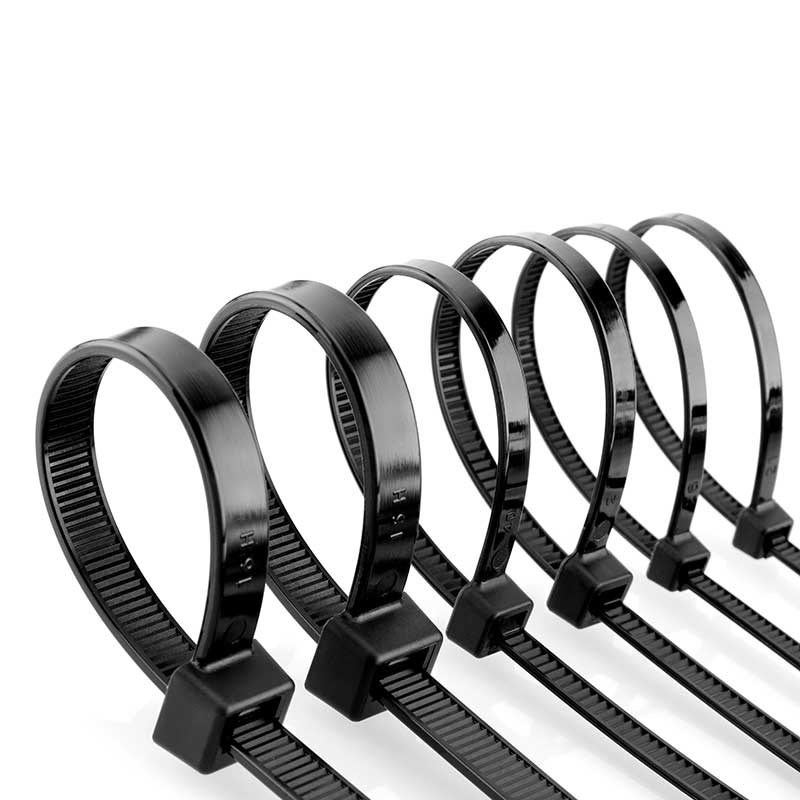
Standard nylon ties are molded from polyamide 6.6 (PA66), a tough thermoplastic that is light, flexible, and cheap to produce. They self-lock through a pawl-and-ratchet head and are the default for indoor and light outdoor bundling. PA66 absorbs a small amount of water, which slightly lowers its short-term strength in continuously wet service but recovers when dry.
Polyester-coated stainless steel ties use a 304 or 316 stainless band wrapped in a polyester (PET) or epoxy coating. The metal carries the load; the coating protects the cable jacket from the steel edges and silences vibration. They are heavier and cost more, but they do not degrade the way plastic does, and 316 grade resists chloride attack in coastal and marine air.

Mechanical Strength: Tension and Vibration
Nylon ties are rated by loop tensile strength, commonly from 18 lb (8 kg) up to around 250 lb (113 kg) for heavy-duty styles. That is plenty for most harnesses and panel bundles. Under sustained vibration, however, the nylon pawl can creep, and in a fire the tie loses all strength.
Coated steel ties start where nylon stops: typical ratings run from 100 lb to over 1,500 lb. Because the band is metal, they hold tension indefinitely and resist shock loads that would snap a plastic tie. For self-locking stainless steel ties in transit, rail, or machinery, that margin is the point.
Temperature and UV: Where Nylon Fades
PA66 performs from about -40 °C to +85 °C continuous, with heat-stabilized grades reaching +105 °C to +120 °C. Above that, or in direct sun, standard nylon embrittles and the tie snaps. UV-resistant cable ties (carbon-black stabilized) extend outdoor life, but they still soften in fire.
Coated steel shrugs off temperature: service ranges of -50 °C to +150 °C are normal, and the metal survives far higher peaks. UV does nothing to steel, and the polyester skin blocks corrosion of the band and abrasion of the cable. For rooftop solar, coastal, or desert sites, steel is the safer long-term call.
Chemicals and Washdown
Nylon absorbs water and weakens in strong acids, solvents, and some cleaning agents. In food, pharma, and galvanizing plants, washdown chemicals attack standard ties within a season. Coated steel — especially 316 with a smooth polymer skin — resists acids, oils, and detergents and meets the hygiene expectations of washdown lines. The coating also stops the steel from galling against sensitive surfaces.
Fire Behavior and Halogen Content
Standard PA66 ties are flammable and can drip. In enclosed transit spaces, tunnels, or rail vehicles, low-smoke, halogen-free (LSZH) or metal ties are often mandated. Coated steel does not burn, which is why it is specified for life-safety and transit routes. If your site has a fire-rating requirement, confirm the tie’s certification before purchase.
Installation Tooling Differs
Nylon ties are hand-tightened or seated with a light tensioning tool; a side cutter finishes the tail. Steel ties need a dedicated tensioning and cutting tool — a hand tool will not give a clean, safe, flush cut. The extra tooling is part of the steel tie’s total cost, but it also delivers the consistent tension that makes steel installations inspectable.
Quick Selection Guide
| Condition | Choose |
|---|---|
| Indoor panel, light bundle, tight budget | Nylon cable ties |
| Outdoor, sun-exposed, moderate load | UV-stabilized nylon |
| High tension, vibration, fire risk | Polyester-coated steel |
| Chemical washdown, coastal, food/pharma | 316 coated stainless steel |
| Life-safety transit / enclosed routes | LSZH or metal tie |
Cost vs Lifecycle
Nylon ties are cents each; coated steel ties cost several times more. But a nylon tie that fails after two summers on a rooftop array means a truck roll and labor that dwarf the part price. For permanent, hard-to-reach, or safety-related runs, the steel tie is the cheaper option over the asset’s life. For consumable, frequently re-worked harnesses, nylon stays the smart default. A simple way to frame it: if the tie outlasts the labor cost of replacing it, spend up; if you will re-open the bundle next month anyway, save with nylon.
Field Lifespan: What the Years Actually Look Like
In a mild indoor environment, a nylon tie easily lasts the life of the equipment. Move it outside in full sun and a non-UV tie can go brittle in two to three seasons; a UV-stabilized tie stretches that to many years but still has a finite plastic life. Coated steel, by contrast, is effectively permanent in the same outdoor spot — the band does not photodegrade, and the coating protects both the steel and the cable. For asset owners counting total cost over a decade, that durability is often the deciding factor.
Recyclability and Disposal
Nylon ties are a thermoplastic and can be collected for recycling where facilities accept PA66; in practice most end in general waste. Stainless steel ties are readily recyclable as metal, and the polyester coating is a minor fraction that does not hinder scrap recovery. If your procurement policy favors recyclable fixings, steel scores higher at end of life.
Specialty Variants Worth Knowing
- Heat-stabilized nylon — for engine bays and enclosures above 85 °C.
- UV-black nylon — outdoor runs exposed to direct sun.
- Epoxy-coated steel — an alternative to polyester where a thicker, more chemical-resistant skin is wanted.
- Detectable ties — with a metal or X-ray trace for food-line contamination control.
Typical Applications by Environment
| Environment | Recommended tie |
|---|---|
| Office / data closet | Standard nylon |
| Rooftop solar array | UV nylon or coated steel |
| Food / pharma washdown | 316 coated steel, detectable |
| Marine / coastal | 316 coated steel |
| Transit / enclosed route | LSZH or metal |
Sourcing and Custom Options
Standard lengths cover most work, but long bundles, odd diameters, or branded installs often need custom lengths, colors, or printed markings. A supplier that stocks both nylon and coated steel, and can provide custom ties, lets you consolidate purchasing and keep one quality standard across the site. Ask for sample reels before a large order so you can verify tensile rating and coating quality firsthand.
A Practical Rule of Thumb
If you are unsure which tie to specify, start from the failure you cannot afford. If a loose bundle only means a re-tie next week, nylon is the rational choice. If a failed tie means a safety inspection, a warranty claim, or a truck roll to a remote rooftop or offshore site, spend the extra on coated steel. Most operations actually need both: nylon for the everyday harness, steel for the handful of runs that matter most. Stocking both, with a written rule for when each applies, is usually the lowest total cost and the highest reliability at the same time.
Put the rule on the bill of materials so purchasers and installers make the same decision every time, and review it after the first year of service — field experience quickly shows whether a specific location is harder on ties than the spec assumed. Keep a few sample ties from each supplier on hand so any future audit can confirm the grade installed matches the drawing, and photograph the installed bundle as-installed for the maintenance record.
Frequently Asked Questions
Is coated steel reusable?
Generally no — once tensioned and cut, it is a permanent tie. For re-workable bundles, use releasable nylon designs.
Will the coating scratch my cable?
No. The polymer skin is there precisely to protect the jacket from the steel band’s edges.
Can I use nylon outdoors?
Yes, with UV-stabilized grades and a realistic service-life expectation; for decades of sun exposure, steel is safer.
Can I paint over a tie for color coding?
Paint does not stick well to nylon or the slick coating; use pre-colored ties or a tagged label instead.
Do coated steel ties conduct electricity?
The band is metal, so treat it as conductive; maintain separation from live parts or use insulated saddles.
Specify the Right Tie for the Environment
Niuli Electric stocks nylon, UV-resistant, and polyester-coated stainless steel ties. Tell us the temperature, chemical, and tension profile of your site and we will match the grade.
