



-
Introduction
Cable glands are easy to overlook in a refinery project. They’re small parts compared with motors, pumps, junction boxes, and process equipment — but they sit exactly where a cable enters an enclosure. In a hazardous area, that entry point has to maintain the protection concept of the equipment.
So the first question isn’t “Which cable gland is strongest?” It’s which gland is certified and suitable for the specific hazardous area, equipment protection method, cable construction, and installation conditions?
For petrochemical refineries, the distinction between Zone 1 and Zone 2 matters a lot. A gland selected for an ordinary industrial enclosure cannot automatically be used in a hazardous area just because it has a good IP rating.
This guide explains the main selection points and shows how to approach cable-gland specification for Zone 1 and Zone 2 refinery installations.
-
What Are Zone 1 and Zone 2 Hazardous Areas?
Zone classification describes how likely a flammable gas or vapor atmosphere is to be present during normal operation.
Under the IEC hazardous-area system, Zone 1 is an area where an explosive gas atmosphere is likely to occur occasionally during normal operation. Zone 2 is an area where such an atmosphere is not likely to occur during normal operation, but could exist for a short period if it does occur.
In a refinery, the classification depends on the actual process, equipment, release sources, ventilation, and plant layout. Typical examples might include areas around process equipment, pumps, valves, vents, or other potential release points — but the classification has to come from the site’s hazardous-area study, not from the name of the equipment alone.
This distinction matters because the cable gland is part of the electrical installation. Zone 1 and Zone 2 don’t simply mean “use two different sizes of cable gland.” They affect the required equipment protection, certification, installation method, and documentation.
IEC 60079-14:2024 covers the design, selection, installation, and initial inspection of electrical installations in explosive atmospheres, including the selection and installation of Ex equipment.
-
Why Does Cable Gland Selection Matter in Petrochemical Refineries?
Explosion Protection and Gas-Tight Sealing
A cable gland in a hazardous area has a more demanding role than an ordinary cable entry.
For a flameproof Ex d enclosure, the gland and cable combination must preserve the enclosure’s ability to contain an internal explosion. IEC guidance notes that, for an Ex d enclosure, the cable and gland combination needs to prevent ignition-capable hot gases or flames from reaching the surrounding atmosphere. (IEC Assets)
The gland may also provide environmental sealing and, depending on the design, additional protection against gas or liquid migration through the cable.
This is why a cable gland’s IP68 rating should not be confused with Ex certification. IP protection addresses ingress of solids and water; explosion protection addresses ignition and containment requirements.
A gland can be highly waterproof and still be unsuitable for a Zone 1 installation.
Cable Type and Mechanical Protection
Cable construction affects gland selection.
A refinery may use:
- Unarmored power cables
- Armored cables
- Control cables
- Instrumentation cables
- Cables with different outer-sheath materials
An armored cable generally requires the gland to deal with the armor as well as the cable sheath. Depending on the gland design, it may also need to provide armor clamping and electrical continuity.
The gland must therefore match the actual cable dimensions — not just the nominal cable size.
Cable diameter, armor type, inner bedding diameter, sheath material, and gland sealing range should all be checked before ordering.
Temperature and Environmental Resistance
Petrochemical refineries can expose cable entries to high ambient temperatures, hot equipment surfaces, sunlight, hydrocarbons, moisture, and outdoor weather.
Temperature rating is therefore part of the gland specification.
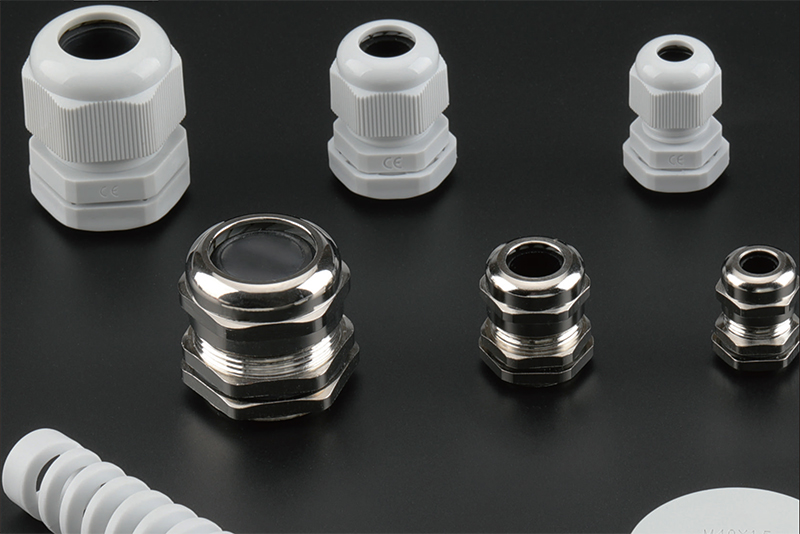
Niuli’s general cable-gland range includes PA66, brass, and stainless-steel designs with stated working-temperature ranges around -40°C to 100°C, depending on the product. Its cable glands are also listed with IP68 protection for the relevant product families. (Cable Tie Nylon)
That doesn’t by itself make a gland suitable for hazardous-area use. The actual Ex-certified product needs a temperature range appropriate to the installation and the required equipment protection concept.
Chemical and Corrosion Resistance
Refinery environments can contain hydrocarbons, process chemicals, salt, moisture, and corrosive vapors.
Material selection becomes important when the gland is installed outdoors or near process equipment.
Nickel-plated brass can provide a useful combination of mechanical strength and corrosion resistance, while stainless steel may be preferred for particularly corrosive locations.
Niuli’s brass cable glands use nickel-plated brass for the body and nut and NBR for the sealing ring. The product range is listed as anti-acid, anti-erosion, waterproof, and dustproof. (Cable Tie Nylon)
For a specific refinery chemical environment, though, compatibility should be checked against the actual chemicals and temperatures rather than trusting a general “chemical resistant” description.
-
Zone 1 vs. Zone 2: What Type of Cable Gland Do You Need?
Equipment Protection Requirements
The zone tells you about the hazardous atmosphere. The equipment protection method tells you how the electrical equipment is designed to manage that hazard.
That distinction is important.
A Zone 1 installation may use equipment designed around protection concepts such as Ex d or Ex e, depending on the equipment and certification. Zone 2 equipment may use different protection concepts appropriate to the equipment protection level and installation.
The cable gland must be compatible with that protection concept.
IEC 60079-14 specifically addresses the selection and installation of Ex equipment in explosive atmospheres, including documentation and initial inspection. (IEC Webstore)
So the right selection process is not:
Zone 1 → buy an “explosion-proof gland.”
It is:
Zone classification → equipment protection concept → certified gland → correct cable → correct installation procedure.
Ex d vs. Ex e Cable Glands
Ex d and Ex e describe different explosion-protection concepts and should not be treated as interchangeable labels.
For an Ex d flameproof enclosure, the gland needs to maintain the integrity of the flameproof enclosure and the applicable cable-entry requirements. IEC’s own guidance highlights the importance of the cable/gland combination in preventing flames or hot gases from escaping following an internal explosion. (IEC Assets)
Ex e refers to increased safety, where the equipment is designed so that additional measures prevent arcs, sparks, or excessive temperatures from becoming an ignition source under the applicable conditions.
The gland selection must follow the certification of the equipment. A standard IP68 gland cannot simply be relabeled Ex d or Ex e because it provides a good seal.
Certification and Marking Requirements
Look at the actual certification marking rather than a marketing description.
Depending on the project and jurisdiction, documentation may involve:
- IECEx certification
- ATEX certification
- Relevant EN/IEC 60079 requirements
- Equipment Protection Level (EPL)
- Gas group
- Temperature class
- Ambient temperature range
- Specific gland/cable restrictions
The certificate should correspond to the exact product type and protection method being installed.
This is particularly important for Zone 1. A general CE, RoHS, SGS, or IP68 certificate is not equivalent to an IECEx or ATEX explosion-protection certificate.
-
How to Choose the Right Explosion-Proof Cable Gland?
Hazardous Area Classification
Start with the site documentation.
Confirm:
- Zone 1 or Zone 2
- Gas or vapor classification
- Equipment Protection Level
- Gas group
- Temperature class
- Ambient temperature
Do not make the zone classification from the gland catalogue. The site’s hazardous-area documentation is the starting point.
Cable Diameter and Gland Size
Measure the actual cable.
The gland needs to fall within its specified clamping or sealing range. For armored cable, additional dimensions may be required.
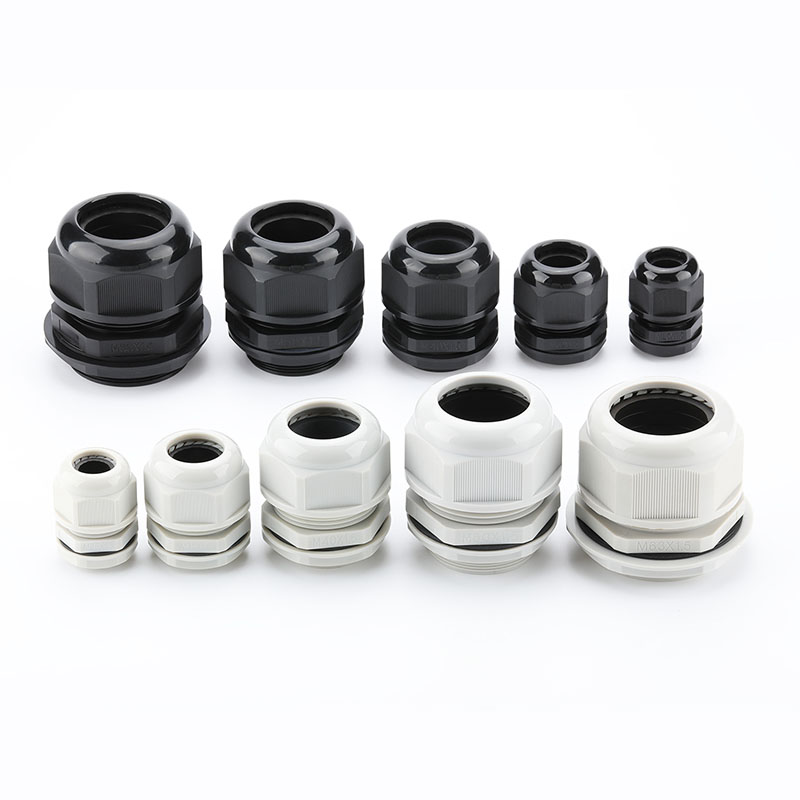
Also verify the enclosure entry thread. Metric, PG, and NPT are not interchangeable simply because their nominal dimensions appear similar.
Niuli provides Metric, PG, G, and NPT cable glands, giving OEMs and panel builders options for different enclosure standards. (Cable Tie Nylon)
For hazardous-area equipment, the thread type and gland certification must both match the enclosure and project requirements.
IP Rating and Environmental Conditions
Check the required ingress protection separately from Ex protection.
If the enclosure needs IP68, the complete cable-entry arrangement has to maintain that level of protection under the manufacturer’s specified conditions.
Consider water, dust, oil, rain, washdown, humidity, and temperature cycling as well as the hazardous atmosphere.
Niuli’s standard cable-gland range includes IP68 products in nylon PA66, brass, and other configurations. (Cable Tie Nylon)
Material Selection
Material depends on the environment.
- PA66 glands can be suitable for general electrical and industrial applications where their temperature, chemical, and mechanical ratings fit the installation.
- Nickel-plated brass provides a stronger metallic body and is a common option for industrial installations.
- Stainless steel becomes more attractive where corrosion is a major concern, particularly outdoors or in aggressive environments.
The material should be selected alongside the sealing material. An NBR seal, for example, has its own temperature and chemical limitations.
Required Certifications
Finally, check the paperwork.
For a hazardous-area project, ask for the exact certificate rather than a general declaration. The documentation should identify the gland model and relevant protection markings.
Also check installation restrictions. Some Ex gland certificates are valid only with particular cable types, cable dimensions, sealing arrangements, or accessories.
-
Common Cable Gland Selection Mistakes in Petrochemical Applications
Several mistakes occur repeatedly during procurement and installation.
- Choosing by IP rating alone. An IP68 gland is not automatically an explosion-proof gland.
- Using a general industrial gland in a hazardous area. The gland needs the protection certification required by the equipment and zone.
- Selecting the gland from cable outer diameter alone. Armored cables often require additional measurements.
- Mixing protection concepts. An Ex d application should not receive a gland simply because its catalogue description contains the words “Ex” or “explosion-proof.”
- Ignoring temperature class and ambient temperature. A gland may be mechanically suitable but unsuitable for the actual operating temperature.
- Using the wrong thread standard. A metric gland and a PG or NPT enclosure opening require careful compatibility checking.
- Assuming certification applies to every product in a supplier’s range. Certification belongs to the specific certified product/configuration.
These errors are usually easy to prevent when the gland is specified from the project documentation instead of being chosen only by size and price.
-
How Do Cable Glands Work with Cable Management Systems?
Cable glands and cable ties perform different jobs, but they’re often installed together.
The cable gland secures and seals the cable where it enters the enclosure. A cable tie organizes and supports the cable after it has entered the equipment.
For example, a refinery control cabinet may use a certified gland at the enclosure wall and cable ties inside the cabinet to keep individual wiring bundles organized.
Keep this distinction clear:
- Cable gland: cable entry, sealing, strain relief, and—where applicable—armor termination or Ex protection.
- Cable tie: cable bundling, routing, and support.
Niuli provides both cable-gland and cable-management products, including Nylon PA66 cable ties and stainless steel cable ties. Its broader cable-gland range includes nylon, nickel-plated brass, and stainless-steel configurations. (Cable Tie Nylon)
For hazardous-area projects, though, the cable gland must satisfy the project’s Ex requirements independently. A compliant cable-management accessory doesn’t make a non-certified gland suitable for Zone 1 or Zone 2.
-
FAQs
Q1. What is the difference between Zone 1 and Zone 2?
Zone 1 is an area where an explosive gas atmosphere is likely to occur occasionally during normal operation. Zone 2 is an area where it is not likely to occur during normal operation, but if it does occur, it is expected to persist only for a short period. (EUR-Lex)
Q2. Does a Zone 1 cable gland have to be Ex d?
Not necessarily. The required gland depends on the equipment protection concept, cable construction, certification, and installation design. Ex d is one protection concept; Ex e is another.
Q3. Is an IP68 cable gland automatically explosion-proof?
No. IP68 concerns ingress protection. Explosion protection requires the appropriate Ex protection concept and certification.
Q4. What certifications should I check for a hazardous-area cable gland?
Depending on the project and market, check the applicable IECEx or ATEX certification, protection concept, EPL, gas group, temperature class, ambient temperature range, and any restrictions stated on the certificate.
Q5. Can the same cable gland be used in Zone 1 and Zone 2?
Sometimes a particular certified gland may be permitted for both, but this cannot be assumed from the zone number alone. Check the product certificate and the equipment’s protection requirements.
Q6. Does Niuli offer cable glands for industrial applications?
Yes. Niuli offers cable glands in PA66 nylon, nickel-plated brass, stainless steel, and other configurations, with Metric, PG, G, and NPT thread options. Its standard cable-gland products include IP68-rated models. (Cable Tie Nylon)
Q7. Can Niuli standard IP68 cable glands be used directly in a Zone 1 refinery?
Do not make that assumption. Niuli’s general product pages list IP68, CE, RoHS, and SGS specifications, but those specifications are not by themselves equivalent to IECEx or ATEX hazardous-area certification. The exact gland and certification must be confirmed for the refinery’s Zone 1 requirements. (Cable Tie Nylon)
Q8. What cable dimensions are needed to select an armored cable gland?
Depending on the gland, you may need the overall cable diameter plus the armor dimensions, inner bedding diameter, and other cable-construction measurements. Using only the overall diameter can result in an incorrect gland selection.
-
Conclusion
Selecting a cable gland for a petrochemical refinery starts with the hazardous-area classification, but it doesn’t end there.
Zone 1 and Zone 2 describe how frequently an explosive atmosphere may be present. The gland itself then has to match the equipment protection concept, cable construction, temperature, environmental conditions, enclosure thread, and required certification. IEC 60079-14:2024 provides the current IEC framework for selection and installation of electrical Ex equipment in explosive atmospheres. (IEC Webstore)
Most importantly: IP68, CE, RoHS, and SGS are not substitutes for Ex certification when the project requires certified hazardous-area equipment.
Niuli Electric provides a range of industrial cable glands in PA66, nickel-plated brass, and stainless steel, including IP68 models and Metric, PG, G, and NPT thread options. (Cable Tie Nylon) For a hazardous petrochemical installation, the correct product should be selected against the project’s exact Ex requirements and verified through the relevant product documentation before procurement.
For standard industrial cable-entry requirements, explore the Niuli Cable Gland Range to compare materials, thread types, sealing ranges, and specifications. For a project-specific requirement, Request Free Samples or contact Niuli with the cable diameter, cable construction, thread type, zone classification, and required certification.
For Zone 1 or Zone 2 refinery projects, provide the exact hazardous-area and equipment requirements so the appropriate cable-gland configuration can be checked before bulk ordering.
