



Introduction
Agricultural machinery is much harder on cable management than a typical indoor electrical installation. Tractors, harvesters, balers, seeders, irrigation equipment — all of them deal with constant vibration, mechanical movement, dust, moisture, temperature swings, and the occasional impact.
A cable tie can look perfectly intact while the bundle behind it slowly wanders off its original position. Once a harness starts to migrate, cables rub against metal edges, moving components, hot surfaces, or each other. That wears down jackets and creates maintenance work further down the line.
So the locking design matters, especially when a bundle has to stay put under repeated vibration.
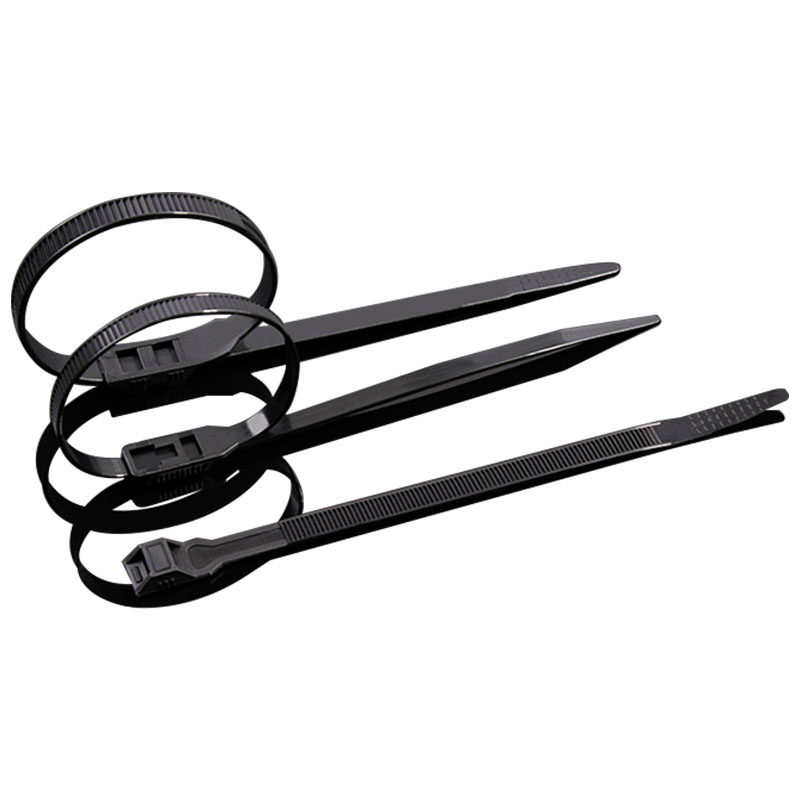
Double-sided teeth cable ties are built for exactly this problem. Instead of relying on a single tooth-and-locking engagement, the tie carries teeth on both sides of its body, with matching anti-release engagement in the locking area. Niuli states that this design increases tension strength by more than 20% compared with conventional designs.
But how does that actually reduce slippage on vibrating agricultural machinery?
Why Do Cable Ties Slip in Heavy-Duty Agricultural Machinery?
Slippage doesn’t necessarily mean the locking head has failed outright. In a vibrating machine, several small mechanical effects can nudge a bundle along, bit by bit.
Continuous vibration
Engines, transmissions, pumps, cutting mechanisms, rotating components, uneven terrain — agricultural machinery generates vibration from all of it, and the loading is repetitive rather than a single impact.
Over time, that repeated movement produces small relative motion between the tie, the bundle, and the supporting structure. If the locking mechanism can’t hold, the tie gradually loses its original position.
Cable movement and bundle weight
A large bundle has more mass and inertia than a handful of control wires. Every time the machine accelerates, stops, turns, or crosses rough ground, that weight loads the fastening point.
The heavier and more mobile the bundle, the more you have to look at tensile strength, tie width, locking geometry, installation tension, and support spacing together.
Installation problems
Even a strong tie performs badly when it’s fitted wrong. Common mistakes:
- Choosing a tie that’s too narrow for the bundle
- Applying inconsistent installation tension
- Leaving excessive slack
- Over-tightening and damaging the cable jacket
- Using ties as structural supports where separate mounting points are required
- Spacing ties too far apart on a long, vibrating run
For agricultural machinery, the objective is not simply to buy the strongest tie on the shelf. The whole cable-management system has to match the mechanical environment.
How Do Double-Sided Teeth Cable Ties Prevent Slippage?
The main difference is locking geometry.
A conventional self-locking tie relies on engagement between the strap’s teeth and a locking element inside the head. A double-sided design adds teeth to both sides of the strap, which creates extra anti-release engagement.
Niuli describes its ties as having teeth on both sides of the body, with the buckle in the head and the opposite side providing anti-release teeth. The company states the design increases tension strength by more than 20%.
That doesn’t mean a double-sided tie can never move under vibration. What the extra engagement buys is more resistance to the forces that gradually loosen or shift a fastening.

Dual-Sided Teeth for Stronger Locking
The simplest way to see the point is to look at the direction of force.
When a bundle pulls against the tie, the strap tries to run backward through the locking head. The teeth and locking mechanism resist that movement.
With teeth on both sides of the strap, there are more engagement surfaces, so the strap and the locking structure interact more mechanically.
On vibrating machinery this matters because the load is never perfectly static. The strap sees thousands of small movements rather than one constant pull. A stronger locking interface holds the original fastening position over repeated cycles.
Locking geometry is only one part of the system, though. Correct installation and adequate support are still necessary where cable movement is significant.
Higher Tensile Strength and Load Retention
Agricultural machinery often asks ties to carry larger bundles and greater mechanical loading than simple indoor wiring.
Niuli’s published double-sided teeth range includes 4.5 mm-wide models with minimum loop tensile strengths of 75 lb and 98 lb, depending on length.
The higher tensile-strength design earns its keep when the cable bundle is:
- Relatively large or heavy
- Exposed to repeated vibration
- Routed around machinery
- Subject to movement during operation
- Installed somewhere replacement is inconvenient
A higher tensile rating gives the installer more mechanical capacity — but tensile strength should not be confused with allowable structural load.
A cable tie is not a substitute for a properly engineered clamp, bracket, cleat, or mounting system. Where a route sees significant mechanical movement, the machinery structure should carry the bundle.
Resistance to Vibration and Repeated Movement
Vibration matters because its effects accumulate.
Take a harness running along a tractor or harvester. During operation it sees thousands of small movements. A fastening that passes one static pull test can still need a suitable locking design and installation method to survive long-term vibration exposure.
Double-sided teeth help by making the strap-locking interface harder to pull backward.
Niuli specifically lists double-sided teeth ties as a high-vibration option, alongside other methods such as push-mount and screw-mount cable-tie bases.
On long runs, the installation pattern matters too. Rather than trusting one very strong tie, spread the support points along the route. That cuts the movement any single fastening point has to absorb.
In short:
Better locking + appropriate tensile strength + proper support spacing = more stable cable management.
Nylon PA66 Material and Long-Term Durability
A locking mechanism is only as reliable as the material behind it.
Niuli makes its double-sided teeth ties from UL-approved Nylon PA66; the product page lists INVISTA U4820L, DuPont 101L, and ASCEND 21SPC as resin sources.
The published product specifications:
- Material: UL-approved Nylon PA66
- Flammability: UL 94V-2
- Installation temperature: -10°C to 85°C
- Working temperature: -40°C to 85°C
- Colors: Natural, black, and other colors upon request
- Certifications listed by Niuli: UL, CE, RoHS, REACH, SGS
Nylon 66 is the standard tie material for good reason: it combines mechanical strength with electrical insulation and decent resistance to common industrial conditions.
On farm equipment, though, match the material to the actual environment. Outdoor machines see UV radiation, water, agricultural chemicals, oil, heat, and big temperature swings. If a tie sits in strong sunlight all day, a UV-stabilized formulation is the better call than a standard black tie.
Niuli sells UV-resistant cable ties separately for outdoor machinery and agricultural applications, built on a specially stabilized PA66 formulation.
Double-Sided Teeth vs. Standard Cable Ties: Performance Comparison
Pick between a standard tie and a double-sided design based on the mechanical environment, not on how the product looks.
| Feature | Standard Cable Tie | Double-Sided Teeth Cable Tie |
| Locking design | Conventional tooth-and-lock system | Teeth on both sides of the body |
| Vibration resistance | Suitable for moderate/static applications | Better suited to high-vibration applications |
| Mechanical retention | Standard | Enhanced |
| Tensile strength | Depends on width and model | Niuli states >20% higher tension strength than conventional designs |
| Heavy cable bundles | Depends on specification | Suitable when higher retention is required |
| Agricultural machinery | Suitable for low-stress areas | Better suited to demanding vibrating locations |
| Installation | Simple | Simple, but correct tension remains important |
| Material | Commonly PA66 | Niuli double-sided range uses UL-approved PA66 |
Here’s the honest caveat: double-sided teeth do not automatically make every installation more reliable.
A properly selected standard tie can be completely adequate for a relatively stationary harness. And even a high-strength double-sided tie can be fitted badly, or used without enough structural support.
For high-vibration machinery, though, the extra resistance to backward movement is a real mechanical advantage.
How to Choose the Right Cable Ties for Agricultural Machinery?
When you’re specifying ties for tractors, harvesters, agricultural processing equipment, irrigation machinery, or anything else that moves, work through these factors.
Measure the cable bundle
Start with the actual bundle diameter. The tensile number comes after.
The tie needs enough length to wrap the bundle and engage the locking head correctly.
Consider the mechanical environment
Ask:
- Is the machine stationary or mobile?
- How much vibration is expected?
- Does the cable move relative to the frame?
- Is the bundle heavy?
- Is the cable route close to moving components?
- Will the installation be exposed to outdoor conditions?
High vibration and repeated movement are strong reasons to move to a higher-retention design.
Select sufficient tensile strength
Don’t pick a tie on bundle diameter alone. Weigh the bundle and account for the dynamic loading generated during machine operation.
Niuli’s double-sided teeth models currently listed on its product page include 75 lb and 98 lb minimum loop tensile-strength options.
Match the material to the environment
For general machinery wiring, PA66 usually gives you the combination of mechanical strength and durability you need.
For prolonged outdoor exposure, look at UV resistance too. Very hot, cold, or chemically aggressive environments may call for a specialized material formulation.
Do not use cable ties as the only structural support
This one matters most on agricultural machinery.
Ties organize and secure cables; they’re not there to carry unsupported runs over long distances or to replace engineered mounting hardware.
Where possible, combine ties with:
- Push-mount bases
- Screw-mount bases
- Cable clamps
- Brackets
- Existing machine mounting points
That cuts movement and lets the tie do its actual job: bundling cables.
Control installation tension
Over-tightening damages the jacket; too little tension lets the bundle wander.
For production assembly, a controlled tensioning tool beats manual tightening for consistency. Niuli’s own guidance on vibration-resistant cable management also recommends appropriate tensioning tools and fixed mounting points.
Why Choose Niuli Electric Double-Sided Teeth Cable Ties?
Niuli Electric builds its double-sided teeth ties for applications where conventional locking doesn’t provide enough mechanical retention.
The tie uses UL-approved Nylon PA66, with teeth on both sides of the cable-tie body. Niuli states the design increases tension strength by more than 20% compared with conventional designs.
The currently published product range:
- 5 × 203 mm: 75 lb minimum loop tensile strength
- 5 × 280 mm: 75 lb minimum loop tensile strength
- 5 × 360 mm: 98 lb minimum loop tensile strength
The product page also lists working temperatures from -40°C to 85°C, so the range fits many general industrial and outdoor machinery environments — provided the actual application stays within the product’s specified conditions.
For agricultural machinery manufacturers and cable-management distributors, this design is worth considering whenever cable bundles face continuous vibration, repeated movement, or higher mechanical loading.
Niuli also offers other cable-tie configurations and materials for different environments, including UV-resistant products for outdoor machinery and agriculture.
For OEM projects, Niuli states that customization is available for product size, color, and packaging, with OEM/ODM support.
FAQs
Q1: Do double-sided teeth cable ties completely prevent slippage?
No tie is completely immune to movement. Double-sided teeth increase mechanical engagement and improve resistance to backward movement, but real-world performance still depends on installation tension, cable weight, vibration level, bundle diameter, support spacing, and the surrounding structure.
Q2: Why are double-sided teeth useful for agricultural machinery?
Agricultural machinery lives with continuous vibration and repeated movement. The extra tooth engagement resists loosening and cable-bundle migration better than a conventional locking design.
Q3: Are Niuli double-sided teeth cable ties made from Nylon 66?
Yes. Niuli’s published double-sided teeth product uses UL-approved Nylon PA66, with several named resin sources listed on the product page.
Q4: What tensile strength do Niuli double-sided teeth cable ties provide?
The published 4.5 mm-wide models come in minimum loop tensile strengths of 75 lb and 98 lb, depending on the model. Niuli also states its double-sided teeth structure increases tension strength by more than 20% compared with conventional designs.
Q5: Can I use double-sided teeth cable ties outdoors?
In many outdoor machinery applications, yes — but treat environmental exposure separately from locking strength. For continuous sunlight, a UV-resistant PA66 formulation is the better choice. Niuli offers a separate UV-resistant cable-tie range for outdoor machinery and agricultural applications.
Q6: Are cable ties enough to support cables on vibrating machinery?
Not always. On long or heavy runs, combine ties with proper mounting points, clamps, or bases. A tie’s job is to secure and organize the bundle, not to replace the machine’s structural cable-support system.
Heavy-duty agricultural machinery demands far more from cable management than a static indoor installation ever will. Continuous vibration, repeated movement, heavy bundles, outdoor exposure, and temperature changes can shift a bundle even when the tie itself hasn’t broken.
Double-sided teeth cable ties tackle one part of that problem: locking retention.
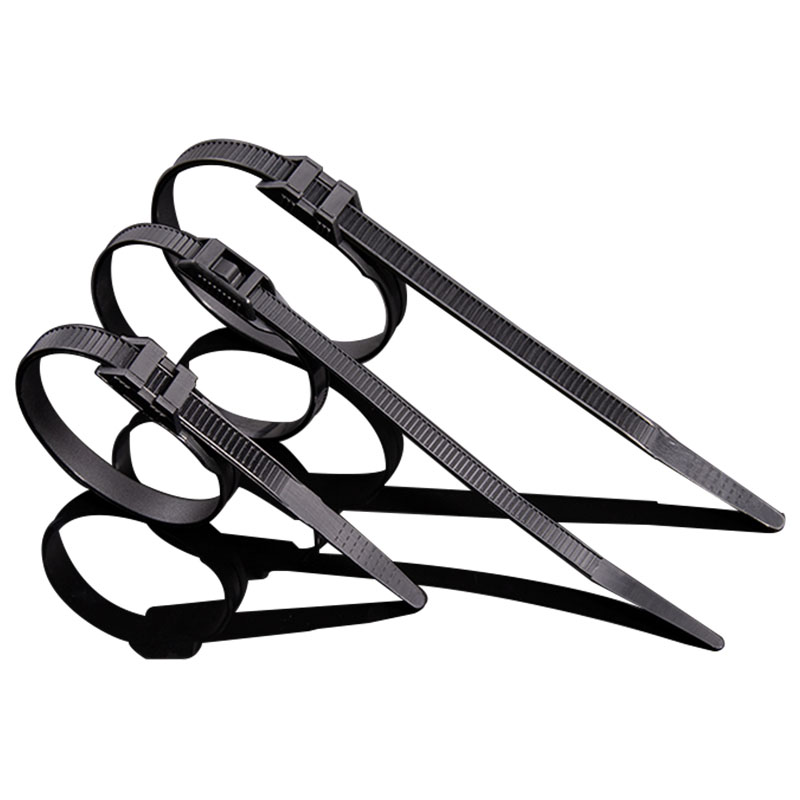
Teeth on both sides of the body mean extra mechanical engagement and more resistance to backward movement. Niuli’s published specifications put the design at more than 20% higher tension strength than conventional designs, and the PA66 construction plus available high-strength models suit demanding cable-bundling work.
The best results come from the whole package: the right tie design, correct width, adequate tensile strength, proper installation tension, sensible support spacing, and environmental resistance.
If you are sourcing cable ties for tractors, harvesters, irrigation systems, agricultural processing equipment, or other vibrating machinery, [Download the Catalog] to review available specifications, or [Request Free Samples] to evaluate the product in your application.
