Choosing the right terminal for your electrical connections is crucial for safety and efficiency. Fork terminals and hook terminals are widely used, but each has unique advantages. In this article, you’ll learn the differences, applications, and installation tips, helping you decide which terminal type is best for your specific needs.
What Are Fork Terminals?
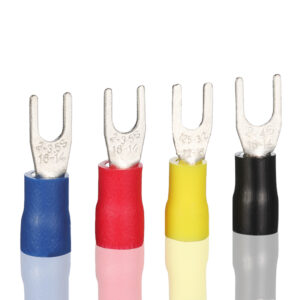
Fork terminals, also known as spade terminals, feature a U-shaped design that allows you to connect or disconnect wires without completely removing the mounting screw. They are widely used in control panels, automotive wiring, and household electrical applications.
Advantages of Fork Terminals:
Easy to install and remove
Secure connection with screws
Ideal for quick maintenance and replacement
Limitations:
Slightly less compact than hook terminals
Not suitable for very high-vibration environments unless properly secured
What Are Hook Terminals?
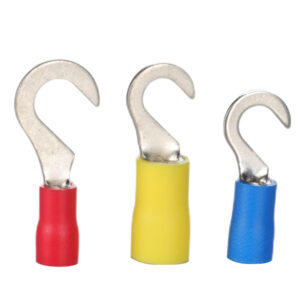
Hook terminals have a curved hook design that wraps around a screw terminal. They are commonly used for simple electrical connections, especially in residential wiring and light industrial applications.
Advantages of Hook Terminals:
Easy to hook around screws quickly
Simple and cost-effective solution for general wiring
Allows temporary connections in certain applications
Limitations:
Less secure than fork terminals if screws loosen
Can slip off in high-vibration environments
Key Differences Between Fork and Hook Terminals
Feature
Fork Terminals
Hook Terminals
Design
U-shaped (spade)
Curved hook
Ease of Installation
Easy to insert and remove with screws
Very easy to hook around screws
Connection Security
Secure when screw tightened
Less secure, may slip if screw loosens
Vibration Resistance
Better resistance
Lower resistance
Applications
Control panels, automotive, industrial
Residential, light industrial
Cost
Moderate
Generally lower
Which One Should You Use?
Fork Terminals: Best for secure connections in industrial, automotive, or high-vibration environments.
Hook Terminals: Suitable for simple residential or light industrial wiring where ease and cost are priorities.
FAQs
Q: Can I use hook terminals in automotive wiring?
While hook terminals can be used for light connections, fork terminals are recommended for automotive applications due to vibration resistance.
Q: Are fork terminals reusable?
Yes, fork terminals can be removed and reinstalled, making them convenient for maintenance.
Q: How do I choose the correct size?
Select terminals based on wire gauge and screw size to ensure a secure and safe connection.
Q: Can I use insulated terminals for safety?
Yes, insulated fork and hook terminals help prevent accidental short circuits and increase safety.
Conclusion
Choosing between fork and hook terminals depends on your application and required security. Fork terminals offer better stability and vibration resistance, while hook terminals are quick and cost-effective. Niuli Electric provides a wide range of high-quality terminals to ensure safe, efficient, and reliable electrical connections for all your projects.