When you install electrical wiring, achieving a secure crimp is essential for safety and long-term reliability. Poorly crimped fork terminals often cause loose connections, voltage drops, or overheating. By understanding the proper tools and techniques, you can ensure strong, stable connections that support your equipment and prevent failures in demanding environments.
Why Proper Crimping Matters
Loose or weak crimps create electrical resistance, which leads to heat buildup, unstable performance, and potential equipment damage. Using correct crimping methods ensures that your fork terminals remain secure even under vibration, movement, or high current.
Common Causes of Loose Fork Terminal Connections
Using the Wrong Crimping Tool
Pliers or multipurpose tools cannot provide uniform pressure. Dedicated crimping pliers are essential.
Incorrect Terminal Size
If the wire gauge and terminal size do not match, the crimp will be loose or easily pulled out.
Poor Wire Stripping Technique
Cutting too much insulation or damaging copper strands reduces conductivity and mechanical strength.
Inconsistent Crimp Pressure
Uneven force results in partial crimps that loosen during operation.
Best Practices for Crimping Fork Terminals
Choose the Right Terminal for Your Wire Gauge
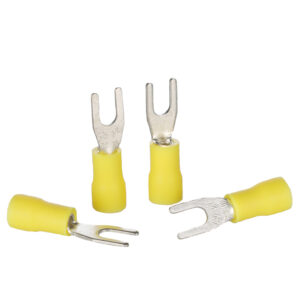
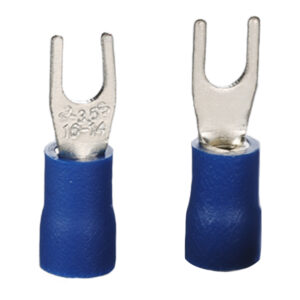
Always match AWG to the terminal color code (red, blue, yellow).
Use a Ratcheting Crimping Tool
Ratcheting tools apply consistent pressure and ensure the crimp is completed correctly.
Strip the Appropriate Length of Insulation
Usually 5–7 mm. Ensure copper strands remain intact.
Insert the Wire Fully Into the Metal Barrel
The conductor should be flush with the end of the barrel for maximum conductivity.
Apply a Firm, Complete Crimp
Crimp once, firmly, and at the correct position—usually the center of the barrel.
Perform a Pull Test
Gently tug the wire to ensure it does not slip out.
Comparison Table: Poor Crimp vs. Proper Crimp
Feature
Poor Crimp
Proper Crimp
Conductivity
Low
High
Mechanical Strength
Weak
Strong
Heat Generation
High
Minimal
Vibration Resistance
Poor
Excellent
Safety Level
Low
Optimal
Additional Tips for Reliable Installations
Use insulated fork terminals for high-vibration environments
Avoid outdoor moisture unless using heat-shrink insulated terminals
Store terminals in dry conditions to prevent oxidation
Replace old or deformed crimping tools
FAQs
Can I use pliers instead of a crimping tool?
Not recommended. Pliers cannot provide uniform compression.
How do I know if my crimp is strong enough?
Perform a pull test—if the wire stays in place, the crimp is secure.
Do fork terminals work for all screw-type terminals?
Yes, they are widely compatible but choose the correct size.
Should I solder after crimping?
Not necessary. A proper crimp is secure on its own.
Are insulated terminals better?
Yes, they offer additional protection, especially in high-vibration or outdoor settings.
Conclusion
A strong crimp ensures safe, stable electrical performance and prevents costly failures caused by loose connections. By choosing the correct fork terminals and proper crimping tools, you protect your wiring from overheating or voltage loss. For reliable, high-quality terminals designed for professional installations, Niuli Electric offers durable solutions you can trust.