When you install cables outdoors or in high-sunlight areas, you need ties that can survive years of UV exposure without cracking. Anti-UV cable ties promise longer durability, but how much longer do they really last compared to standard nylon ties? In this blog, you’ll discover the true lifespan difference and how to choose the right option for your applications.
What Makes Anti-UV Cable Ties Different?
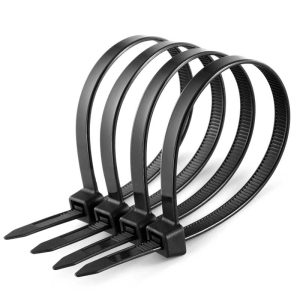
Anti-UV cable ties are made from UV-stabilized nylon, often with added carbon black or other additives to protect the polymer against sunlight degradation.
Key characteristics:
UV-resistant material formulation
Longer outdoor lifespan
Slower aging and oxidation
Better resistance to brittleness and cracking
Ideal for sun-exposed environments
Standard nylon ties do not contain this protection, so they degrade faster when exposed to sunlight.
How UV Exposure Damages Standard Cable Ties
When exposed to sustained ultraviolet radiation, standard nylon ties experience:
Color fading
Loss of tensile strength
Surface cracking
Material fragmentation
Brittleness that causes sudden failure
Without UV stabilization, standard ties may fail far earlier than expected—especially in outdoor installations.
Real Lifespan Comparison: Anti-UV vs. Standard Ties
Outdoor Lifespan
Anti-UV cable ties: typically 5–10 years, depending on sunlight intensity and climate
Standard nylon ties: often 3–12 months before weakening, sometimes failing within weeks in extreme heat
This is a dramatic difference if you rely on long-term outdoor stability.
High-Temperature Outdoor Conditions
Under strong sunlight + heat (parking lots, rooftops, industrial yards):
Anti-UV ties remain stable and flexible
Standard ties become brittle and crack rapidly
Mechanical Strength Over Time
Anti-UV ties maintain tensile strength for years, while standard ties may lose up to 50% of their strength within a few months outdoors.
Color Stability
Anti-UV ties—usually black—retain color longer.
Standard ties quickly fade, signaling material breakdown.
If your application spends more than 2–3 hours per day in sunlight, anti-UV ties are strongly recommended.
How to Identify True Anti-UV Cable Ties
Look for:
Black color with UV-stabilized nylon
PA66 or PA6 materials with UV additives
Weather-resistant labels
Certifications for outdoor use
High-quality anti-UV ties should clearly specify their UV resistance level.
FAQs
Are Anti-UV ties always black?
Most are black because carbon black enhances UV resistance, but some manufacturers offer other UV-stabilized colors.
Can standard nylon ties be used outdoors?
Yes, but only for short-term use. They degrade quickly under sunlight.
Do Anti-UV ties cost more?
Slightly, but the extended lifespan greatly reduces replacement and labor costs.
Can Anti-UV ties handle high temperatures?
Yes, they perform better than standard ties in hot environments.
Are Anti-UV ties suitable for marine applications?
Yes. Their UV and weather resistance makes them ideal for coastal or offshore environments.
Conclusion
Anti-UV cable ties deliver significantly longer outdoor durability compared to standard nylon ties. If you need reliable cable management under sunlight, UV-resistant ties offer years of performance instead of months. Choose professional-grade, long-lasting Anti-UV cable ties from Niuli Electric to ensure your outdoor installations stay secure and dependable.