



Have you ever stared at a tangle of wires and tiny metal pieces, unsure which terminal fits the job? You’re not alone. Working with electrical terminals can feel overwhelming—but it doesn’t have to be. In this guide, we’ll break down 16 types of electrical terminals, explain their uses, and show you how to pick the right one for your project. Whether you’re wiring industrial machines, automotive harnesses, or systems secured with nylon cable ties, you’ll come away confident in your choice.
Understanding what are the terminals and their terminal types is essential for reliable, long-lasting electrical connections. Keep reading, and you’ll learn how to match each terminal to the right task like a pro.
What is an Electrical Terminal?
An electrical terminal is a small device that connects two or more wires, acting as a bridge for electrical current. It ensures smooth electricity flow from one component to another without interruption.
Terminals come in various designs and materials, each tailored to specific environments or applications. From automotive wiring to industrial control panels, these small components play a big role in keeping your systems running efficiently.
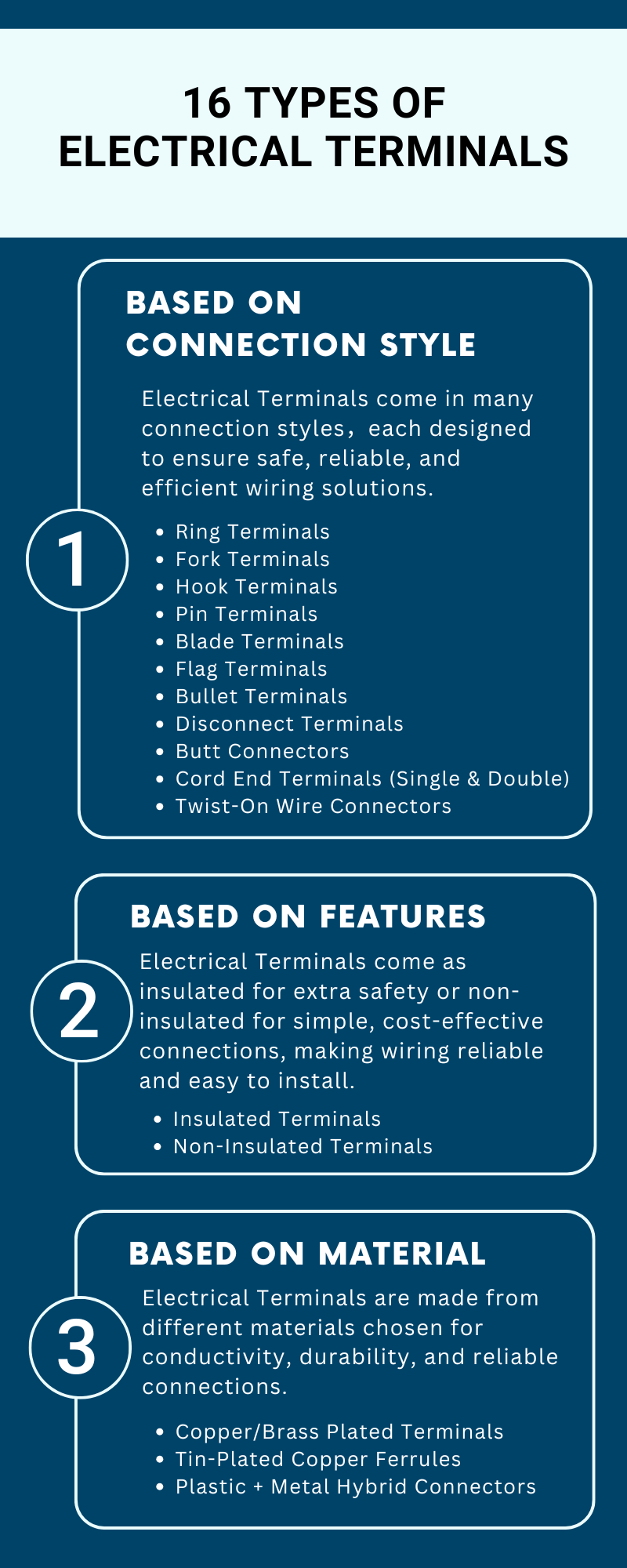
Based on Connection Style
Electrical terminals are essential components in wiring systems, providing secure and reliable connections for a variety of applications.
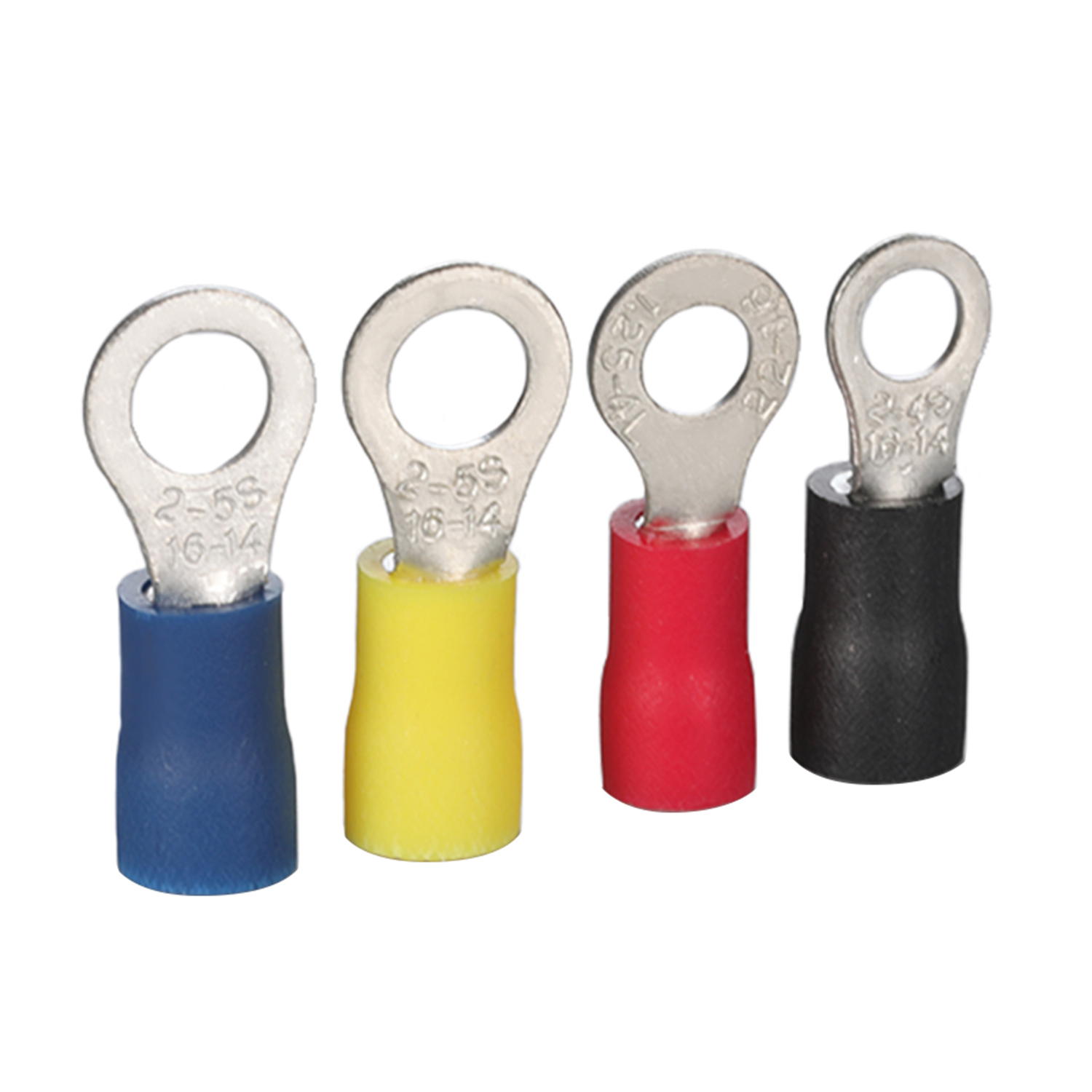
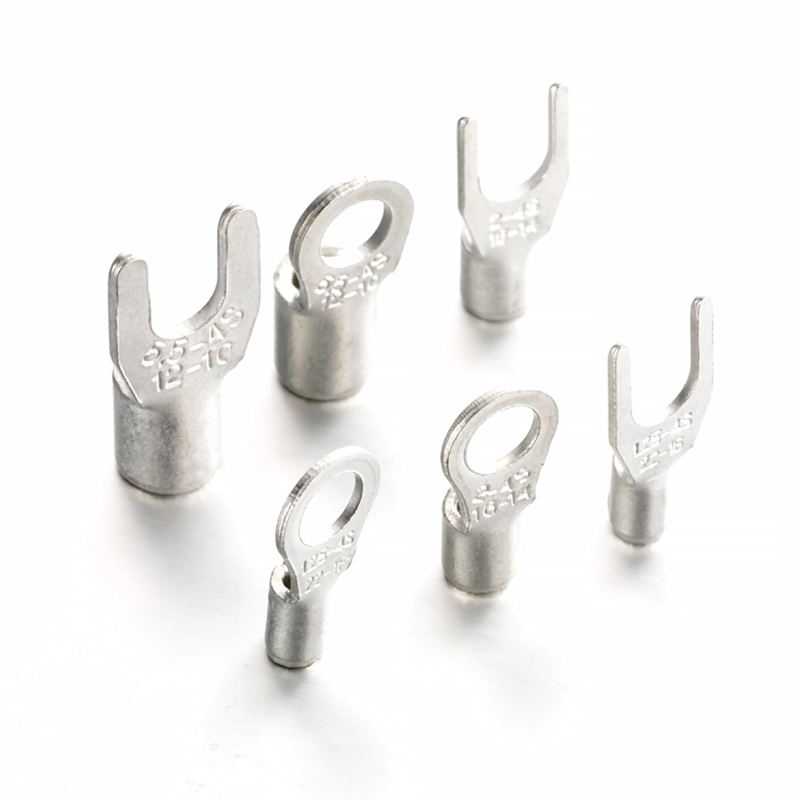
1. Ring Terminals are among the most widely used electrical connectors and feature a circular metal loop with a central hole that allows them to be fastened securely to screws or studs. The closed-loop design ensures the connection remains stable even in environments with vibration or movement, and many ring terminals include insulation sleeves for added protection against electrical shorts. These terminals are commonly made from copper, brass, or aluminum, making them suitable for automotive battery connections, industrial machinery, and electrical panels, as well as DIY electronics projects where reliability is paramount. The main advantage of ring terminals lies in their security, but they require a screw or stud for attachment, making them less convenient for connections that need to be frequently disconnected.
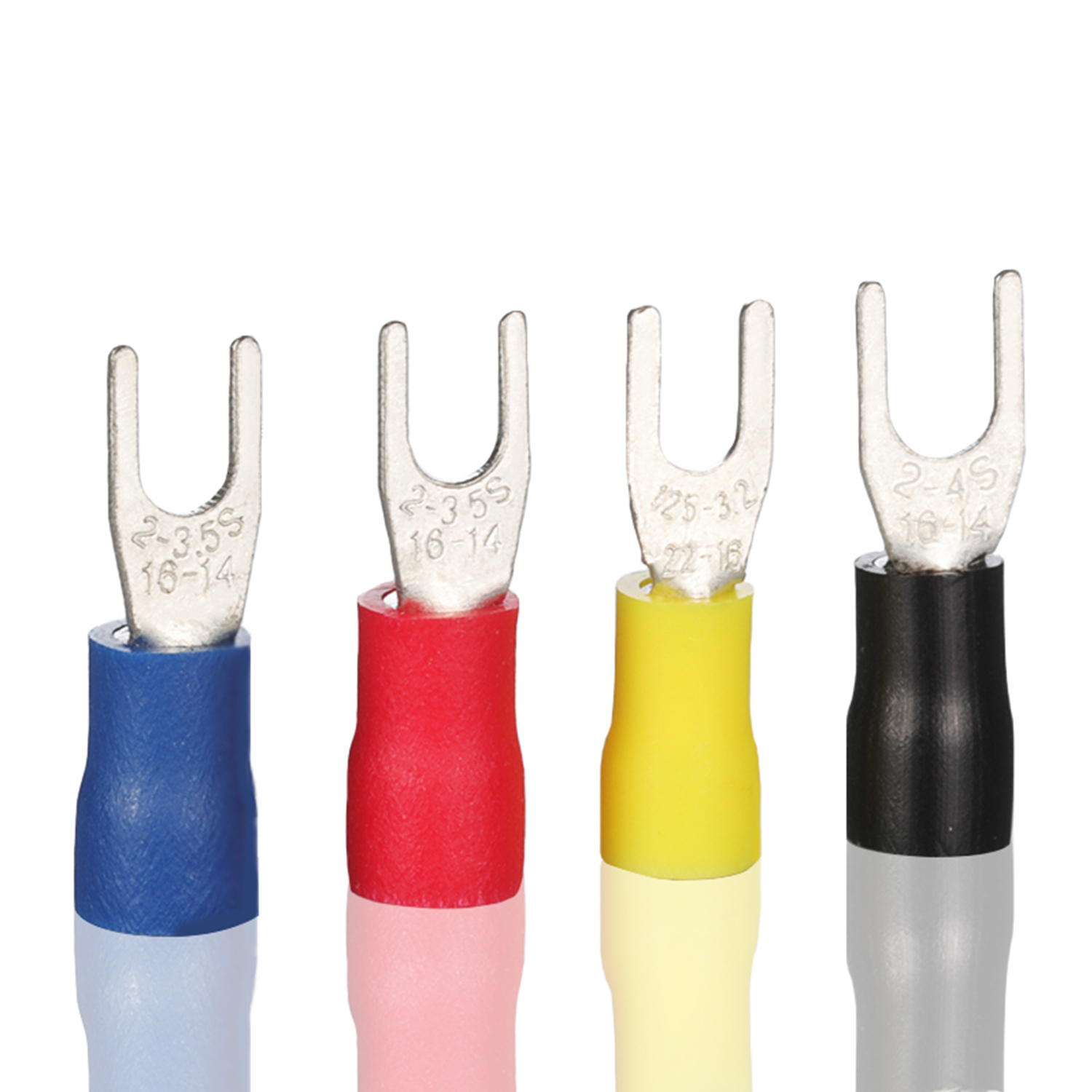
2.Fork Terminals, also known as spade terminals, provide a U-shaped end that allows quick installation or removal without fully unscrewing the fastener. They are available in insulated and non-insulated versions, often with tin-plated metal to resist corrosion. Fork terminals are frequently used in automotive wiring harnesses, industrial control panels, and household appliances. Their primary benefit is convenience, as they enable fast connections while maintaining reasonable security, though they are slightly less stable than ring terminals in high-vibration conditions.
3.Hook Terminals are small connectors shaped like hooks, designed for temporary or adjustable connections. They are ideal for low-current circuits, testing setups, or scenarios where wires may need to be reconfigured quickly. While their design allows for easy attachment and removal, hook terminals are generally not suitable for permanent or high-vibration applications, as the connection can become loose over time.
4.Pin Terminals are slender, cylindrical connectors that terminate a wire into a pin, which is then inserted into a terminal block or connector. This design prevents wire strands from fraying and ensures a reliable and consistent electrical connection. Pin terminals are often used in circuit boards, industrial control systems, and compact consumer electronics where organized wiring is critical. Their small size and precise connection capabilities make them an effective solution for maintaining neat wiring layouts in complex systems.
5.Blade Terminals have flat, rectangular metal ends that slide into corresponding receptacles, providing quick, reusable connections. They are commonly employed in automotive fuse boxes and household appliances. Blade terminals are convenient for fast assembly and disassembly, but exposed connections may require additional insulation to prevent accidental contact or short circuits.
6.Flag Terminals are designed with a perpendicular orientation, allowing wires to connect at a right angle to the attachment point. This configuration is particularly useful in tight spaces where neat, organized routing is necessary. Flag terminals are commonly found in consumer electronics, industrial control panels, and appliances with limited internal space. The right-angle design helps prevent wire bending or kinking, simplifying installation and maintenance.
7.Bullet Terminals consist of male and female connectors that snap together to form a secure but detachable connection. Insulated versions provide additional protection and color-coding for wire gauge identification. These terminals are widely used in automotive wiring harnesses, audio systems, and marine electronics. Proper installation requires selecting the correct wire gauge and using a quality crimping tool to ensure a reliable connection. When disconnecting, it is important to grip the connector body rather than pulling on the wire to avoid damage.
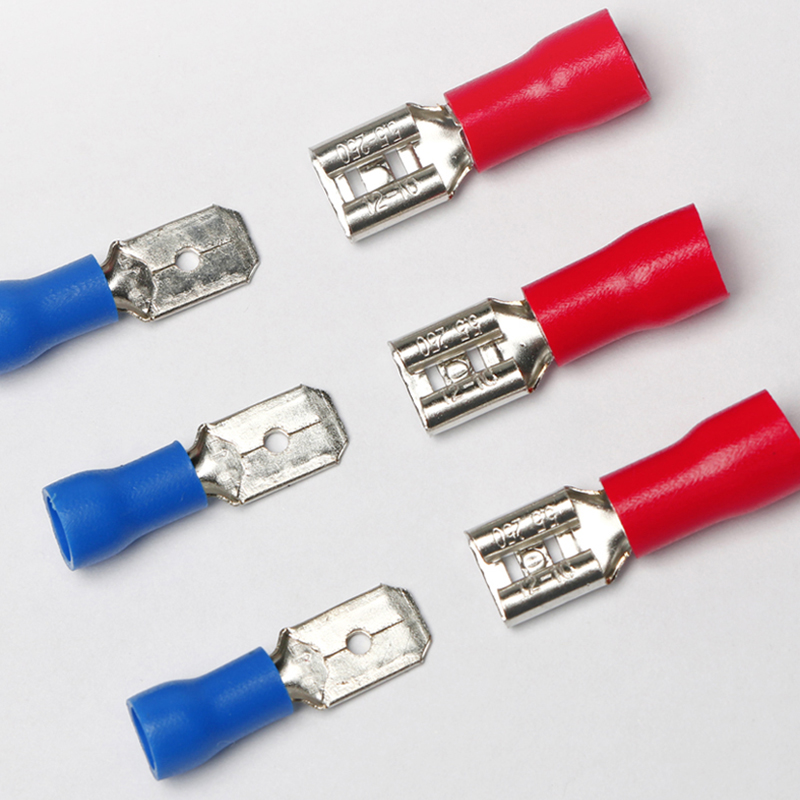
8.Male and Female Quick Disconnects, also referred to as quick-disconnect terminals, allow components to be connected and disconnected easily without tools. The male terminal slides securely into the female terminal, creating a reliable connection that is ideal for automotive lights, industrial machinery, marine applications, household appliances, and electronic modules requiring frequent servicing or replacement. These terminals are typically made from copper or brass, often with tin plating to resist corrosion, and insulated versions provide extra protection against moisture and accidental shorts. Proper installation with a quality crimping tool ensures long-term electrical reliability, and when disconnecting, it is recommended to grip the terminal body rather than the wire to avoid damage. Quick disconnects are rated for specific voltage and current levels, making them suitable for both low- and medium-power applications while maintaining secure performance in high-vibration environments.
9.Butt Connectors are cylindrical terminals used to join two wires end-to-end. They come in insulated and non-insulated forms, and some include heat-shrink tubing for additional protection. Butt connectors are commonly used in automotive wiring, household repairs, and wire extensions, providing a reliable inline connection when properly crimped. They are particularly useful for extending wires or repairing damaged cables while maintaining a neat and secure connection.
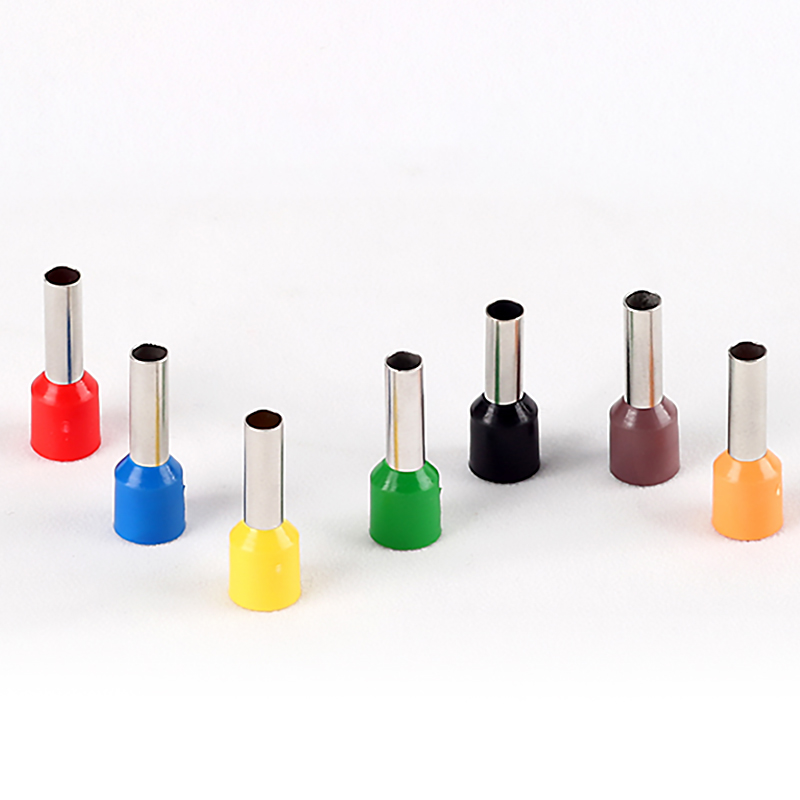
10.Cord End Terminals prevent stranded wires from fraying and improve the reliability of crimped connections. These terminals are commonly used in automotive wiring harnesses, industrial machines, and household appliances, especially when wires are bundled and organized with nylon cable ties. Cord end terminals ensure that each wire remains intact and firmly connected, reducing maintenance issues and enhancing electrical safety.
11.Twist-On Wire Connectors, or wire nuts, are plastic or polymer caps with an internal metal coil that grips wires when twisted together. Wire nuts provide an insulated, secure, and compact connection for multiple wires and are color-coded for easy identification of wire gauge and quantity. They are widely used in household wiring projects, including junction boxes, light fixtures, outlets, and switches. Their main advantage is simplicity, allowing connections without specialized tools. However, wire nuts are not suitable for wet environments or extreme temperatures, and repeated disconnection may weaken the connection or damage the wires.
Feature-Based Terminals
Electrical terminals can also be categorized based on features such as insulation.
12.Insulated Terminals include a covering made of PVC, nylon, or polymer that prevents accidental contact, reduces the risk of short circuits, and provides strain relief. These terminals are often color-coded according to wire gauge, which simplifies selection in automotive, marine, and industrial applications.
13.Non-Insulated Terminals, by contrast, lack this protective layer and are typically made of bare copper, brass, or aluminum. They are commonly used in enclosed control panels or high-temperature environments where insulation is unnecessary or additional protective measures such as heat shrink tubing will be applied. Non-insulated terminals are preferred for compact installations that require minimal bulk and maximum electrical conductivity.
Material-Specific Terminals
Material selection is another critical factor in choosing the right terminal.
14.Copper or Brass Plated Terminals offer excellent electrical conductivity and resist corrosion, making them ideal for automotive and industrial wiring systems.
15.Tin-Plated Copper Ferrules provide enhanced corrosion resistance, particularly in humid or harsh environments, which is why they are often used in marine and industrial machinery wiring.
16.Plastic and Metal Hybrid Connectors combine the mechanical strength of metal with the insulation and durability of plastic. These hybrid terminals are particularly effective in wiring harnesses organized with nylon cable ties, offering secure, vibration-resistant connections while keeping wires neatly bundled and safe from wear.
Conclusion
Choosing the right electrical terminal is essential for safety, reliability, and efficiency in any wiring project. From Ring Terminals and Fork Terminals to Cord End Terminals and Non-Insulated Terminals, understanding the types, features, and materials ensures that your connections remain secure and long-lasting. Whether you are wiring industrial machines, automotive harnesses, or household appliances, selecting the right terminal can save time, prevent failures, and simplify maintenance. If you want high-quality terminals for any application, including options compatible with nylon cable tie wiring harnesses, contact us today to find the perfect solution for your project.
