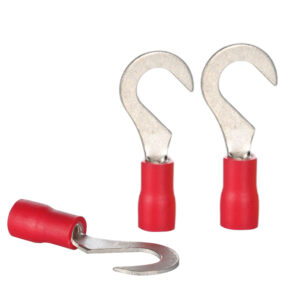
When you handle electrical wiring, using the right terminal type ensures better safety, stronger connections, and easier maintenance. Hook terminals offer unique advantages in applications where quick installation, flexibility, and secure wiring are essential. In this guide, you’ll discover where hook terminals work best so you can improve your electrical projects.
What Are Hook Terminals?
Hook terminals are electrical connectors shaped like an open hook, allowing you to attach wires to screw posts, studs, and terminal blocks without fully removing hardware. Their open-end design makes them ideal for fast installation, frequent adjustments, and reliable mechanical connections in various environments.
Key Advantages of Hook Terminals
Quick Installation
You can slip the terminal over a screw terminal without removing the screw completely, saving time in repetitive wiring tasks.
Strong Mechanical Grip
Once tightened, the hook shape ensures a stable and secure connection even under vibration or movement.
Easy Maintenance
Hook terminals are perfect when you need to disconnect and reconnect wires frequently, especially in panels and testing environments.
Where Hook Terminals Are Most Useful
Control Panels and Switchboards
Hook terminals are commonly used in control cabinets where wiring adjustments and troubleshooting occur regularly. Their open design speeds up maintenance.
HVAC Systems and Equipment Wiring
In HVAC units or industrial machinery, the constant vibration makes hook terminals a reliable choice because they hold firmly once secured.
Automotive Electrical Systems
Car wiring often requires quick replacement or inspection. Hook terminals allow you to fasten wires to posts or terminal strips without extra tools.
Temporary or Test Circuit Connections
Engineers and technicians favor hook terminals when setting up temporary circuits or running diagnostics because they can be connected and removed quickly.
Household Electrical Fixtures
They are ideal for DIY projects like lighting fixtures, appliance repairs, and low-voltage systems, where convenience and flexibility matter.
How to Choose the Right Hook Terminal
Match wire size to the correct hook terminal gauge.
Choose insulated types for better protection in tight or high-heat spaces.
Pick copper or tin-plated materials for improved conductivity and corrosion resistance.
Ensure compatibility with your screw or stud diameter.
FAQs
Are hook terminals safe for high-vibration environments?
Yes. When properly tightened, hook terminals offer strong mechanical retention and perform well in vibrating conditions like HVAC systems and vehicles.
Can hook terminals be used outdoors?
Yes, but choose corrosion-resistant materials such as tin-plated copper and pair them with insulated sleeves for added durability.
What is the main difference between hook terminals and ring terminals?
Ring terminals fully enclose the screw for maximum security, while hook terminals allow quicker installation and removal.
Do hook terminals require special tools?
No. A standard crimping tool is enough for installation.
Conclusion
Hook terminals provide fast installation, flexible wiring, and strong electrical performance across industrial, automotive, and household applications. By selecting the right type and material, you can ensure safer and more reliable wiring. If you’re looking for high-quality hook terminals, Niuli Electric offers durable, cost-effective products suitable for all your electrical projects.