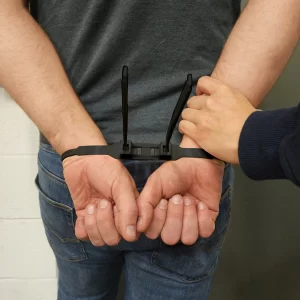
During prisoner medical examinations, safety, control, and efficiency must be carefully balanced. Handcuff cable ties are widely used to maintain security while allowing medical staff to perform necessary procedures. In this article, you’ll learn how handcuff cable ties support safe medical examinations and why proper selection matters.
What Are Handcuff Cable Ties?
Handcuff cable ties are disposable restraint devices designed to temporarily secure a detainee’s wrists. Compared with traditional metal handcuffs, they are lightweight, cost-effective, and easy to deploy, making them suitable for controlled medical and custodial environments.
Typical features include:
High-tensile nylon material
Single- or double-loop designs
Tamper-resistant locking mechanism
One-time or limited-use application
Why Medical Examinations Require Controlled Restraints
During medical examinations, detainees may need to be restrained to:
Protect medical staff from sudden movement
Prevent self-harm or interference with treatment
Maintain a calm and controlled examination environment
Ensure compliance with institutional safety protocols
Handcuff cable ties provide restraint without the bulk of traditional hardware.
Why Metal Handcuffs Are Not Suitable for MRI and CT Scans
In certain medical examinations, such as MRI or CT scans, metal handcuffs simply cannot be used. These imaging procedures strictly prohibit metal objects because they can:
Interfere with imaging accuracy
Cause equipment malfunction or damage
Create serious safety risks during MRI procedures
In these situations, you need a non-metallic restraint solution that maintains control without compromising medical equipment.
How Handcuff Cable Ties Solve This Problem
Handcuff cable ties, made from high-strength nylon, are metal-free and safe for use in imaging environments. They allow you to:
Compliance: Meets local regulations and usage standards
FAQs
Are handcuff cable ties safe for medical examinations?
Yes, when used correctly and according to protocol, they provide effective restraint while minimizing interference with medical care.
Why are disposable restraints preferred in medical settings?
Disposable restraints improve hygiene, reduce cross-contamination, and simplify logistics.
Can handcuff cable ties replace metal handcuffs entirely?
They are suitable for controlled environments like medical examinations, but policies may still require metal restraints in other situations.
Do handcuff cable ties cause discomfort?
High-quality designs with smooth edges reduce discomfort when properly applied and monitored.
Are handcuff cable ties adjustable?
Most designs allow controlled tightening to balance restraint and medical accessibility.
Conclusion
Handcuff cable ties play a critical role in prisoner medical examinations by supporting safety, hygiene, and operational efficiency. When selected and used properly, they help you maintain control without compromising medical care. Niuli Electric supplies reliable handcuff cable ties designed for professional, institutional use, helping you meet safety and operational standards with confidence.