When choosing electrical connection methods, reliability is always your top priority. Solder rings and crimp terminals are both widely used, but they perform differently depending on application, environment, and installation quality. This article helps you understand their differences so you can choose the most reliable solution for your electrical projects.
What Is a Solder Ring?
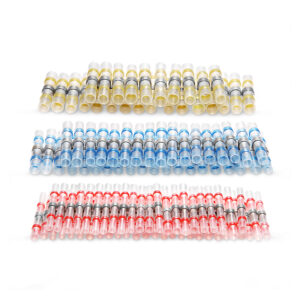
A solder ring is a preform solder ring, often combined with heat shrink tubing. When heat is applied, the solder melts and creates an electrical connection while the tubing seals the joint.
Key Characteristics of Solder Rings:
Requires heat for installation
Provides both electrical connection and sealing
Commonly used in aerospace, automotive, and waterproof applications
What Are Crimp Terminals?
Crimp terminals create electrical connections by mechanically compressing the terminal onto the wire using a crimping tool. This method is fast, consistent, and widely adopted in industrial and electrical installations.
Key Characteristics of Crimp Terminals:
No heat required
Strong mechanical connection
Suitable for mass production and field installation
Reliability Comparison: Solder Ring vs Crimp Terminals
Electrical Conductivity
Solder Rings: Provide excellent conductivity when properly heated and flowed.
Crimp Terminals: Offer stable conductivity when crimped with the correct tool and wire size.
Mechanical Strength
Solder Rings: Strong electrical bond but weaker against vibration and pulling forces.
Crimp Terminals: Superior mechanical strength and vibration resistance.
Installation Consistency
Solder Rings: Highly dependent on correct temperature and heating time.
Crimp Terminals: Very consistent when using standardized crimp tools.
Environmental Resistance
Solder Rings: Excellent sealing against moisture when combined with heat shrink.
Crimp Terminals: Requires insulated or sealed versions for moisture protection.
Key Differences at a Glance
Feature
Solder Ring
Crimp Terminals
Installation Method
Heat activated
Mechanical crimping
Vibration Resistance
Moderate
High
Waterproof Capability
Excellent
Depends on insulation
Installation Speed
Slower
Fast
Skill Requirement
Medium to high
Low to medium
Typical Applications
Automotive, aerospace
Industrial, control panels
Which Is More Reliable for Your Application?
Choose solder rings if you need waterproof sealing and compact connections.
Choose crimp terminals if you require strong mechanical stability, vibration resistance, and fast installation.
FAQs
Q: Are solder rings stronger than crimp terminals?
Electrically, solder rings are strong, but mechanically, crimp terminals offer better long-term strength.
Q: Can solder rings replace crimp terminals entirely?
Not always. Crimp terminals are better for high-vibration or load-bearing connections.
Q: Do crimp terminals loosen over time?
Properly crimped terminals using correct tools rarely loosen.
Q: Which option is better for outdoor use?
Solder rings with heat shrink provide better waterproof protection unless sealed crimp terminals are used.
Conclusion
Both solder rings and crimp terminals can be reliable when used correctly. Your best choice depends on mechanical stress, environment, and installation conditions. For consistent, professional results, Niuli Electric offers high-quality solder rings and crimp terminals designed to meet industrial standards and ensure dependable electrical connections.