When you’re working in demanding environments, choosing the right stainless steel cable tie becomes critical for safety and performance. Both self-locking and ball-lock stainless steel ties offer impressive strength, but each design behaves differently under tension. This guide helps you understand which option better fits your high-strength cable management needs.
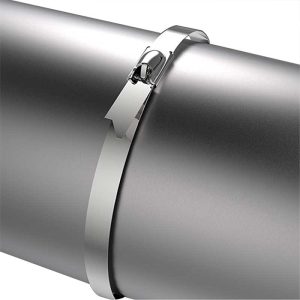
Ball-lock ties use a stainless steel ball inside the locking head to secure the strap instantly.
Key features:
Extremely high tensile strength
Fast installation
Ideal for harsh, high-vibration, or high-temperature environments
Suitable for heavy-duty industrial and outdoor use
Self-Locking vs Ball-Lock: Which Is Stronger?
Tensile Strength Comparison
Ball-lock ties generally provide higher tensile strength due to their frictionless, automatic locking design. The locking ball grips tightly even under extreme tension.
Self-locking ties are strong but rely on mechanical teeth, which may not match the strength of ball-lock systems in critical applications.
Winner: Ball-Lock Stainless Steel Ties
Performance in Harsh Environments
Ball-lock ties withstand severe heat, cold, chemicals, UV, vibration, and saltwater exposure.
Self-locking ties also perform well but may not maintain the same reliability in extreme settings.
Winner: Ball-Lock Stainless Steel Ties
Installation Efficiency
Ball-lock ties tighten instantly and require minimal effort.
Self-locking ties may require more force to lock but are easier to adjust during installation.
Winner: Ball-Lock (Fastest Installation)
Cost Considerations
Self-locking stainless steel ties are generally more budget-friendly.
Ball-lock ties cost more due to their performance advantages.
Reliable performance in standard industrial environments
Choose ball-lock stainless steel ties if you need:
Maximum tensile strength
Fast installation
Performance in harsh or high-risk environments
Long-term durability under vibration or temperature extremes
FAQs
Q: Are ball-lock ties always the better choice?
Not always. They’re stronger but may be unnecessary for standard indoor applications.
Q: Can both types be used outdoors?
Yes, but ball-lock ties provide better long-term corrosion and temperature resistance.
Q: Do stainless steel ties damage cables?
Use protective sleeves if cables have soft insulation to prevent abrasion.
Q: Are these ties reusable?
Most stainless steel ties are single-use due to their permanent locking design.
Conclusion
Both self-locking and ball-lock stainless steel ties offer impressive durability, but ball-lock ties deliver superior strength and reliability in extreme conditions. If you want dependable fastening for demanding applications, investing in high-quality stainless steel ties is essential. Niuli Electric provides premium cable ties that ensure strong, long-lasting performance.