When handling electrical connections, choosing the right terminal is crucial for safety and reliability. Ring terminals and fork terminals both serve important roles, but knowing which one suits your project can save you time and prevent connection issues. This guide will help you make an informed choice with confidence.
What Are Ring Terminals?
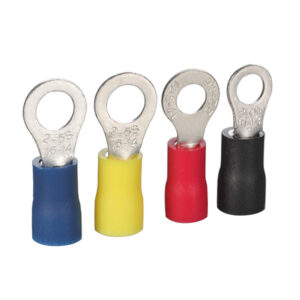
Ring terminals have a closed-loop design that wraps completely around a screw or stud. This creates a secure, permanent connection that is resistant to vibration and loosening, making them ideal for automotive, industrial, and high-vibration electrical applications.
Key Features of Ring Terminals:
Secure Connection – Cannot slip off once fastened.
Durable – Maintains stability under vibration or stress.
Versatile – Available for different wire gauges.
Color-Coded – Easy identification by wire size.
What Are Fork Terminals?
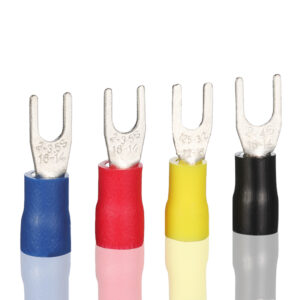
Fork terminals, also called spade terminals, have an open-ended design, allowing installation without completely removing the screw. This makes them perfect for applications requiring frequent maintenance or temporary connections.
Key Features of Fork Terminals:
Quick Installation – Can be inserted under a screw without removal.
Reusable – Easy to disconnect and reconnect multiple times.
Space-Saving – Fits in tighter spaces.
Versatile – Works for multiple wire sizes.
Ring Terminals vs Fork Terminals: Key Differences
Connection Security Ring terminals offer superior security because the loop fully encircles the screw, minimizing the risk of accidental disconnection. Fork terminals, while convenient, can loosen if the screw is not tightly fastened.
Installation Speed Fork terminals are faster to install, ideal for setups that require frequent changes. Ring terminals require screw removal, making them slightly slower but more reliable for permanent connections.
Durability Ring terminals are more durable in high-vibration or heavy-duty applications. Fork terminals suit lighter-duty or temporary setups.
Application Scenarios
Ring Terminals: Automotive wiring, industrial machinery, permanent electrical connections.
Fork Terminals: Temporary connections, home projects, panels needing frequent adjustments.
Which One Should You Use?
For Maximum Reliability: Choose ring terminals when a permanent, vibration-resistant connection is needed.
For Quick and Flexible Connections: Use fork terminals when cables may need to be removed or replaced often.
For Harsh Environments: Ring terminals provide better durability and stability.
FAQs
Q: Can ring terminals and fork terminals be used interchangeably?
It depends on the application. Ring terminals are better for permanent, secure connections, while fork terminals suit quick, temporary setups.
Q: Are ring terminals suitable for automotive wiring?
Yes, they are widely used due to their secure, vibration-resistant design.
Q: Can fork terminals handle heavy-duty cables?
Fork terminals work for moderate loads but may loosen under high vibration; ring terminals are preferred for heavy-duty use.
Q: Do I need special tools to install these terminals?
Yes, both types require a crimping tool to securely attach the wire to the terminal.
Conclusion
Choosing the right terminal ensures a safe, reliable electrical connection. Ring terminals offer maximum security, while fork terminals provide flexibility and convenience. Assess your project requirements carefully. Niuli Electric supplies high-quality ring and fork terminals, helping you achieve durable, safe, and efficient electrical installations every time.