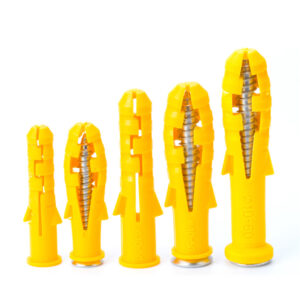
When choosing the right wall plugs for your installation, you want reliability, stability, and long-term performance. Understanding the difference between PP wall plugs and nylon wall plugs helps you avoid failure and ensures your project stays secure. This guide gives you the clarity you need before making a purchase decision.
What Are PP Wall Plugs?
PP (Polypropylene) wall plugs are lightweight, economical anchors commonly used for light-duty installations. They work well in softer materials and simple household applications.
Key Characteristics:
Low cost
Good flexibility
Suitable for light loads
Works in concrete, brick, and drywall
Best For: small shelves, lightweight fixtures, picture frames, and general use where heavy load is not required.
What Are Nylon Wall Plugs?
Nylon wall plugs are engineered for durability and higher mechanical strength. They perform well under stress and resist aging, moisture, and chemicals.
Key Characteristics:
High tensile strength
Excellent durability
Heat and aging resistance
Handles medium to heavy loads
Best For: cabinets, TV brackets, heavy lighting, industrial installations, and vibrating environments.
PP Wall Plugs vs Nylon Wall Plugs
Feature
PP Wall Plugs
Nylon Wall Plugs
Strength
Low–Medium
Medium–High
Durability
Basic
Excellent
Load Capacity
Light-duty
Medium to heavy-duty
Environment Resistance
Limited
Strong resistance to aging, moisture, temperature
Price
Very economical
Slightly higher
Best Application
Household light load
Professional, industrial, heavy load
How to Choose the Right One
You should choose PP or nylon wall plugs based on your project’s load requirements and environment.
Choose PP if you need:
A budget-friendly option
Light-duty anchoring
Quick household installations
Choose Nylon if you need:
Long-term stability
Heavy load support
Resistance to heat, moisture, or vibration
Professional or industrial-grade reliability
FAQs
Q: Are nylon wall plugs worth the higher price?
Yes. If you need durability, strength, and reliability, nylon wall plugs are a better long-term investment.
Q: Can PP wall plugs be used outdoors?
They can, but PP material may degrade faster under UV and temperature changes. Nylon performs better outdoors.
Q: Do both plug types work with the same screws?
Generally yes, but always match screw size to plug size for safe anchoring.
Q: Which is better for hollow walls?
Nylon provides better expansion and grip in hollow materials.
Conclusion
Choosing between PP wall plugs and nylon wall plugs depends on your load, environment, and safety needs. Nylon offers stronger and longer-lasting performance, while PP provides a cost-effective solution for lighter tasks. If you want dependable, high-quality wall plugs, Niuli Electric offers reliable options designed for professional users.