


Introduction: The Hidden Cost of Outdoor Cable Management
When routing cables outdoors, sunlight is a silent destroyer. A standard nylon zip tie might look strong on day one, but after a year of relentless UV exposure, it becomes brittle and snaps under the slightest pressure.
In critical installations like solar farms, 5G telecom towers, and rooftop HVAC units, a broken $0.05 cable tie can lead to sagging wires, exposed connections, electrical shorts, and thousands of dollars in emergency maintenance.
By upgrading to true Anti-UV Cable Ties (also known as Weather Resistant or UV Stabilized ties), you can dramatically extend the life of your entire cable system. In this guide, we’ll explain the science behind UV resistance and why it’s the smartest investment for outdoor projects.
The Silent Destroyer: How UV Radiation Damages Standard Nylon
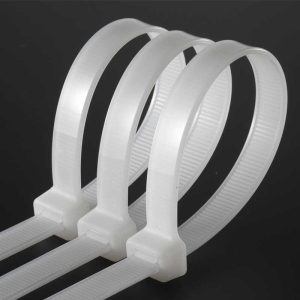
If you use standard white/clear nylon 66 ties outdoors, you are putting your project at risk. When exposed to direct sunlight, ultraviolet (UV) rays attack the polymer chains within the plastic in a process called photo-oxidation.
Here is exactly what happens to a standard tie outdoors:
-
Color Fading: The tie loses its original finish.
-
Loss of Flexibility: The plasticizers evaporate, causing the tie to harden.
-
Micro-Cracking: Invisible surface cracks begin to form along the stress points (especially near the locking head).
-
Catastrophic Failure: The tensile strength drops to near zero, and the tie snaps—often dropping heavy cable bundles.
A standard nylon tie typically fails within 1 to 2 years outdoors. For a 25-year solar panel installation, this is unacceptable.
The Science Behind Anti-UV Cable Ties (Why are they black?)
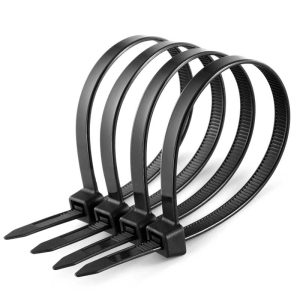
How do Anti-UV cable ties survive the sun? The secret lies in a specific additive: Carbon Black.
High-quality UV-resistant cable ties are manufactured by mixing premium Nylon PA66 resin with at least 2% finely dispersed Carbon Black.
This is not a simple “surface coating.” The Carbon Black is integrated into the molecular structure of the tie. It acts like microscopic sunglasses for the plastic, absorbing the destructive ultraviolet radiation and turning it into harmless trace amounts of heat.
The Result?
-
Tensile strength remains consistent for years.
-
The ties stay flexible and resist sudden brittleness.
-
Lifespan jumps from 1-2 years to 7-10+ years in continuous outdoor exposure.
Protect your outdoor installations today. Browse our factory-direct UV Resistant Nylon Cable Ties .
Top 4 Industries That Must Use UV-Resistant Zip Ties
If your project falls into any of these categories, anti-UV ties are not an option—they are a strict requirement:
-
Solar Power (PV) Installations: Solar arrays sit under direct, brutal sunlight for decades. UV ties ensure cable management tracks along the solar rails never sag or touch the hot roof.
-
Telecommunications & 5G Towers: Wires running up antenna masts face extreme weather and high UV index. UV ties keep coaxial and fiber optic cables securely fastened at high altitudes.
-
Agriculture & Irrigation: Outdoor farming equipment and greenhouse wiring require ties that won’t degrade in the summer sun or rot in the rain.
-
Marine & Coastal Routing: While Stainless Steel Ties are best for salt spray, UV nylon ties are frequently used for above-deck wire bundling on boats and docks.
Cost Analysis: Cents vs. Thousands of Dollars
For procurement managers, the math is simple.
The material cost difference between a standard nylon tie and a UV-resistant nylon tie is practically zero—just fractions of a cent per piece. However, the labor cost of sending a technician to a remote telecom tower or a commercial rooftop to replace broken ties can cost hundreds of dollars per hour.
You spend pennies more upfront to avoid hours of expensive maintenance later.
Frequently Asked Questions (FAQs)
1. Are all black cable ties UV resistant?
No! This is a dangerous misconception. Many cheap black cable ties are simply dyed with standard black pigment for aesthetic reasons. They contain no carbon black and will degrade just as fast as white ties. Always ask your manufacturer if the ties are strictly “UV Stabilized” or “Weather Resistant” before buying.
2. Can I use Anti-UV cable ties indoors?
Yes, absolutely. While they are engineered for the outdoors, their robust PA66 construction makes them perfectly fine for indoor use, especially near large windows or under intense industrial lighting.
3. Do UV-resistant ties also resist extreme heat?
UV resistance and high-temperature resistance are two different features. While standard UV ties can handle up to +85°C (185°F), if your outdoor cables are touching extremely hot machinery or exhaust pipes, you must specify High-Temperature UV Cable Ties, which are rated up to +120°C.
Conclusion: Secure Your Outdoor Projects with Niuli Electric
When you are bundling cables in sun-exposed areas, hoping the zip tie will hold is not a strategy. You need guaranteed, UV-stabilized performance.
At Niuli Electric (NLZD), we manufacture premium UV-Resistant Cable Ties trusted by solar contractors, telecom giants, and electrical distributors worldwide. Our ties are tested for extreme weatherability, ensuring your installations stay secure for years to come.
Don’t let a cheap zip tie ruin your expensive project.
Contact our factory today for Free Samples & Wholesale Bulk Pricing!
