


-
Introduction
When securing electrical wiring, choosing between heavy-duty plastic cable ties and metal ties is not simply a question of strength. The safer fastening solution depends on the electrical environment, cable construction, moisture exposure, installation method, and mechanical requirements.
Metal ties are widely used for high-temperature, high-strength, and harsh industrial applications. However, their conductivity and rigid metal construction can introduce considerations that do not apply to plastic fasteners. Heavy-duty nylon cable ties, by contrast, combine mechanical strength with electrical insulation, corrosion resistance, lightweight construction, and easy installation.
For many electrical wiring applications, especially where cables require secure bundling without introducing a conductive fastening component, a heavy-duty plastic cable tie can actually be the safer choice.
-
Heavy-Duty Plastic Ties vs. Metal Ties: What’s the Difference?
Heavy-duty plastic ties are typically manufactured from engineering plastics such as Nylon 66 (PA66). They are designed to bundle and secure wires while providing a combination of mechanical strength, flexibility, electrical insulation, and corrosion resistance.
Metal ties are generally made from stainless steel or other metallic materials. Their major advantages are high tensile strength, excellent temperature resistance, and strong durability in demanding environments.
The fundamental difference is the behavior of the fastening material itself.
| Feature | Heavy-Duty Plastic Ties | Metal Ties |
| Electrical conductivity | Non-conductive | Conductive |
| Insulation | Excellent | Requires consideration of electrical isolation |
| Corrosion resistance | Good, depending on material | Excellent with appropriate stainless steel grade |
| Tensile strength | High for heavy-duty grades | Very high |
| Flexibility | Higher | Low |
| Installation | Fast and lightweight | Often requires dedicated tools |
| Cable contact | Softer polymer surface | Rigid metal surface |
| Weight | Lightweight | Heavier |
| Typical applications | Electrical wiring, panels, industrial bundling | High-temperature, marine, heavy-duty environments |
Niuli identifies Nylon 66 cable ties as offering good tensile strength and electrical insulation, while stainless steel ties are positioned for applications requiring higher mechanical and environmental performance.
The important point is that higher tensile strength does not automatically mean greater electrical safety.
-
When Are Heavy-Duty Plastic Ties the Safer Choice?
Electrical Insulation and Short-Circuit Risk
The biggest safety advantage of a plastic cable tie in electrical wiring is that the material itself is non-conductive.
Nylon does not provide a metallic path for electrical current. When correctly selected and installed, a heavy-duty nylon cable tie can therefore secure wiring without introducing an electrically conductive component around the cable bundle.
This characteristic is useful in applications such as:
- Electrical control panels
- Switchgear and distribution equipment
- Lighting wiring
- Motor wiring
- Appliance wiring
- Industrial electrical harnesses
Metal fasteners can conduct electricity if they come into contact with an energized conductor or exposed conductive part. The risk depends heavily on the specific installation design, insulation system, grounding arrangement, and applicable electrical standards, so metal ties are not inherently unsafe. However, where electrical isolation is desirable, a non-conductive Nylon 66 tie offers an inherent material advantage.
Niuli’s Nylon 66 cable ties are specifically described as providing good electrical insulation as well as tensile strength.
Corrosion and Moisture Resistance
Plastic does not rust.
For electrical installations exposed to humidity, condensation, cleaning water, or many common chemicals, a suitable nylon cable tie can eliminate the metal corrosion mechanism entirely.
This can be particularly useful around:
- Indoor electrical panels
- HVAC equipment
- Lighting fixtures
- Machinery
- Industrial electrical cabinets
- Humid manufacturing environments
Metal ties can also perform extremely well in wet environments when the correct stainless steel grade is selected. For example, 304 and 316 stainless steel provide excellent corrosion resistance compared with ordinary carbon steel.
However, plastic ties can be a simpler solution where the application does not require the extreme corrosion resistance or temperature capability of stainless steel.
Niuli’s Nylon 66 products are described as resistant to acids and alkalis and as having good aging resistance.

Protection Against Cable Damage: Soft Edges vs. Sharp Metal Shear
A cable tie is in direct contact with the cable jacket, so the fastening material itself matters.
A rigid metal tie can create concentrated mechanical contact at bends, edges, or locking mechanisms. Improper installation, excessive tension, burrs, or damaged coatings can potentially create abrasion points against cable insulation.
Nylon is inherently softer and more compliant than metal. This makes it easier to form around a cable bundle without introducing a rigid metal edge.
However, this does not mean every plastic cable tie is automatically safe for cables. Over-tightening can still create excessive localized pressure, and improperly cut plastic tails can become sharp enough to abrade adjacent cable jackets over time.
For heavy-duty wiring, the correct installation tension and appropriate cable-tie size remain essential.
Installation Safety and Ease of Handling
Plastic ties are lightweight and can generally be installed quickly by hand or with standard cable-tie tools.
This offers practical safety benefits for electrical installers because the material is easier to handle and does not have the rigid edges associated with metal straps.
Metal cable ties can require dedicated tensioning and cutting tools, especially for high-strength stainless steel products. Improper removal or cutting can also produce sharp metal edges.
For high-volume electrical assembly, the easier handling of plastic ties can reduce installation time and simplify repetitive cable-management work.
-
When Should You Choose Metal Ties Instead?
Heavy-duty plastic ties are not always the best solution.
Metal ties should be considered when the installation requires performance beyond the practical limitations of nylon.
Extreme Temperature
If the cable tie will operate at temperatures significantly above the rated range of standard Nylon 66, stainless steel can provide a much wider temperature margin.
Niuli’s standard Nylon 66 cable ties are specified around the -40°C to +85°C range, while stainless steel cable ties are intended for demanding temperature and environmental applications.
Exceptional Mechanical Loads
Stainless steel ties can provide substantially higher tensile strength than conventional nylon ties. Niuli’s comparison identifies stainless steel ties as capable of significantly higher tensile loads than Nylon 66 products.
For heavy equipment, large cable bundles, structural bundling, and applications subject to severe mechanical loading, metal may therefore be the more appropriate choice.
Severe Marine or Corrosive Environments
In applications involving direct saltwater exposure, severe salt spray, or other aggressive environments, stainless steel—particularly an appropriate marine-grade alloy such as 316—may provide better long-term performance than nylon.
High-Security or Long-Term Heavy-Duty Applications
Metal ties are also appropriate where maximum mechanical retention and high resistance to vibration, heat, or harsh environmental conditions take priority over installation convenience.
In other words, the question is not whether plastic is “better” than metal. It is whether the specific application benefits more from electrical insulation and flexibility or from extreme mechanical and environmental resistance.
-
How to Choose the Right Cable Tie for Electrical Wiring?
Start with the electrical environment.
If the primary requirement is non-conductive cable management, heavy-duty Nylon 66 is often a strong candidate. For industrial electrical wiring, select a cable tie with sufficient tensile strength while maintaining an appropriate safety margin.
Next, evaluate the operating temperature. Standard Nylon 66 may be suitable for many electrical installations, while high-temperature or specialized materials may be necessary when temperatures exceed the normal operating range.
Then consider environmental exposure:
- Indoor vs. outdoor installation
- Humidity and moisture
- UV exposure
- Chemicals
- Salt spray
- Vibration
- Mechanical loads
Cable-bundle size is also critical. Select the correct length, width, and minimum loop tensile strength rather than choosing a cable tie based on length alone.
Niuli’s cable-tie range is available in different dimensions and tensile-strength specifications, allowing buyers to match the product to the actual application.
Finally, verify the material and quality documentation. For safety-critical procurement, look for clearly specified Nylon 66, relevant certifications, traceable manufacturing, and consistent production quality.
-
Why Choose Niuli Electric Heavy-Duty Plastic Cable Ties?
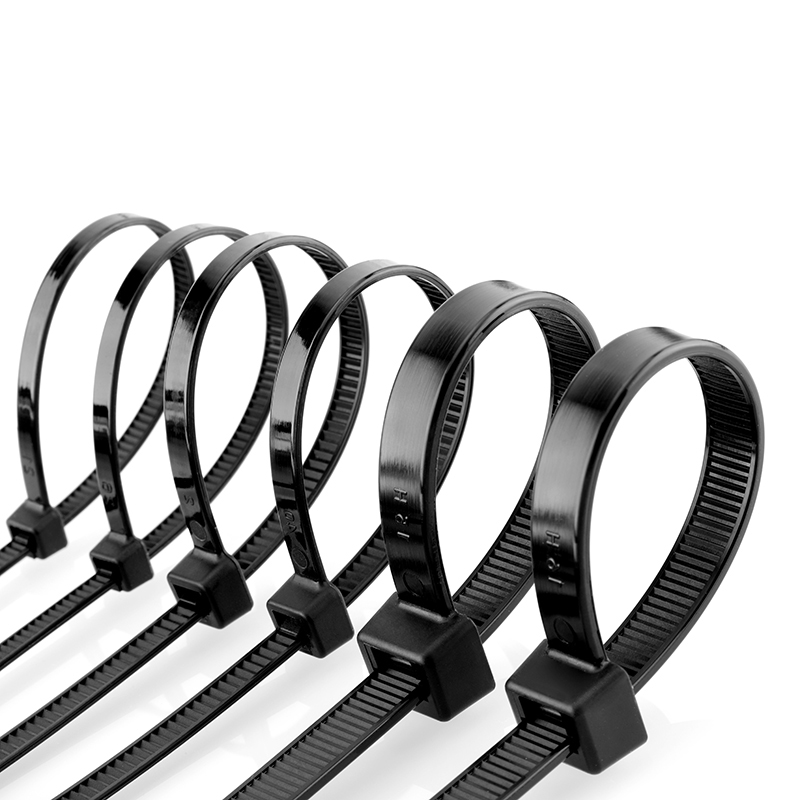
Niuli Electric manufactures Nylon 66 cable ties designed for electrical, industrial, automotive, lighting, and other cable-management applications.
Its Nylon 66 cable ties use UL-approved material, with UL 94V-2 flammability performance listed for the relevant product range. The company also highlights good tensile strength, electrical insulation, acid and alkali resistance, and aging resistance.
For demanding applications, Niuli offers multiple cable-tie configurations rather than relying on one standard design. Options include different widths, lengths, tensile strengths, and specialized product types.
Niuli also manufactures super-strong and double-sided teeth cable ties for applications where higher mechanical retention is required. Its published technical information states that its double-sided teeth design can provide more than 20% higher tension strength than conventional designs.
For B2B buyers, the combination of Nylon 66 material, electrical insulation, mechanical strength, multiple specifications, and manufacturing consistency makes heavy-duty plastic ties a practical alternative to metal fastening systems in many wiring applications.
-
Conclusion
The safest cable tie material depends on what the wiring installation actually needs.
Heavy-duty plastic ties are often the safer choice when electrical insulation, corrosion resistance, flexible cable contact, lightweight handling, and installation efficiency are priorities. Nylon 66 provides a useful combination of mechanical performance and electrical insulation without introducing a conductive metal component around the wiring.
Metal ties become more attractive when the application demands extreme temperature resistance, exceptionally high tensile strength, severe marine exposure, or heavy-duty mechanical retention.
For most electrical wiring projects, the correct decision should therefore be based on electrical safety + environmental conditions + mechanical requirements, rather than tensile strength alone.
Selecting the correct Nylon 66 grade, size, tensile strength, and installation tension can provide reliable cable management while reducing unnecessary risks to the wiring system.
-
FAQs
Q1. Are plastic cable ties safer than metal ties for electrical wiring?
They can be, particularly when electrical insulation is important. Nylon cable ties are non-conductive, while metal ties are conductive. However, the safest choice ultimately depends on the complete electrical installation and applicable standards.
Q2. Can heavy-duty nylon cable ties replace stainless steel ties?
For many electrical and industrial wiring applications, yes. However, stainless steel is preferable where extremely high tensile strength, very high temperatures, or severe marine exposure exceed the practical capabilities of nylon.
Q3. Do plastic cable ties protect wires better than metal ties?
Nylon is softer and more flexible than metal, which can reduce the risk of rigid metal contact with cable jackets. However, improper tensioning or cutting can still damage cables.
Q4. Are Nylon 66 cable ties electrically insulating?
Yes. Nylon 66 is a non-conductive engineering polymer and is widely used where electrical insulation is desirable. Niuli specifically lists good electrical insulation as a feature of its Nylon 66 cable ties.
Q5. When should I choose stainless steel cable ties instead?
Consider stainless steel when the installation involves extreme temperatures, very high mechanical loads, severe outdoor or marine conditions, or other environments where nylon does not provide sufficient performance.
Q6. Are heavy-duty nylon cable ties suitable for outdoor wiring?
Yes, provided the appropriate grade is selected. For prolonged UV exposure, a UV-stabilized Nylon 66 product should be used instead of a standard indoor-grade tie.
Q7. How do I select the right tensile strength?
Consider cable-bundle diameter, total bundle weight, vibration, installation method, and expected environmental loads. The cable tie should have sufficient minimum loop tensile strength with an appropriate safety margin.
Q8. What makes Niuli heavy-duty plastic cable ties different?
Niuli uses UL-approved Nylon 66 across relevant cable-tie ranges and offers different widths, lengths, tensile-strength levels, and specialized designs for demanding applications.
- Choose the Right Cable Tie for Your Wiring Project
For electrical wiring applications where non-conductive fastening, cable protection, corrosion resistance, and easy installation are priorities, heavy-duty Nylon 66 cable ties can be a safer and more practical alternative to metal ties.
Niuli Electric provides Nylon 66 cable ties in multiple sizes, tensile-strength levels, and application-specific designs for electrical, lighting, automotive, and industrial cable management.
Explore the Nylon Cable Tie Catalog to review available specifications, or Request Samples to evaluate the products before placing a bulk order.
Have a demanding wiring application? Contact Niuli Electric with your cable size, environment, and load requirements for help selecting the appropriate heavy-duty cable tie.
